
The Floor That Looked Perfect — Until It Didn’t
You fell in love with laminate flooring for all the right reasons. It looks like real hardwood, costs a fraction of the price, and seemed practically maintenance-free when you first had it installed.
But a few months in, something changed.
Maybe you noticed a plank lifting near the back door. Or a soft clicking sound underfoot that wasn’t there before. In worse case the swollen section near the bathroom that’s starting to look like a speed bump.
Here’s the truth: laminate flooring problems are extremely common, and they affect floors in homes of every age and price range. The good news is that most laminate flooring issues are preventable and many are fixable.
This guide breaks down every major laminate flooring problem, what’s behind it, and exactly what you can do about it. Whether you’re a first-time homeowner or just dealing with a frustrating floor situation, this is the resource you need.
What Makes Laminate Flooring Vulnerable?
Before diving into specific problems, it helps to understand what laminate actually is.
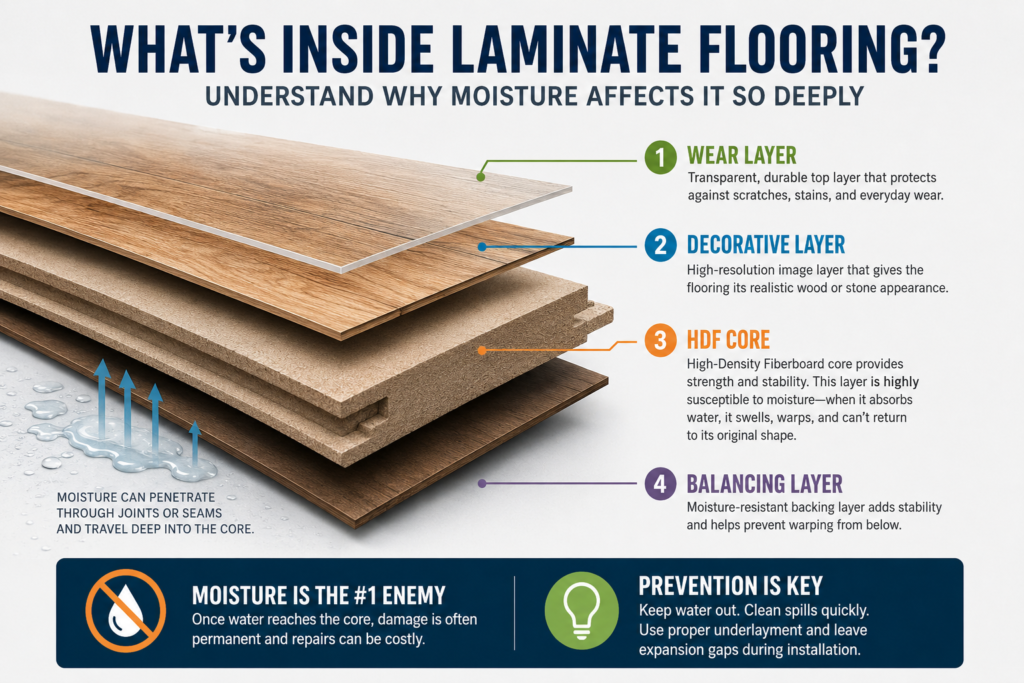
Laminate flooring is a multi-layer synthetic product. At its core is a high-density fiberboard (HDF) or medium-density fiberboard (MDF) core, topped with a photographic layer that mimics wood or stone, and sealed with a clear wear layer.
That HDF core is both laminate’s greatest strength and its biggest weakness. It creates a stable, affordable plank — but it’s also highly sensitive to moisture. Unlike solid hardwood, which can be sanded and refinished, laminate has no real margin for error when water gets involved.
Understanding this helps explain nearly every problem on this list.
The 8 Most Common Laminate Flooring Problems (And How to Fix Them)
1. Laminate Floor Swelling and Buckling
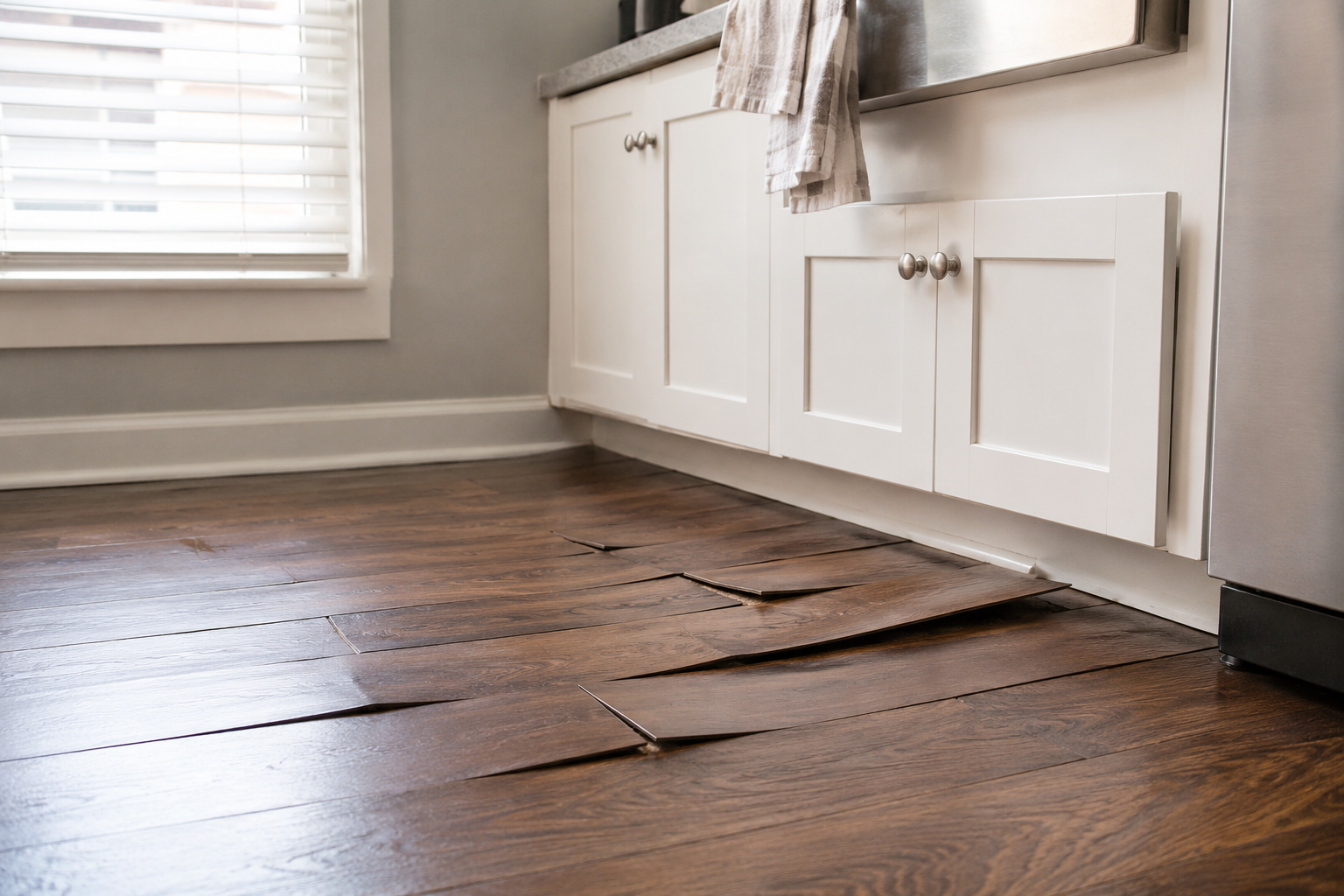
This is the number one laminate flooring problem homeowners report. Swelling happens when moisture seeps into the HDF core, causing the planks to expand, warp, and lift off the subfloor.
Common causes:
- Water spills left unwiped
- High indoor humidity (above 60%)
- Improper installation near wet areas
- Leaking appliances or plumbing
How to fix it:
If the swelling is limited to one or two planks, you may be able to replace just the affected boards without redoing the entire floor. Start by identifying and eliminating the moisture source first — otherwise the problem will return.
For widespread buckling, especially after a flood, professional water damage remediation may be necessary. The Institute of Inspection Cleaning and Restoration Certification (IICRC) provides guidelines on proper water damage assessment for flooring.
Expert Tip: Always use a moisture meter before installation and before repairs. A reading above 12% in the subfloor means you need to address moisture before laying any laminate.
2. Laminate Flooring Gaps Between Planks
A laminate floor that looked perfect after installation starts developing small — then not-so-small — gaps between planks. This is often a laminate floor problems expansion issue.
Laminate flooring expands and contracts with changes in temperature and humidity. This is called thermal expansion. If the floor wasn’t given adequate expansion gaps around the room’s perimeter during installation, or if indoor conditions fluctuate dramatically, gaps will appear.
Common causes:
- Insufficient expansion gap at walls (typically ¼ inch is required)
- Rapid temperature swings (e.g., HVAC going from high heat to air conditioning)
- Low humidity in winter causing planks to contract
How to fix it:
For gaps caused by humidity, the fix is environmental: use a humidifier during dry winter months to keep indoor relative humidity between 35–65%, which is the range most laminate manufacturers recommend.
If the gaps are structural — caused by poor installation — the floor may need to be re-laid with correct spacing. Pull the baseboard trim and check whether a proper expansion gap exists.
Expert Tip: The National Wood Flooring Association (NWFA) recommends acclimating laminate flooring in the installation room for 48–72 hours before installation to minimize future expansion issues.
3. Peaking (Planks Lifting at the Seams)
Peaking is the opposite of gapping. Instead of pulling apart, the planks push against each other and lift upward at the seams, forming a ridge you can feel underfoot.
This happens when there’s no room for the floor to expand, so the pressure goes upward instead.
Common causes:
- Missing or inadequate expansion gap at walls
- Obstructions under the floor (debris or uneven subfloor bumps)
- Humidity spike causing rapid expansion
How to fix it:
Remove the baseboards or quarter-round molding and check the expansion gap. If planks are tight against the wall, carefully use a pull bar to create space. In severe cases, you may need to remove rows from the edges of the room, trim the planks, and reinstall with a proper gap.
4. Laminate Planks Clicking or Making Noise
That hollow, clicky sound when you walk across certain spots is one of the most annoying laminate flooring problems — and also one of the most misunderstood.
The sound typically comes from planks that have lost contact with the subfloor, or from joints that are slightly misaligned and rubbing against each other.
Common causes:
- Uneven subfloor beneath the laminate
- Missing or inadequate underlayment
- Improper click-lock joint engagement during installation
- Moisture causing warping that separates planks from the subfloor
How to fix it:
For minor squeaks, laminate floor repair injector kits allow you to inject adhesive under the plank without removing it. For widespread noise, the issue often points to subfloor irregularities — the subfloor should be flat within 3/16 inch over a 10-foot span, per most manufacturer specs.
Expert Tip: Before installation, always check the subfloor flatness with a long straightedge or 8-foot level. Grinding down high spots or using floor-leveling compound on low spots prevents this problem entirely.
5. Scratches and Surface Damage
Laminate is tougher than real hardwood in many ways, but it’s not scratch-proof. Once the wear layer is compromised, the photographic layer underneath is exposed — and there’s no sanding it back.
Common causes:
- Moving heavy furniture without felt pads
- Pet claws (especially large dogs)
- High heels, grit, and sand tracked in from outside
- Dragging appliances across the floor
How to fix it:
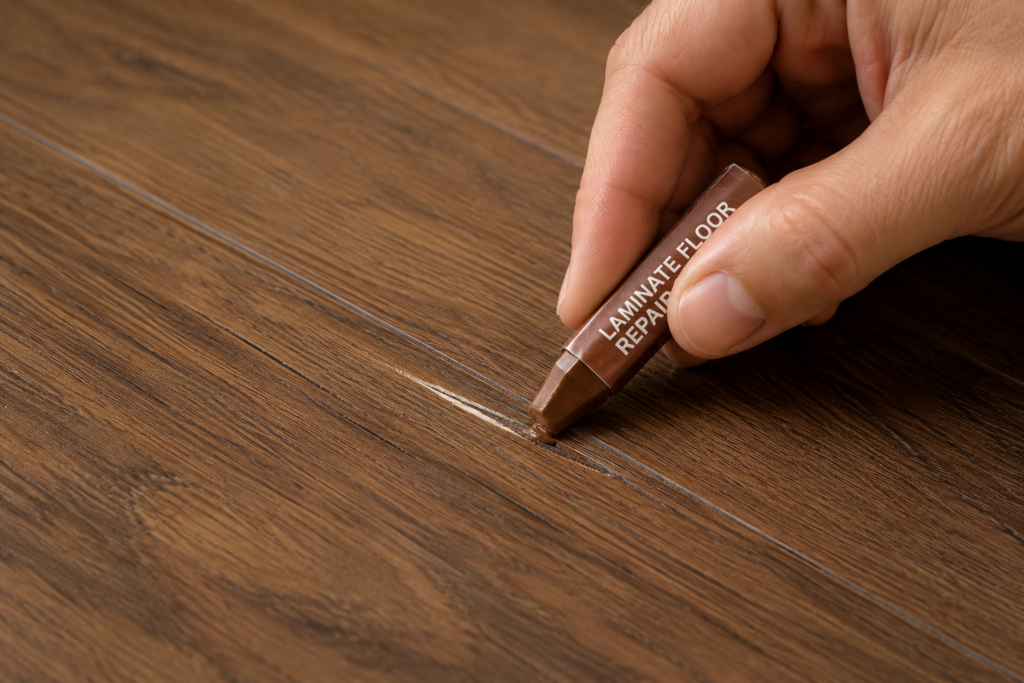
Shallow scratches can often be addressed with laminate floor repair markers or wax fill sticks, which are color-matched to your floor tone. Deep gouges or chips that expose the core typically require plank replacement — which is straightforward on a floating floor.
For prevention, the Flooring Contractors Association recommends felt pads under all furniture legs and placing entry mats at every exterior door to trap grit before it reaches your floor.
6. Water Damage and Staining
Water is laminate’s natural enemy. Beyond swelling, prolonged exposure to water causes discoloration, mold growth underneath the planks, and permanent structural damage to the core.
Common causes:
- Flooding from appliances, pipes, or weather
- Mopping with excessive water
- Pet accidents left unaddressed
- Spills around toilets, sinks, and dishwashers
How to fix it:
Act fast. The EPA notes that mold can begin growing within 24–48 hours of water exposure. Dry the affected area immediately, use fans and a dehumidifier, and assess whether the underlayment has absorbed water — if it has, it must be replaced along with any damaged planks.For future protection, consider waterproof laminate options or transition to luxury vinyl plank (LVP) in high-moisture areas like kitchens and bathrooms.
7. Fading and Discoloration From Sunlight
Laminate floors in rooms with large windows or skylights often develop uneven fading over time. Exposed areas lighten while furniture-covered sections retain the original color, creating a patchwork appearance that’s difficult to reverse.
Common causes:
- Direct UV exposure through windows
- Single-direction sunlight hitting only part of the floor
- Poor-quality laminate with low AC (abrasion class) rating
How to fix it:
Prevention is far easier than repair. Use UV-blocking window film or cellular shades to reduce sun exposure. Rotate area rugs periodically so fading happens evenly. If the discoloration is severe, plank replacement is the only real fix.
Expert Tip: When buying laminate, look for the AC rating system. AC3 and above is suitable for heavy residential use. Higher-rated floors also tend to have better UV resistance built into the wear layer.
8. Improper Installation Failures
Many laminate flooring problems trace back directly to installation errors — and this is one of the most under-discussed topics in the industry.
Common installation mistakes:
- Skipping underlayment (or using the wrong type)
- Not acclimating the flooring before installation
- Cutting planks without a dust mask or proper tools
- Forgetting expansion gaps at doorways, transitions, and heating vents
- Installing over a damp or uneven subfloor
A poorly installed laminate floor will develop problems within months, even if it’s a high-quality product. Always follow the manufacturer’s installation instructions precisely, or hire a certified installer.
Laminate Flooring Problem vs. Luxury Vinyl Plank: A Quick Comparison
If you’re weighing a repair vs. a full replacement, it’s worth knowing how laminate stacks up against its main competitor.
| Feature | Laminate Flooring | Luxury Vinyl Plank (LVP) |
|---|---|---|
| Water resistance | Low–moderate | High (fully waterproof options available) |
| Scratch resistance | Moderate (AC-rated) | High |
| Cost per sq. ft. | $1–$5 installed | $2–$7 installed |
| Repairability | Plank replacement | Plank replacement |
| Lifespan | 15–25 years | 20–25 years |
| Feel underfoot | More natural | Slightly hollow |
Sources: Consumer Reports flooring guide, Floor Critics comparison
Fix Laminate Flooring Problem: DIY or Call a Pro?
Not every laminate flooring problem requires a contractor. Here’s a simple guide:
DIY-friendly repairs:
- Surface scratches (repair markers, wax sticks)
- Minor gaps (humidity control, transition molding adjustment)
- Single squeaky plank (adhesive injection kit)
- Small chips (filler kits)
Call a professional when:
- Multiple planks are buckled or swollen
- Water damage has reached the subfloor or underlayment
- The entire floor is shifting or making widespread noise
- You suspect mold growth beneath the floor
For significant repairs, get at least two quotes from certified flooring contractors. The World Floor Covering Association (WFCA) has a contractor directory that lists certified flooring professionals.
Frequently Asked Questions
1. What is the most common laminate flooring problem?
Moisture damage and swelling is the most frequently reported issue. Because laminate’s HDF core is highly absorbent, water exposure — even minor and repeated — causes planks to swell, warp, and buckle over time.
2. Can you fix laminate flooring without replacing planks?
Yes, for surface-level issues like scratches and minor chips. Repair kits with color-matched markers, wax sticks, and filler compounds work well for cosmetic damage. However, structural problems like swelling or buckling almost always require plank replacement.
3. Why is my laminate floor making a clicking noise when I walk on it?
Clicking usually indicates that planks have separated from the subfloor, the subfloor is uneven, or the click-lock joints weren’t fully engaged during installation. Check for high or low spots in the subfloor and ensure the underlayment is continuous with no gaps.
4. How do laminate floor expansion problems happen?
Laminate expands and contracts with changes in temperature and humidity. If an adequate expansion gap wasn’t left around the room’s perimeter during installation, the floor has nowhere to expand — causing planks to push against each other, peak at seams, or buckle upward.
5. Is laminate flooring worth repairing, or should I replace it?
It depends on the extent of damage. Isolated problems (a few planks, surface scratches) are almost always worth repairing since laminate’s floating floor system makes individual plank replacement relatively easy. Widespread water damage, subfloor issues, or a floor that’s over 20 years old may make full replacement the smarter investment.
Conclusion: Don’t Ignore the Signs
A laminate flooring problem rarely resolves on its own — and most get progressively worse if left unaddressed. The good news is that once you understand what’s causing the issue, the path forward becomes much clearer.
Whether it’s a swollen plank near the dishwasher, a gap that appeared over winter, or a persistent clicking sound that’s driving you up the wall, this guide gives you the knowledge to assess, address, and prevent the most common laminate flooring problems.
Your next step? Walk your floor today and take note of any early warning signs. Catch them now, and you’ll save yourself from a much more expensive repair down the road.
If you’re unsure whether your floor needs a DIY fix or professional help, consult a certified flooring specialist. A 30-minute assessment can save you thousands — and give your floor many more years of life.
Also read: Why Do Wood Floors Creak? Causes, Fixes & Expert Tips

