
You walk into a bedroom and something just feels different. The walls aren’t flat and bare — they have depth, texture, character. There’s a reason high-end hotel rooms and designer homes always seem to have that effortless elegance: bedroom panelling.
It’s one of the most impactful design upgrades you can make without tearing your walls apart. Whether you’re drawn to classic wainscoting, modern fluted panels, or bold geometric shapes, the right wall treatment can completely redefine your space.
In this guide, you’ll learn everything you need to know — from the most popular styles and materials to installation tips, costs, and how to choose the right look for your room.
Let’s get into it.
What Is Bedroom Panelling?
Bedroom panelling refers to any decorative or structural treatment applied to bedroom walls using wood, MDF, PVC, or other materials to create texture, pattern, or architectural interest.
It’s been used in architecture for centuries — from the grand wood-panelled halls of Tudor estates to the sleek fluted walls you see on interior design platforms like Houzz and Architectural Digest today.
Unlike wallpaper, panelling adds genuine dimension to a room. It creates shadows, depth, and a tactile quality that no printed surface can replicate.
Why Bedroom Panelling Is Worth It
Before diving into styles, here’s a quick look at the pros and cons:
| Pros | Cons |
|---|---|
| Adds architectural character | Can be costly for premium materials |
| Hides imperfect walls | Requires some DIY skill or a contractor |
| Increases perceived home value | Darker panels can shrink small rooms |
| Wide range of styles and budgets | Removal can damage drywall underneath |
| Improves insulation and acoustics | Trendy styles may date over time |
According to Remodeling Magazine’s Cost vs. Value Report, interior millwork upgrades consistently rank among the highest-ROI home improvements — and panelling is a significant part of that.
The Most Popular Bedroom Panelling Styles
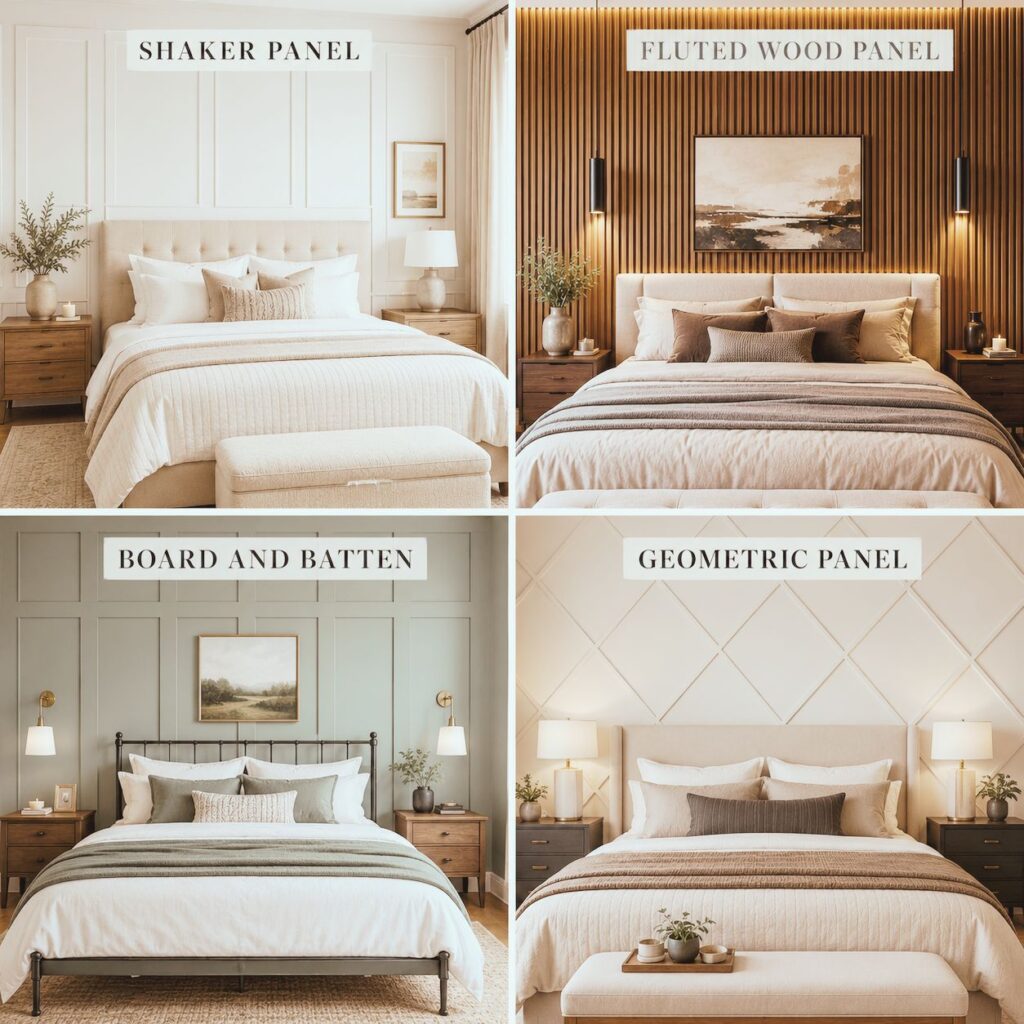
Not all panelling looks the same. Here’s a breakdown of the styles you’ll encounter most — and what kind of bedroom they work best in.
1. Shaker Panel Wainscoting
This is the classic. Shaker-style panelling features flat-centre rectangular panels framed by a raised border, and it’s been a staple of American interior design for decades.
It works beautifully in traditional, farmhouse, or transitional bedrooms. Paint it white for a clean cottage feel, or go navy or forest green for a bold, moody statement.
Best for: Traditional, farmhouse, and transitional bedroom styles.
2. Fluted Wood Panelling
Fluted panels — featuring vertical grooves running the length of the panel — are arguably the hottest bedroom wall trend right now. They have a sculptural, tactile quality that photographs beautifully and looks even better in person.
You’ll see them featured heavily on Pinterest bedroom boards, and interior designers from New York to LA are speccing them for client projects. Natural oak, walnut stain, and painted MDF are the most popular choices.
Best for: Contemporary, Scandinavian, and luxury modern bedrooms.
3. Board and Batten
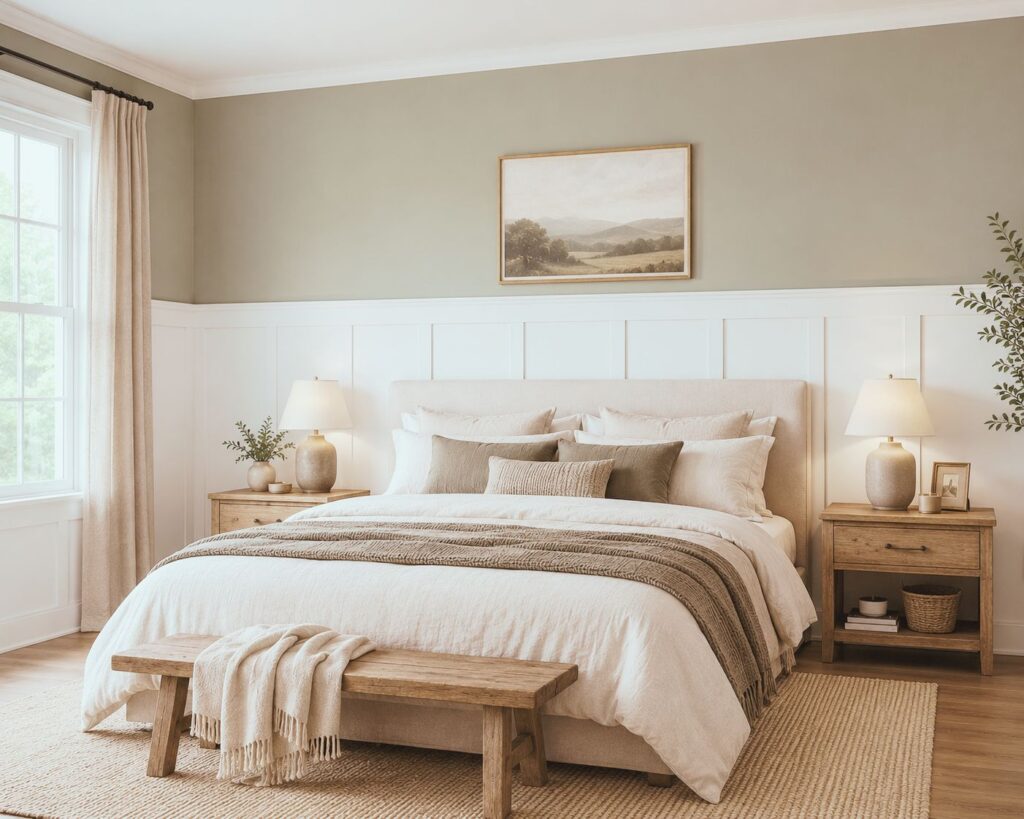
Board and batten is one of the most accessible DIY-friendly panelling styles. It uses wide vertical boards (the “boards”) separated by narrow strips (the “battens”) to create a clean, graphic wall treatment.
The spacing and scale are infinitely adjustable, making it work across a wide range of bedroom sizes and ceiling heights. You can run it full-height or stop it at a chair rail for a half-wall treatment.
Best for: Farmhouse, coastal, and casual-contemporary bedrooms.
Also Read: Laminate Flooring Problem: 8 problems and its Causes, Fixes & Prevention
4. Geometric and Moulding Panels
If you want something more bespoke, geometric panel mouldings — diamonds, hexagons, overlapping rectangles — offer an almost wallpaper-like visual impact without any paper. These are applied directly to the wall using lengths of trim moulding, and the effect can be breathtaking.
The National Kitchen & Bath Association (NKBA) notes that custom millwork details are among the most requested features in high-end bedroom renovations.
Best for: Glamorous, maximalist, Hollywood Regency, or Art Deco-inspired bedrooms.
5. Full-Height Tongue and Groove
This classic panelling method involves interlocking planks that run from floor to ceiling. It originated in utilitarian settings but has had a major design revival — especially in natural pine, white-painted, or limewashed finishes.
When used on all four walls, it creates a warm, cabin-like enveloping quality. On a single feature wall, it reads as clean and contemporary.
Best for: Coastal, Scandinavian, rustic modern, and cabin-style bedrooms.
Bedroom Panelling Ideas for Every Aesthetic
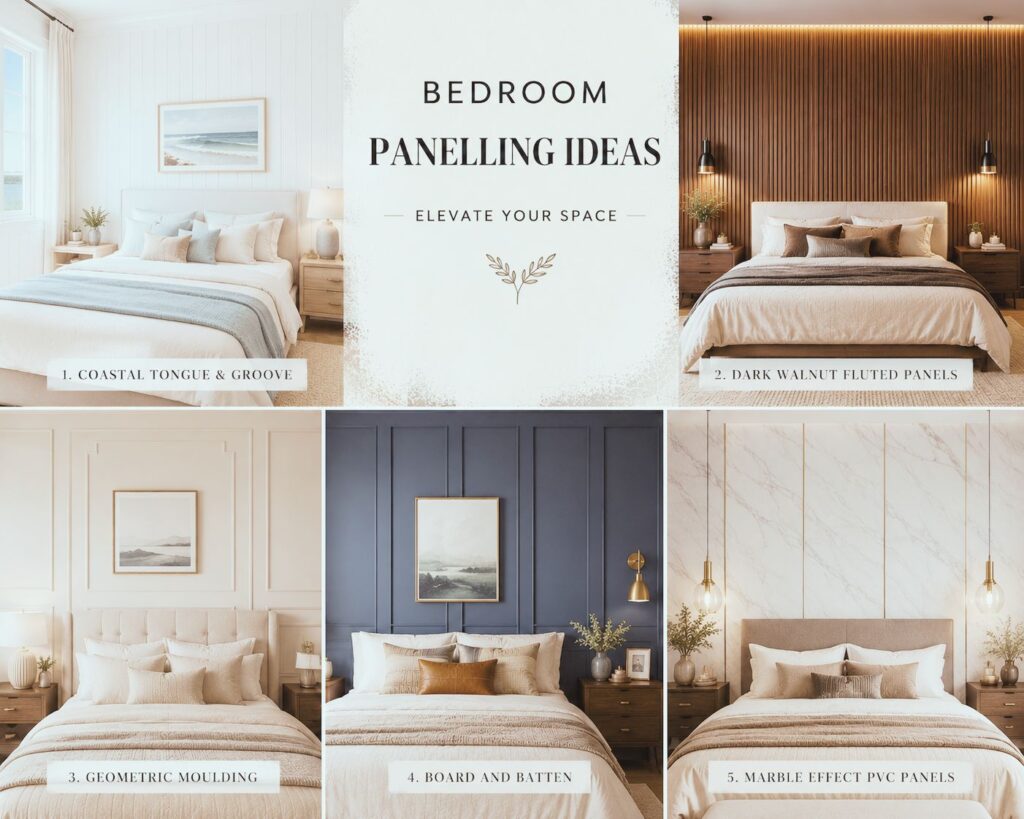
Finding the right panelling style is about matching it to your existing decor — or letting the panelling define the direction you want to go.
Modern Minimalist
Keep it simple: full-height white MDF panels with subtle shadow gaps between boards. No paint contrast, no moulding detail. Just clean vertical lines that add texture without visual noise. Pair with matte black hardware and a low-profile platform bed.
Maximalist Glam
Go dark and dramatic. Deep charcoal or midnight blue fluted walnut panels, floor-to-ceiling, with a large upholstered headboard set against them. Add brass sconces and a statement chandelier. This is a bedroom that makes a statement.
Rustic Farmhouse
Whitewashed board and batten, half-wall height, with a running chair rail in natural wood. Simple, cozy, and timeless. Add reclaimed wood shelving and linen curtains to complete the look.
Pale oak tongue and groove with wide planks. No paint — let the natural grain do the work. Keep the rest of the room minimal: concrete lamps, a wool throw, and a simple bed frame. Design publications like Dezeen consistently feature this style in contemporary Nordic interiors.
Panelling Behind the Bed: The Feature Wall Approach
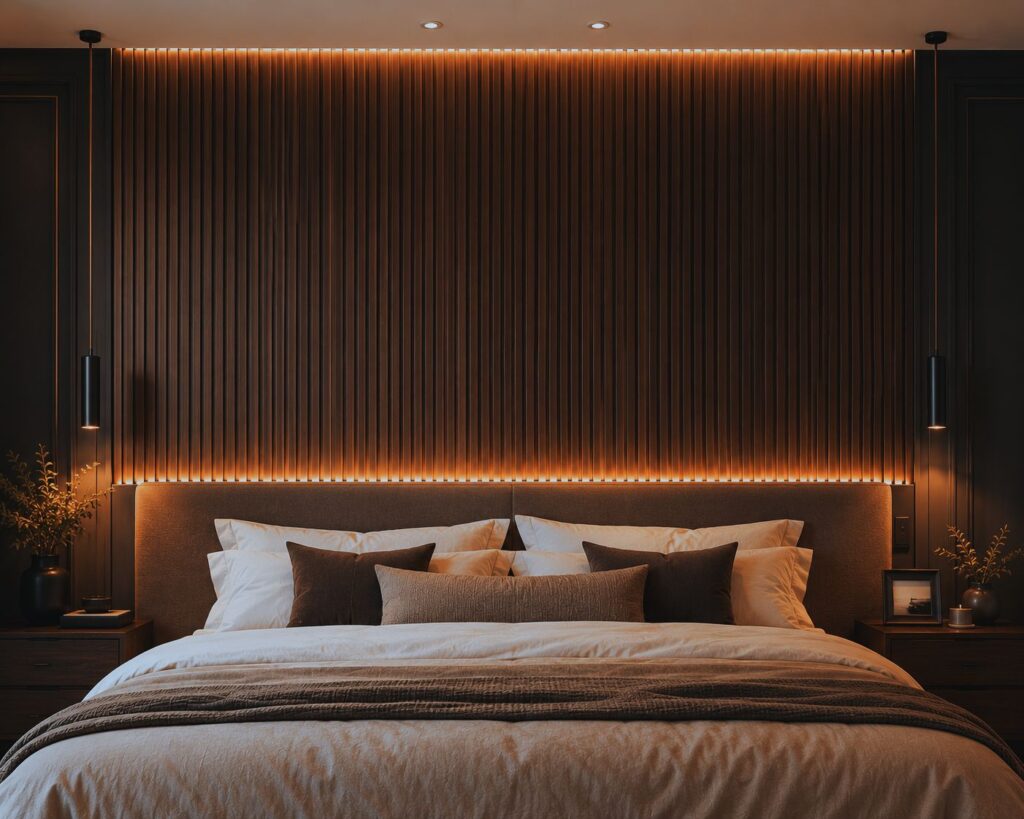
If a full-room panelling project feels overwhelming, start where it matters most: directly behind the bed.
Panelling behind the bed is the single most impactful use of wall panelling in a bedroom. It acts as a built-in headboard, a design anchor, and a focal point all in one.
Here’s what makes it work:
- Scale matters. The panelled section should be at least as wide as the bed — ideally extending 12–18 inches on either side.
- Height is flexible. You can take it floor-to-ceiling for drama, or cap it at around 60–72 inches for a more contained, headboard-like effect.
- Lighting elevates everything. Integrated LED strip lighting at the base or top of the panels, or wall sconces mounted directly onto the panelling, creates a hotel-like ambiance.
- Color contrast sells it. A panelled accent wall in a contrasting color — navy behind a neutral room, or white panelling in a dark room — dramatically increases visual impact.
According to interior designers interviewed by House Beautiful, a well-executed feature wall behind the bed is one of the fastest ways to make a bedroom feel “designed” rather than simply decorated.
Wall Panelling Ideas: Room-by-Room Considerations
Small Bedrooms
In smaller rooms, go vertical. Tall, narrow panels draw the eye upward and make ceilings feel higher. Stick to light colors — white, cream, soft greige — to prevent the room from feeling closed in. Avoid bold horizontal banding, which visually shortens walls.
Large or Open-Plan Bedrooms
Larger rooms can handle more visual complexity. Full-room panelling, multiple wall treatments, or dark bold colors all work here. You can even use panelling to define zones within a large bedroom — a panelled reading nook, for example, or a panelled dressing area.
Low-Ceiling Bedrooms
Avoid heavy horizontal elements like thick chair rails or wide wainscoating. Instead, use full-height vertical panelling to elongate the room visually. Painted the same color as the ceiling, vertical panels can make a low ceiling almost disappear.
Bedroom Panelling Materials: What to Know Before You Buy
The material you choose affects not just the look, but the durability, installation complexity, and cost.
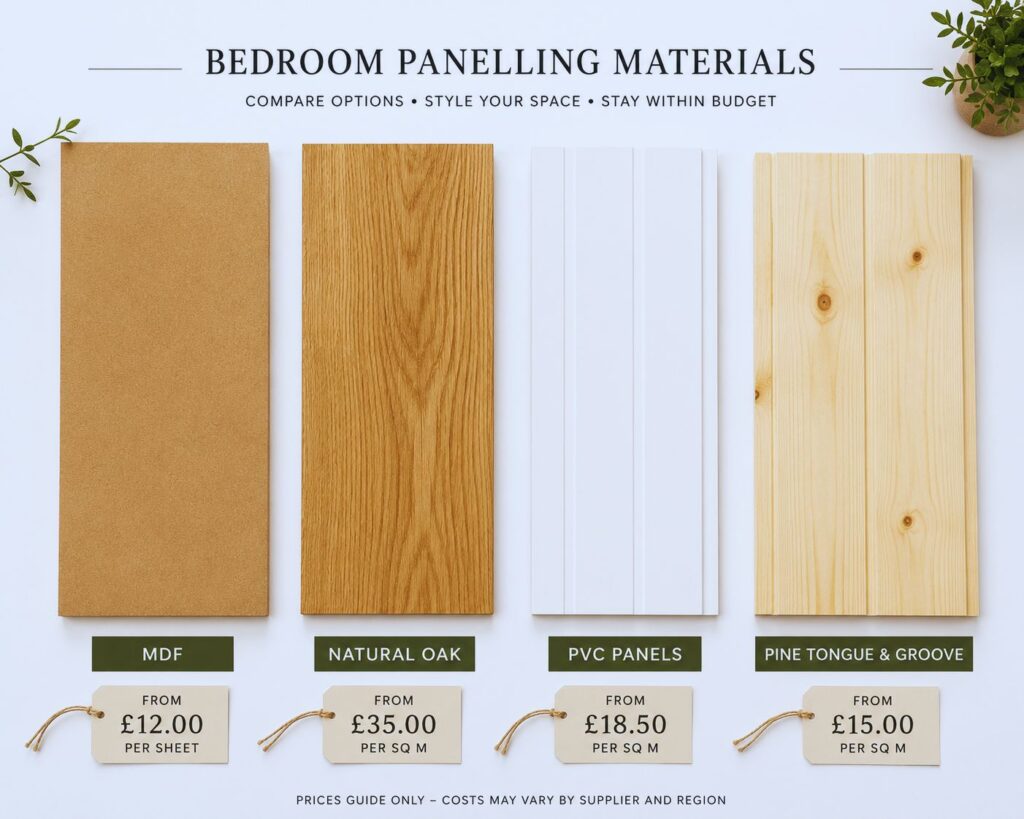
| Material | Best For | Avg. Cost (per sq ft) | DIY-Friendly? |
|---|---|---|---|
| MDF | Painted styles, all climates | $1.50–$3.50 | Yes |
| Solid Wood | Natural finishes, premium look | $4–$12+ | Moderate |
| Plywood | Modern / rustic styles | $2–$5 | Yes |
| PVC / Composite | Moisture-prone areas | $1–$4 | Yes |
| Reclaimed Wood | Rustic, farmhouse styles | $5–$15 | Moderate |
MDF (Medium-Density Fibreboard) is the go-to for most painted panelling projects. It’s smooth, consistent, holds paint beautifully, and is significantly cheaper than solid wood. The Engineered Wood Association provides technical guides for working with MDF and other composite panels.
Solid wood offers unmatched warmth and natural variation, but it’s more expensive and requires more careful installation to account for expansion and contraction.
PVC and composite panels are worth considering if your bedroom has any humidity concerns — they won’t warp, swell, or crack.
How to Install Bedroom Panelling: A Beginner’s Overview
You don’t have to be a professional carpenter to install bedroom panelling. Many homeowners tackle board and batten, shaker panels, and even fluted MDF with basic tools and a weekend.
Here’s a simplified overview of the process:
- Plan and measure. Calculate square footage, decide on panel spacing, and sketch your layout. This Old House has detailed step-by-step guides for popular panelling styles.
- Purchase materials. Buy 10–15% extra to account for waste and mistakes.
- Prepare the wall. Fill any holes, sand smooth, and apply a primer if painting later.
- Mark your lines. Use a level to mark stud locations and panel positions.
- Cut and attach panels. Use construction adhesive and finish nails. A brad nailer makes this significantly faster.
- Fill nail holes and caulk gaps. Caulk is what separates a professional finish from an amateur one — take your time here.
- Paint or finish. Apply two coats of your chosen finish, sanding lightly between coats.
For more complex styles — geometric moulding, fluted panels, or full tongue-and-groove installations — consider consulting a professional for at least the layout and first section.
Expert Tips for Bedroom Panelling
These are the details that separate good panelling from great panelling:
- Always caulk. Every seam, every corner, every joint. The caulk is what gives panelling its crisp, built-in look.
- Match the sheen to the style. Flat or eggshell paint reads as casual and modern; semi-gloss reads as more traditional and formal.
- Use a consistent reveal. In board and batten, the spacing between battens should be mathematically consistent — measure and mark carefully before you commit.
- Prime MDF edges. MDF soaks up paint aggressively at cut edges. Apply a dedicated MDF primer or multiple coats of regular primer before painting.
- Consider integrated lighting early. If you want sconces or LED strips incorporated into the panelling, plan the wiring before you install. Retrofitting electrical is far more disruptive.
- Sample colors on the actual panels. Paint reads differently on textured, dimensional surfaces than it does on flat swatches.
Frequently Asked Questions About Bedroom Panelling
1. Is bedroom panelling expensive?
It depends heavily on the material and whether you DIY or hire out. A basic board-and-batten feature wall using MDF can cost as little as $150–$400 in materials for a standard bedroom wall. Full-room solid wood panelling can run $3,000–$10,000+ professionally installed. Most homeowners land somewhere in the middle with a painted MDF accent wall.
2. Can I install bedroom panelling myself?
Yes — many styles are genuinely beginner-friendly. Board and batten, shaker wainscoting, and basic moulding panels are all achievable DIY projects with basic tools (a miter saw, brad nailer, level, and caulk gun). More intricate geometric patterns or full tongue-and-groove installations may benefit from professional help.
3. What’s the best panelling for a bedroom feature wall?
Fluted wood or MDF panels are currently the most popular choice for bedroom feature walls due to their sculptural quality and versatility. For a more classic look, shaker-style wainscoting behind the bed creates a timeless, built-in headboard effect. Ultimately, the “best” choice depends on your room’s existing style.
4. Does bedroom panelling add value to a home?
Interior millwork and architectural details are consistently cited by real estate professionals as value-adding features. While panelling itself is difficult to isolate in market data, well-executed interior design upgrades — including panelling — contribute to a home’s perceived quality and desirability. According to Zillow’s Consumer Housing Trends Report, design-forward interiors sell faster and at higher prices.
5. What paint colors work best with bedroom panelling?
White and off-white remain the most universally flattering, particularly for traditional or farmhouse styles. Deeper tones — navy, forest green, charcoal, terracotta — are highly popular for contemporary and maximalist bedrooms, especially for feature walls. For a sophisticated, layered look, paint the panels the same color as the walls but in a different sheen (e.g., walls in flat, panels in satin).
Conclusion: Your Bedroom Deserves Better Walls
Bedroom panelling isn’t just a design trend — it’s a design upgrade that stands the test of time. Whether you’re adding a simple board-and-batten feature wall behind your bed or committing to floor-to-ceiling fluted panels on every wall, the impact is immediate and lasting.
The best part? You don’t need a huge budget or a professional crew to get started. Many homeowners begin with a single panelled accent wall behind the bed — a weekend project that transforms the entire feel of the room.
