
Candles make any space feel magical — until one tips over, drips onto your favorite table cloth, or leaves a stubborn puddle on your hardwood floor.
If you’ve ever stared at a dried wax stain wondering where to even start, you’re not alone. The good news? Candle wax is one of the most removable household messes once you know the right technique.
This guide covers everything — from frozen wax to fabric stains to delicate wood surfaces and how to remove candle wax. No expensive products needed. Most solutions are already in your home.
Why Wax Removal Method Matters
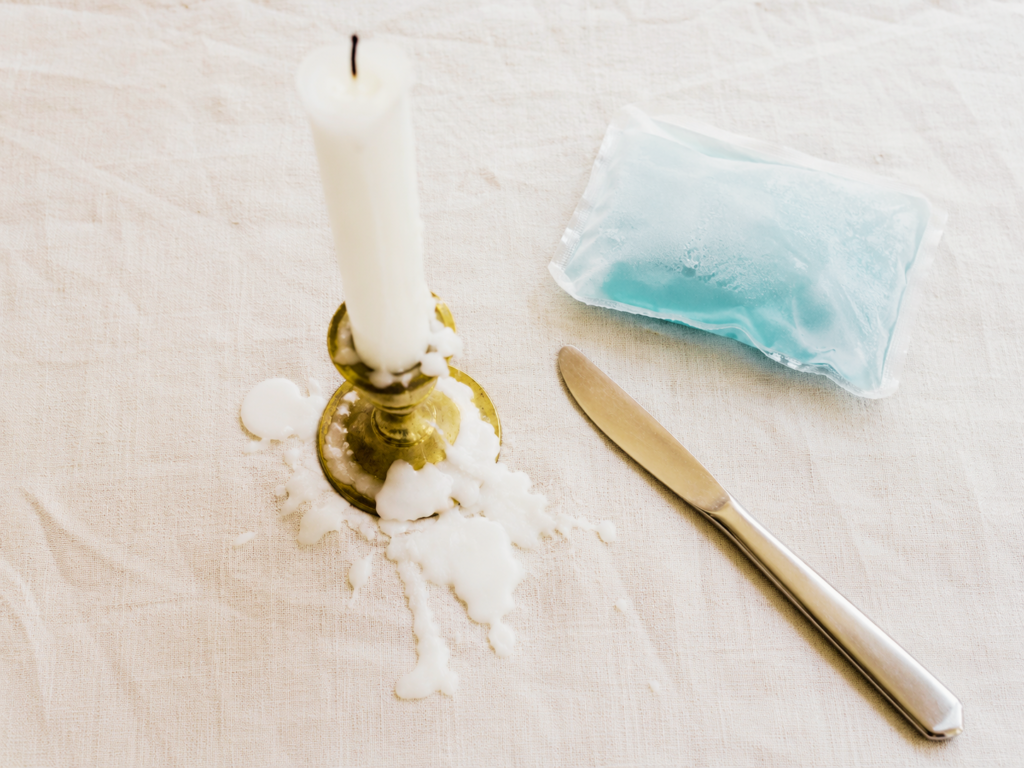
Not all wax is the same, and not all surfaces react the same way.
Paraffin wax, the most common type used in candles, is petroleum-based and has a melting point between 120°F and 160°F. That means heat softens it and cold hardens it — and both properties are tools you can use when removing it.
Soy wax has a lower melting point and tends to be easier to clean up. Beeswax is denser and stickier, sometimes requiring more effort.
The surface underneath matters just as much. Porous materials like fabric and carpet absorb wax differently than non-porous ones like glass or tile. Matching your removal method to both the wax type AND the surface is the key to getting a clean result without damage.
The Golden Rule: Freeze First or Heat Second
Before you try anything else, remember this:
- Freeze the wax to make it brittle, then chip it off
- Heat the wax to re-melt it, then absorb or wipe it away
These two approaches cover almost every scenario. The right one depends on the surface. Delicate fabrics often respond better to freezing; hard non-porous surfaces often respond better to careful reheating.
Never scrub wax while it’s still soft and warm — that just pushes it deeper into fibers or scratches surfaces.
How to Remove Candle Wax from Fabric and Clothing
This is probably the most common problem — and the most forgiving to fix.
Step-by-Step Method
- Let the wax harden completely. Don’t touch it while it’s warm.
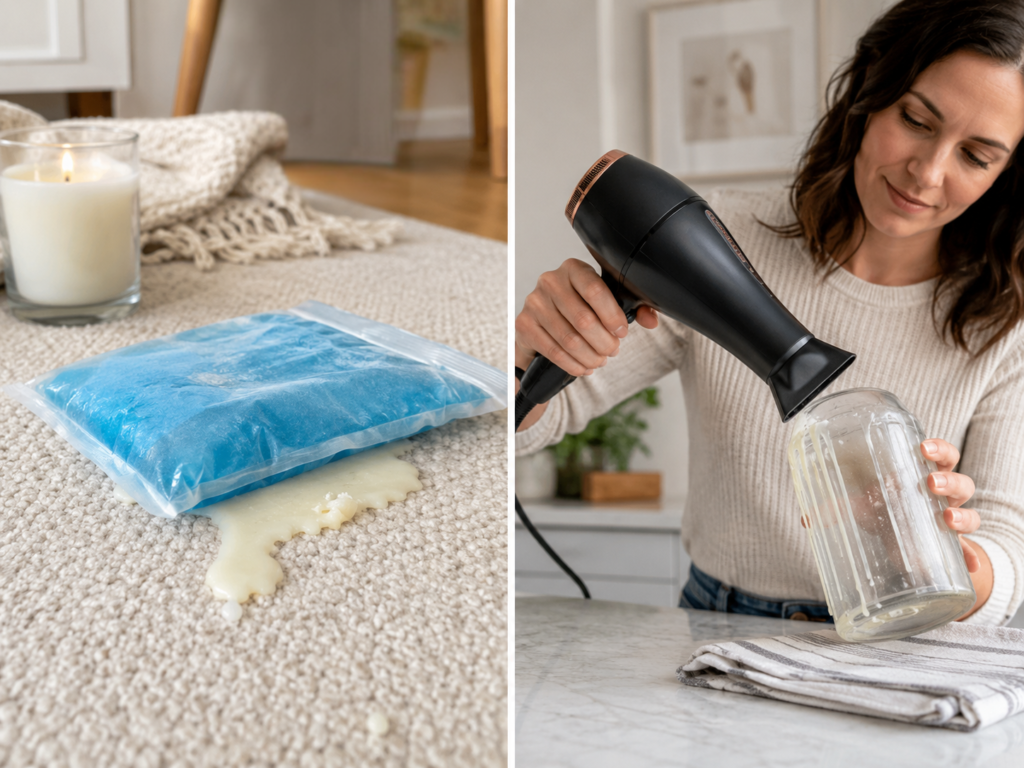
- Place the fabric in a plastic bag and freeze for 30–60 minutes, or press an ice pack directly over the wax.
- Flex the fabric gently to crack the hardened wax, then use a dull knife or spoon to flake it off.
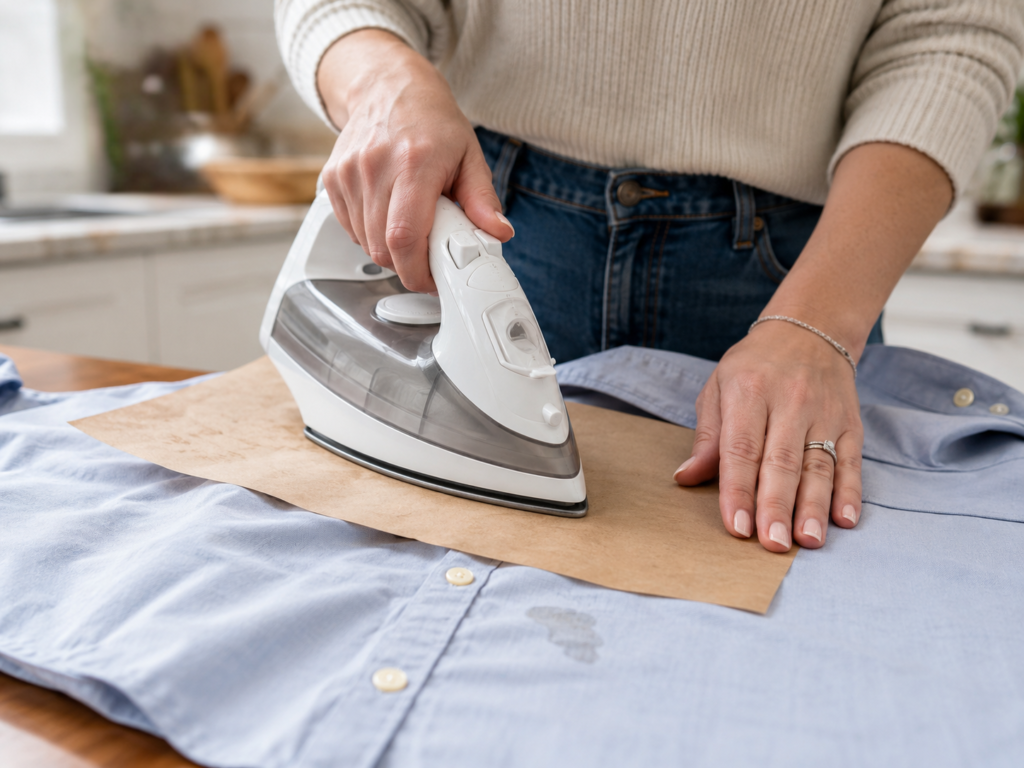
- Lay the stained area between two sheets of paper towels or brown paper bags.
- Run a warm iron (no steam) over the paper. The heat will re-melt the remaining wax, and the paper absorbs it. Move to a clean area of paper as it soaks through.
- Treat the remaining oil stain with a small amount of dish soap or a pre-wash stain remover like Zout or Carbona Stain Devils.
- Wash as normal according to the fabric’s care label.
💡 Expert Tip: If you’re dealing with colored wax that has left a dye stain, apply rubbing alcohol to the spot before washing. This helps lift pigment that the iron method alone won’t remove.
What NOT to Do with Fabric
- Don’t rub the wax — this spreads it and works it deeper into fibers
- Don’t use boiling water directly — it can set some dyes or shrink fabric
- Don’t skip the stain treatment step — wax always leaves a faint oily ring if you skip it
Also Read: How to Clean Shower Tiles- 6 Steps
How to Remove Candle Wax from Carpet
Carpet is trickier because wax can seep between fibers and bond firmly once hardened. But the process is very similar to fabric — with a few adjustments.
The Freeze-and-Iron Method for Carpet
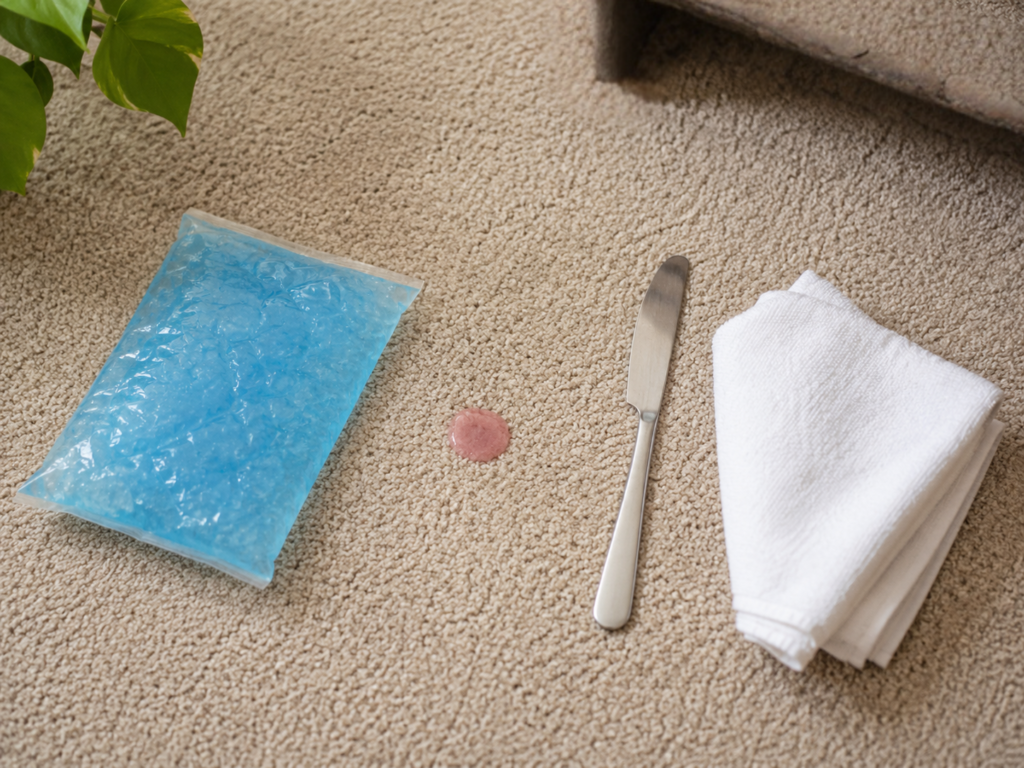
- Harden the wax using an ice pack or frozen zip-lock bag placed directly on the spill. Wait 10–15 minutes.
- Scrape off as much solid wax as possible using a dull butter knife or credit card. Work from the outside edge inward to avoid spreading.
- Vacuum up the loose chips.
- Place a clean white cloth or paper towels over the remaining residue.
- Press a warm iron on low heat over the cloth. The wax will transfer from the carpet fibers to the cloth. Keep moving to a clean section of cloth as needed.
- Apply a carpet cleaner such as Folex Instant Carpet Spot Remover to treat any lingering oil stain or dye residue.
- Blot — never scrub — and let dry.
According to Good Housekeeping’s cleaning experts, the iron method works on most carpet types, but you should always test on a hidden area first, especially for delicate or antique rugs.
⚠️ Caution: Don’t use a high heat setting on the iron over carpet — synthetic fibers like nylon can melt. Use the lowest effective setting.
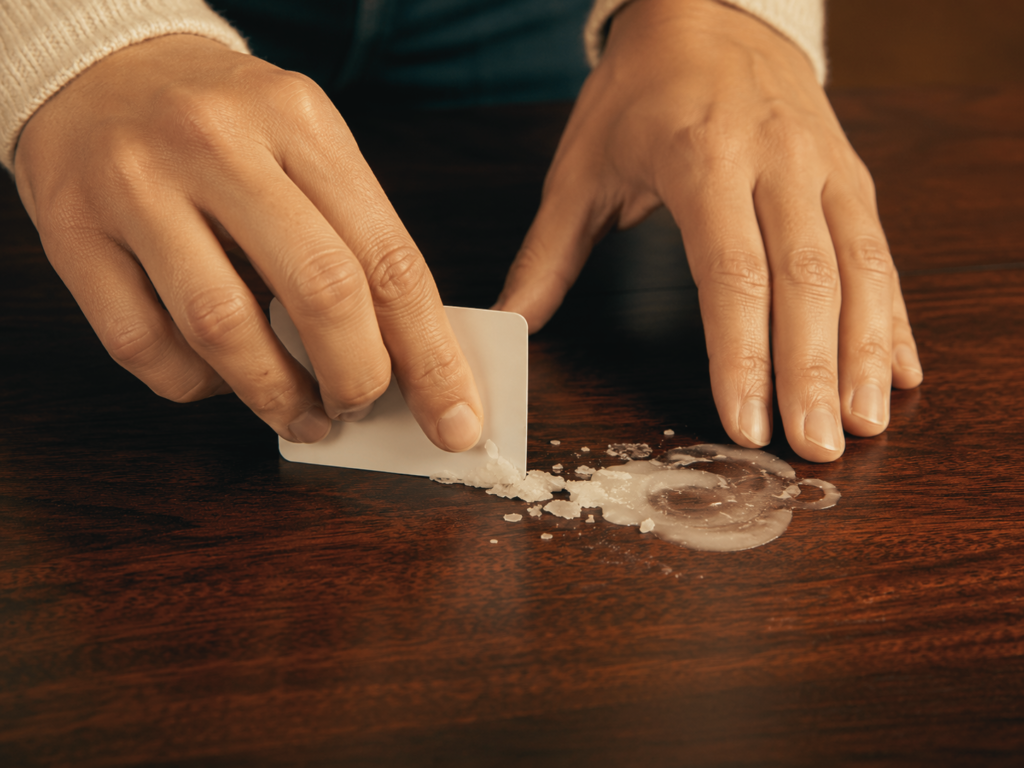
How to Remove Candle Wax from Wood
Wood is beautiful but sensitive — especially if it’s polished, stained, or sealed with a finish. The goal here is to remove the wax without scratching the wood grain or dulling the finish.
Method 1: The Gentle Freeze Approach
- Place a zip-lock bag filled with ice over the wax for 5–10 minutes
- Use a plastic scraper (a credit card works great) to carefully lift the hardened wax
- Work slowly with the grain of the wood
- Wipe residue with a cloth barely dampened with white vinegar or a wood-safe cleaner
Method 2: Hair Dryer Technique
- Set a hair dryer on low heat
- Hold it 4–6 inches from the wax and move it slowly back and forth
- As the wax softens, blot it up immediately with a paper towel
- Don’t let it re-harden in a smeared state — keep blotting as you go
- Finish with a wood polish like Howard Feed-N-Wax to restore shine
💡 Expert Tip: For antique or high-gloss wood finishes, always opt for the freeze method over heat. Heat can cause wood to absorb moisture unevenly and may cloud a lacquered finish.
How to Remove Candle Wax from Glass
Glass is actually one of the easiest surfaces — wax doesn’t bond chemically to non-porous surfaces.
Quick Method
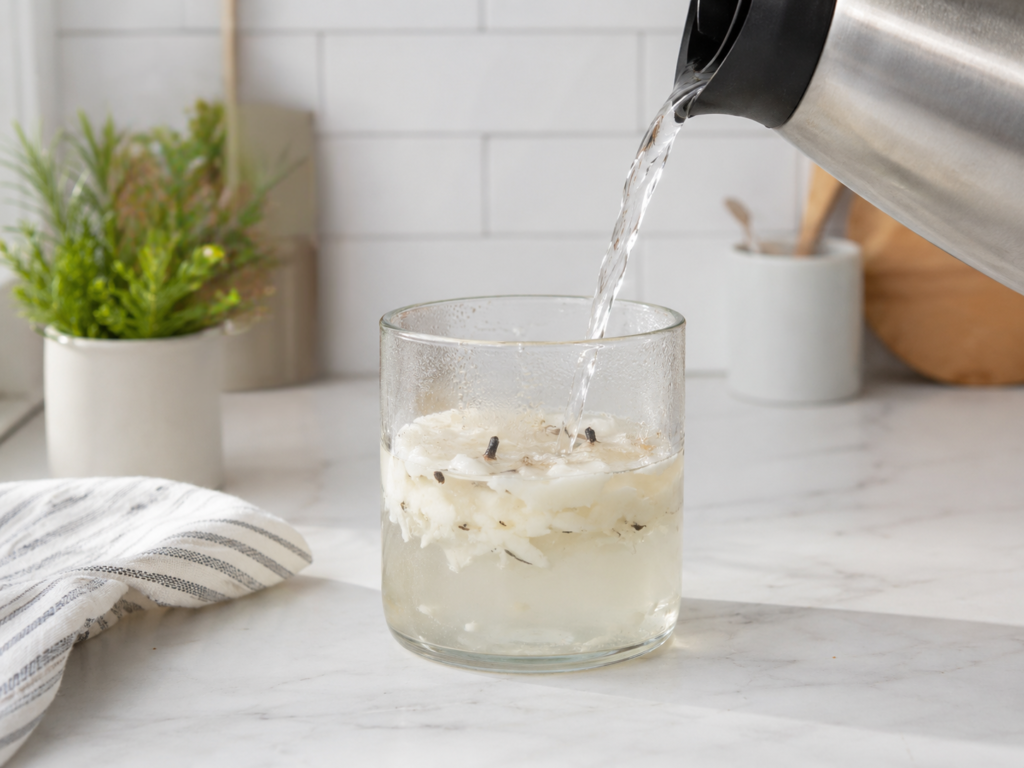
- Pour boiling water into or over the glass container
- The wax will melt and float to the surface
- Let cool slightly, then skim or pour off the liquid wax
- Wipe clean with dish soap and a sponge
For Candle Holders with Stubborn Residue
- Place the glass item in the freezer for 30–60 minutes
- The wax will shrink and pop away cleanly from the sides
- Use a butter knife to gently lever out the hardened disk of wax
This works great for rescuing candle jars — clean them out and you’ve got a nice storage container or vase.
How to Remove Candle Wax from Walls
Candle soot and wax drips on painted walls require a gentler approach to avoid damaging the paint.
- Freeze the wax with an ice pack until fully hardened
- Peel or gently scrape with a plastic scraper or the edge of a credit card
- For any remaining residue, apply a small amount of rubbing alcohol on a cotton ball and dab gently
- Wipe clean with warm soapy water and dry immediately
Avoid anything abrasive — rough sponges or steel wool will scratch paint and leave marks that are harder to fix than the original wax stain.
Also Read: Morning Glories: Everything You Need to Know to Grow Them Successfully
How to Remove Candle Wax from a Tablecloth
Tablecloths get the worst of candle drips — especially during dinner parties. The good news is linen and cotton respond well to the iron method covered in the fabric section.
For a formal or dry-clean-only tablecloth, skip DIY treatment entirely. Take it to a professional cleaner and point out the wax stain — they have solvents that can break down wax without damaging delicate fibers. The Dry Cleaning & Laundry Institute recommends never applying heat to a garment or textile you’re unsure about.
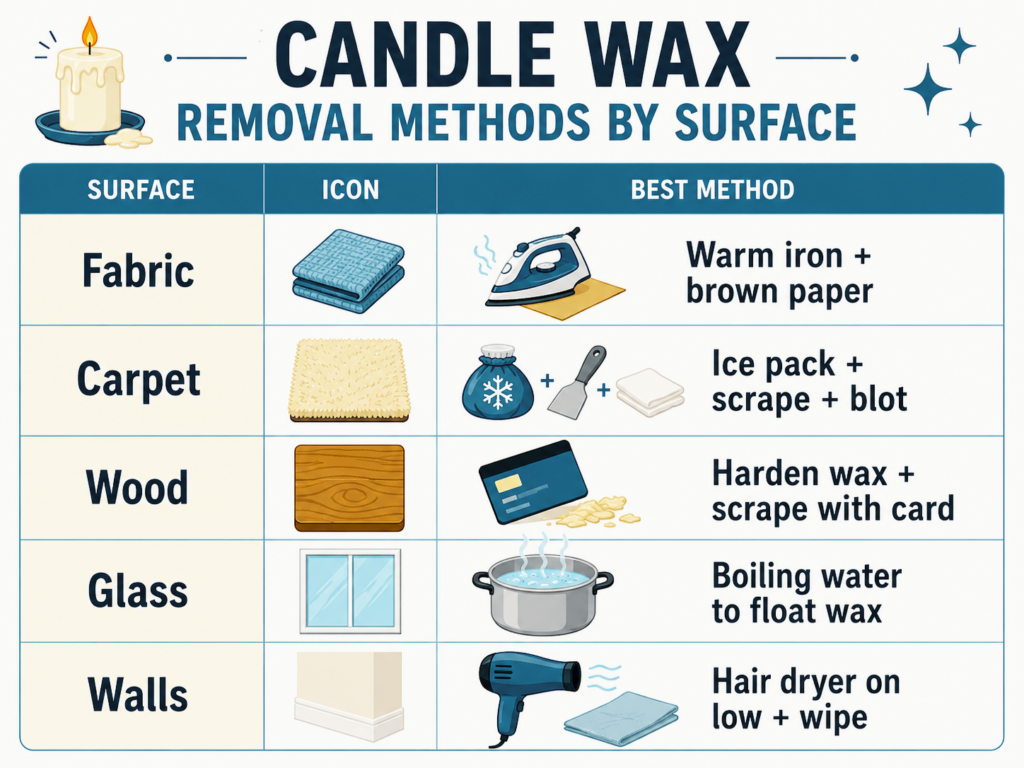
Quick Reference: Wax Removal by Surface
| Surface | Best Method | Avoid |
|---|---|---|
| Fabric / Clothing | Freeze + iron + stain remover | Rubbing while warm |
| Carpet | Freeze + iron + carpet cleaner | High heat, scrubbing |
| Hardwood Floor | Freeze + plastic scraper + wood polish | Metal scrapers, heat on antique finishes |
| Glass / Candle Jars | Boiling water or freezer | Abrasive scrubbers |
| Painted Walls | Freeze + plastic scraper + rubbing alcohol | Abrasive sponges |
| Leather | Freeze + leather conditioner | Heat, alcohol |
| Upholstery | Freeze + iron + upholstery cleaner | High heat |
Products That Actually Help
You don’t need anything fancy, but a few affordable products make the process noticeably easier:
- Goo Gone — Excellent for removing oily wax residue from hard surfaces and floors
- Carbona Stain Devils #4 — Specifically formulated for wax and grease on fabric
- Folex Carpet Spot Remover — Water-based, safe for most carpet types, works on the oily residue left after wax removal
- Howard Feed-N-Wax — To restore and protect wood after wax removal
- Rubbing alcohol (isopropyl 70%+) — Available at any pharmacy; lifts pigment dye from colored candle wax
Most of these cost under $10 and are available at grocery stores, hardware stores, or online.
Expert Tips for Preventing Wax Drips
The easiest cleanup is the one you never have to do. Here are a few habits that professional home stylists and candle enthusiasts swear by:
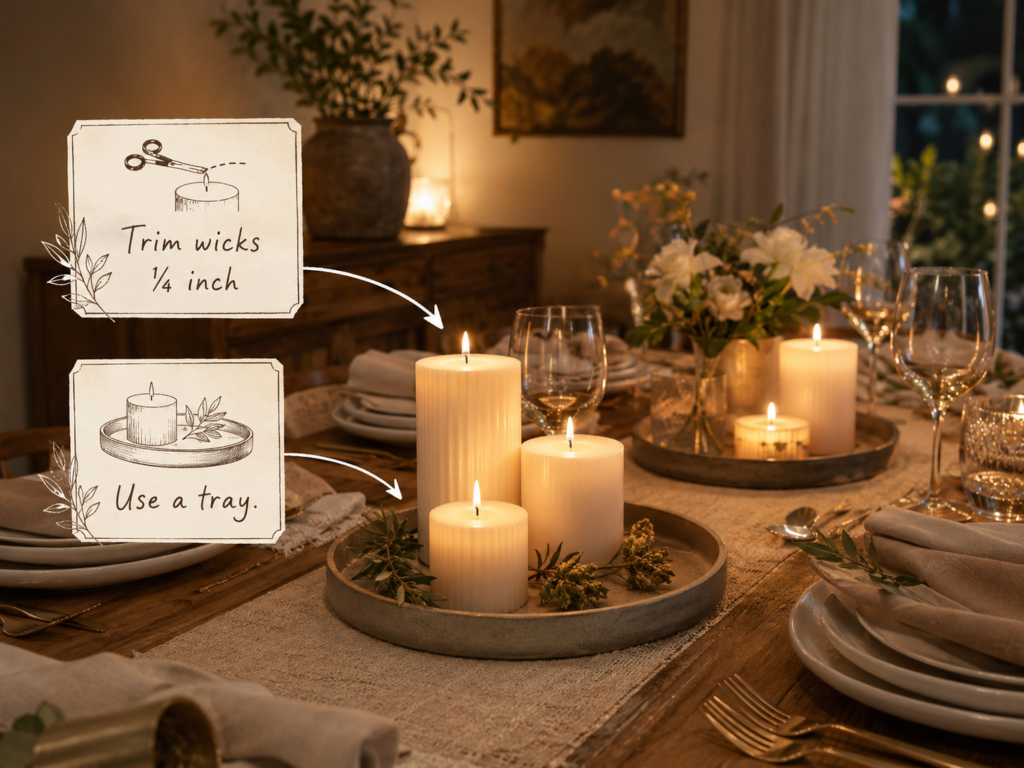
- Use candle trays or holders — A simple glass plate or purpose-made tray catches drips before they hit your table. Brands like Pottery Barn and even dollar stores carry affordable options.
- Trim wicks to ¼ inch before every burn — According to the National Candle Association, a properly trimmed wick reduces dripping and uneven burning significantly.
- Avoid burning candles in drafty areas — Wind causes uneven burning and excessive dripping. Keep candles away from fans, vents, and open windows.
- Never move a candle while burning — Hot liquid wax sloshes and spills easily. Let it cool and re-harden before relocating.
- Use “dripless” candles for candlestick holders — These are made with a higher melt point and specifically designed to minimize drips during normal use.
FAQs: How to Remove Candle Wax
1. Does vinegar remove candle wax?
White vinegar can help remove the oily residue left after wax has been removed from hard surfaces like glass or sealed wood. However, it shouldn’t be used on fabric, as it won’t dissolve wax on its own. Use it as a follow-up cleaner after the main wax has been scraped or ironed away.
2. Can I use a hair dryer to remove candle wax from carpet?
Yes, but with caution. Use the lowest heat setting and keep the dryer moving continuously. Place a white cloth over the softening wax and let it absorb the melted wax. The risk is that high heat can mat synthetic carpet fibers or push the wax further in. The iron-and-paper-towel method is generally more controlled.
3. How do I remove candle wax from a couch or upholstered furniture?
Freeze the wax with an ice pack, then gently break and peel away the solid pieces. Use a warm iron (on low) with a clean white cloth between the iron and the upholstery to draw out the remaining residue. Follow up with an upholstery cleaner or a small amount of dish soap diluted in water. Always blot — never scrub.
4. What removes candle wax from hardwood floors without damaging them?
The safest approach is to freeze the wax first, then use a plastic scraper (never metal) to lift it off. For residue, a cloth slightly dampened with mineral spirits works well on sealed hardwood without dulling the finish. Always follow up with a wood conditioner or polish. Avoid steam mops — heat and moisture can warp hardwood.
5. Will candle wax stain permanently?
In most cases, no — candle wax stains are not permanent if treated correctly. The exception is heavily pigmented colored candle wax that has been left for a long time on a light-colored porous material like raw wood or unsealed stone. Acting quickly and using the right method keeps permanent staining from happening.
Conclusion: Clean Wax, Clean Home
Candle wax spills feel like a disaster in the moment — but they really are one of the more fixable household messes. Armed with the right technique for your surface, a bit of patience, and items you already have at home, you can get virtually any surface back to looking spotless.
The core principles are simple: freeze to harden, scrape gently, then treat any residue. Or melt carefully and absorb immediately. Match the method to the material, work slowly, and you’ll be fine.
Bookmark this guide so you’re ready the next time a candle drips. And consider sharing it with a friend who just discovered a wax surprise on their favorite tablecloth.
Have a surface or situation not covered here? Drop a comment below — we love finding solutions to unusual wax problems.

