
There’s something almost magical about morning glories.
You step outside just after sunrise, and there they are — wide, trumpet-shaped blooms in vivid purple, blue, pink, or white, unfurled toward the light like tiny satellite dishes chasing the sun. By afternoon, they’ve quietly closed again. And tomorrow morning, the whole show starts over.
It’s no wonder morning glories have been a garden favorite for centuries. They’re fast-growing, dramatically beautiful, and surprisingly forgiving for beginner gardeners.
But they also come with questions. Do morning glories come back every year? Are they perennials or annuals? How do you actually plant them for the best results?
This guide answers all of it — from seed to bloom — so you can grow morning glories with confidence.
What Are Morning Glories?
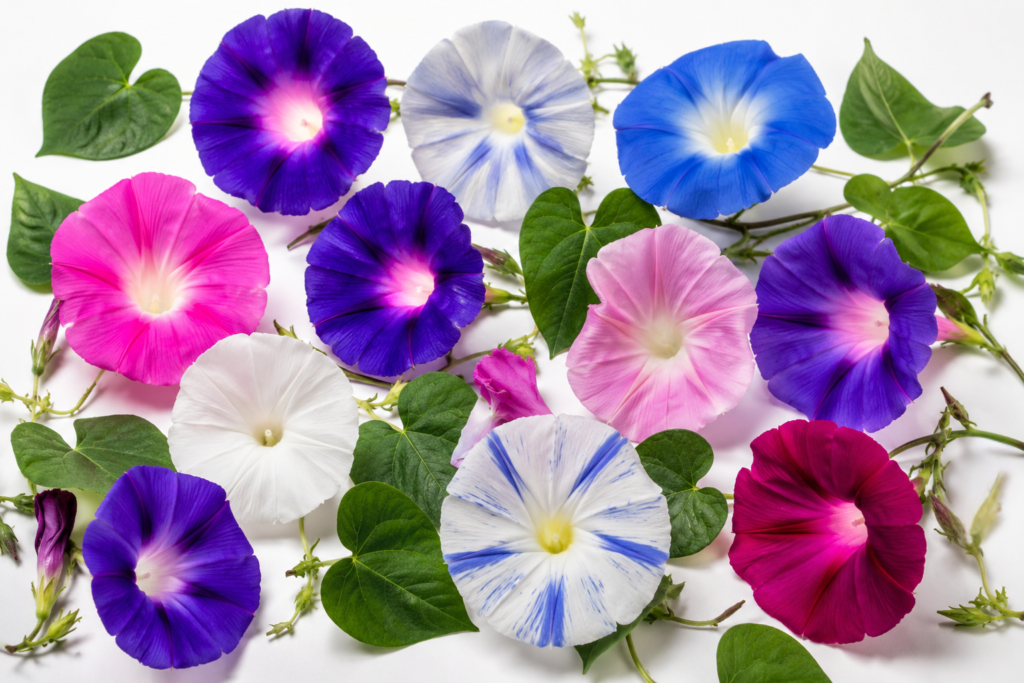
Morning glories belong to the genus Ipomoea, part of the Convolvulaceae family — the same plant family as sweet potatoes and bindweed. There are over 1,000 species in the Ipomoea genus, but the varieties most commonly grown in home gardens come from Ipomoea purpurea, Ipomoea tricolor, and Ipomoea nil.
The name comes from their behavior: the flowers open in the morning and close by midday or early afternoon, especially in heat or direct sun.
They’re beloved for their:
- Speed — from seed to bloom in as little as 60–90 days
- Vertical coverage — vines easily reach 6–15 feet in a single season
- Variety — hundreds of cultivars in a range of colors, from deep indigo to pure white
- Wildlife value — flowers attract hummingbirds, bees, and butterflies
Popular cultivars include ‘Heavenly Blue’ (classic sky blue), ‘Grandpa Ott’ (deep purple with a red star), ‘Scarlett O’Hara’ (rich crimson), and ‘Pearly Gates’ (pure white).
Are Morning Glories Perennials or Annuals?

This is one of the most searched questions about morning glories — and the answer has a small but important nuance.
In most climates, morning glories are grown as annuals. They complete their full life cycle — germinate, grow, bloom, set seed, and die — within a single growing season. Once frost hits, the plant dies back completely.
However, in frost-free climates (USDA Hardiness Zones 10–11), morning glories can behave as short-lived perennials, returning from their roots year after year.
Do Morning Glories Come Back Every Year?
Not from the roots — but they do come back from self-seeding.
Morning glories are prolific seed producers. If you let the seed pods dry on the vine at the end of the season, they drop seeds into the soil that overwinter naturally and sprout the following spring. In many gardens, this creates the impression that morning glories are perennial — they seem to return reliably — but it’s actually new plants growing from last year’s dropped seeds.
This self-seeding habit can be a blessing or a minor nuisance depending on how tidy you like your garden. In some regions, Ipomoea purpurea is considered mildly invasive due to this aggressive re-seeding. The USDA PLANTS Database lists several Ipomoea species with invasive potential in certain states, so it’s worth checking local guidelines.
Expert Tip: If you want to control self-seeding, deadhead spent flowers before the seed pods form. Collect and store seeds in a paper envelope in a cool, dry place for intentional planting next spring.
How to Plant Morning Glories: Step-by-Step
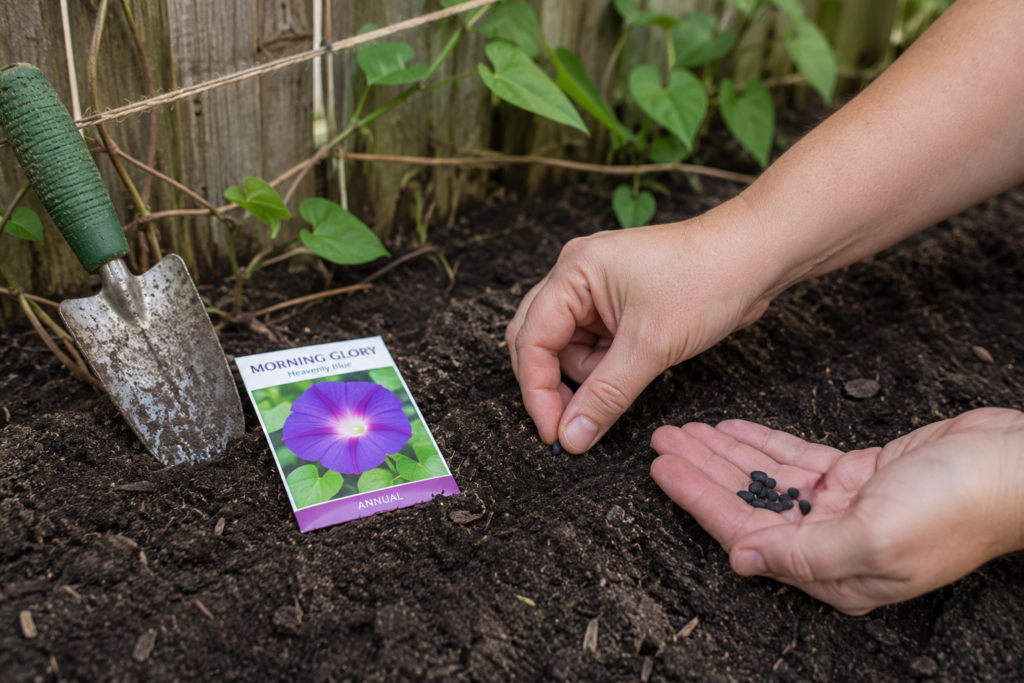
Morning glories are one of the easiest flowering vines to grow from seed — but there are a few tricks that dramatically improve germination rates and early growth.
When to Plant
Sow seeds outdoors after the last frost date, when soil temperatures have reached at least 64°F (18°C). Morning glory seeds planted in cold soil germinate poorly and rot easily.
If you want to get a head start, you can start seeds indoors 4–6 weeks before your last frost — but morning glories don’t love being transplanted, so use biodegradable peat pots that go directly in the ground to minimize root disturbance.
To find your last frost date, use the Old Farmer’s Almanac Frost Dates Calculator.
Scarifying the Seeds
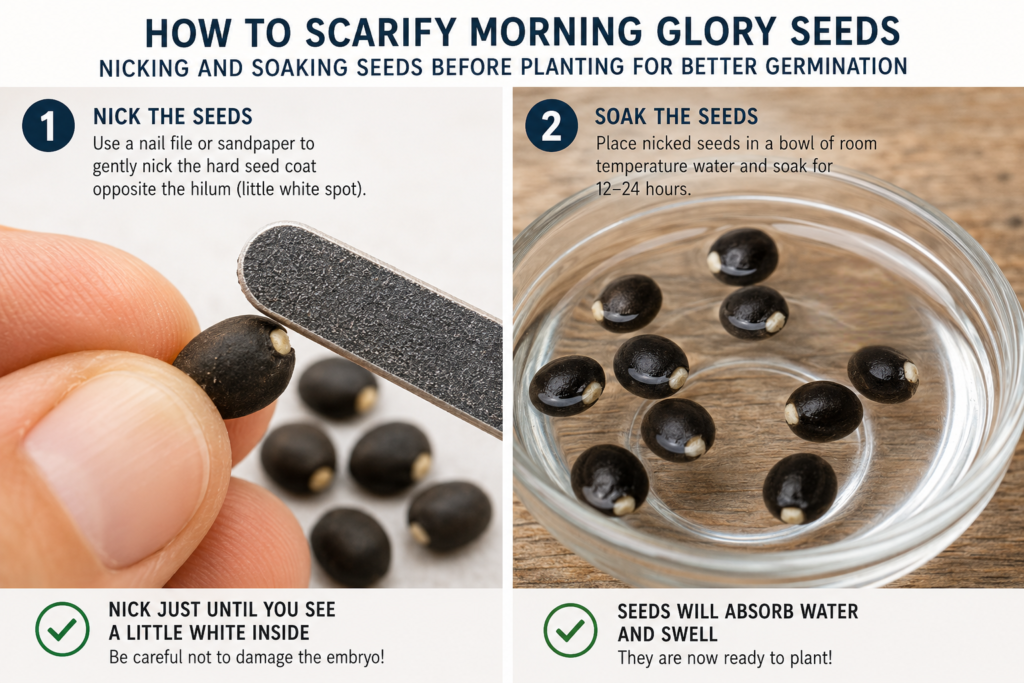
Morning glory seeds have a hard outer coat that slows germination. To speed things up, scarify the seeds before planting:
- Gently nick the seed coat with a nail file or sandpaper on one side
- Soak seeds in warm water for 8–24 hours before planting
- Plant while seeds are still swollen from soaking
This simple step can improve germination rates significantly and cut days off your wait time.
Where and How to Plant
- Location: Full sun — at least 6–8 hours of direct sunlight daily
- Soil: Well-draining, moderately fertile soil. Avoid over-fertilizing; rich soil produces lush leaves and fewer blooms
- Depth: Sow seeds ½ inch deep
- Spacing: 6 inches apart (they’ll fill in quickly)
- Support: Plant near a fence, trellis, arbor, or mailbox — morning glories need something to climb
Expert Tip: Morning glories actually bloom better in leaner soil. If your soil is very rich or you’ve added lots of compost, hold back on nitrogen fertilizer — excess nitrogen encourages leafy green growth at the expense of flowers.
ALSO READ: 6 Best Hallway Flooring Ideas for Every Home Style and Budget
How to Care for Morning Glories
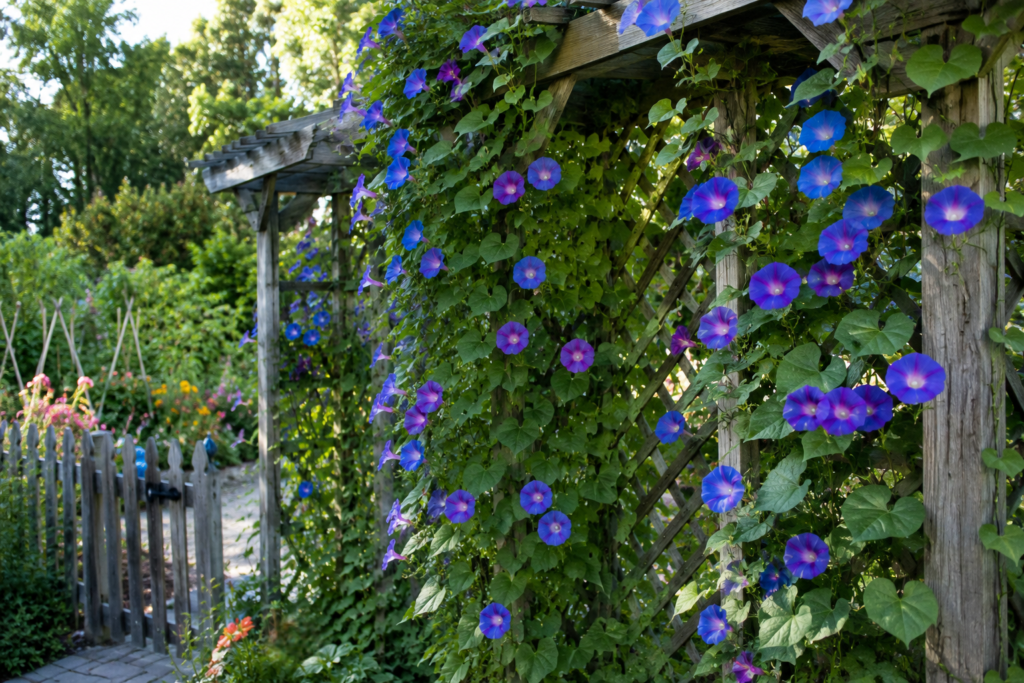
Once established, morning glories are wonderfully low-maintenance. Here’s what they need to thrive:
Watering
Water deeply once a week — morning glories are drought-tolerant once established but appreciate consistent moisture during their early growing period. Avoid overwatering, which can cause root rot and yellowing leaves.
Fertilizing
Less is more. A balanced, low-nitrogen fertilizer applied once a month is plenty. Too much nitrogen, as mentioned, will push the plant toward foliage over flowers. Espoma’s Flower-tone is a well-regarded organic option for flowering vines.
Training the Vines
Morning glory tendrils are self-twining, but young plants may need a little guidance at first. Gently weave new growth through your trellis or fence weekly during the early season. Once they get going, they find their own way.
Pests and Problems
Morning glories are generally pest-resistant, but watch for:
- Aphids — treat with a blast of water or neem oil spray
- Leaf miners — remove affected leaves; rarely a serious problem
- Spider mites — more common in hot, dry conditions; increase watering and humidity around the plant
Morning Glories and Wildlife
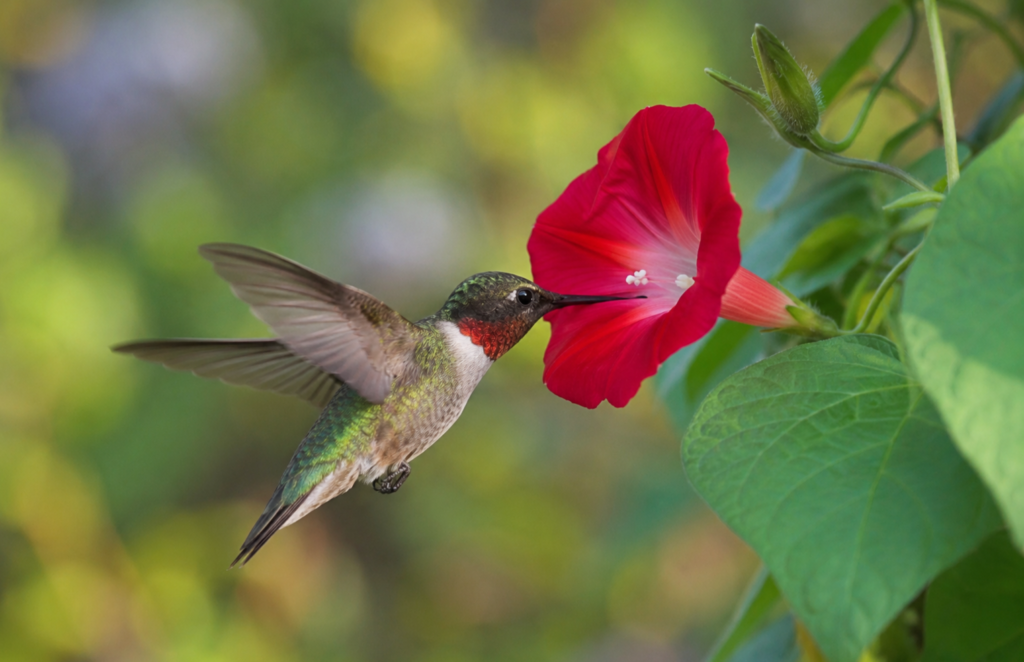
One of the best reasons to grow morning glories is what they bring with them.
The trumpet-shaped flowers are perfectly designed for pollinators. According to the Xerces Society, Ipomoea species are excellent nectar sources for native bees, bumblebees, and hoverflies. The long floral tubes are particularly well-suited for hummingbirds, making red and pink cultivars especially effective at attracting them.
Planting morning glories near a vegetable garden can also increase overall pollination and attract beneficial insects that control pest populations.
Pros and Cons of Growing Morning Glories
| Pros | Cons |
|---|---|
| Fast-growing, blooms in 60–90 days | Dies back with frost (annual in most climates) |
| Low maintenance once established | Can self-seed aggressively |
| Covers fences and trellises quickly | Flowers close in the afternoon |
| Attracts hummingbirds and pollinators | Seeds are toxic if ingested |
| Huge variety of colors and cultivars | Doesn’t like being transplanted |
| Thrives in poor to average soil | Needs sturdy support structure |
Important Safety Note: Morning glory seeds contain ergine (d-lysergic acid amide), a naturally occurring compound that is toxic if consumed in large quantities. Keep seeds away from children and pets. The American Association of Poison Control Centers lists morning glory seeds as a toxic plant for humans and animals.
Quick-Reference Growing Guide
| Factor | Requirement |
|---|---|
| Sunlight | Full sun (6–8 hours minimum) |
| Soil | Well-draining, average fertility |
| Watering | Once weekly, deep watering |
| Planting Depth | ½ inch |
| Spacing | 6 inches apart |
| Germination Time | 5–21 days |
| Bloom Time | 60–90 days from seed |
| Mature Vine Height | 6–15 feet |
| USDA Hardiness Zones | Annual zones 3–9; perennial zones 10–11 |
| Support Needed | Yes — trellis, fence, or arbor |
Frequently Asked Questions
1. Do morning glories come back every year?
In most climates, morning glories don’t return from their roots after frost — they are annuals. However, they self-seed extremely reliably. Seeds dropped at the end of the season overwinter in the soil and sprout new plants each spring, giving the strong impression that the plant returns on its own.
2. Are morning glories perennials?
Morning glories are tender perennials that only survive as true perennials in frost-free climates (USDA Zones 10–11). Everywhere else, they behave as annuals. Their prolific self-seeding is often what makes them seem perennial in cooler regions.
3. How long do morning glories take to bloom?
Most varieties bloom within 60–90 days of planting. Scarifying seeds (nicking and soaking before planting) and ensuring full sun exposure both help push blooms toward the earlier end of that window.
4. How do you keep morning glories blooming all season?
Deadhead spent flowers regularly to redirect the plant’s energy from seed production back into flowering. Full sun is non-negotiable — plants in partial shade bloom far less. Also avoid high-nitrogen fertilizers, which favor leafy growth over blooms.
5. Are morning glories invasive?
Some Ipomoea species can spread aggressively through self-seeding, particularly in warm climates. Ipomoea purpurea is listed as a weed in parts of the South and Southeast. To prevent unwanted spread, deadhead flowers before seed pods form, or collect seeds intentionally. Always check with your local cooperative extension service for region-specific guidance on invasive species.
Conclusion
Morning glories are proof that some of the most spectacular garden plants are also the simplest to grow.
Give them sun, something to climb, and a little patience — and they’ll deliver a daily floral performance from midsummer to first frost, attract pollinators, cover bare fences, and seed themselves so reliably that one good planting can last for years.
Whether you’re a first-time gardener or someone looking to add effortless vertical color to an established garden, morning glories earn their place every single season.
Start with a classic like ‘Heavenly Blue’, scarify those seeds, and plant them where you’ll see them from a window. You’ll want to be there when they open.
Which morning glory variety are you planting this season? Share in the comments — we’d love to see your garden!

