
Your hallway is the first thing people see when they walk into your home — and the last thing they notice when they leave.
Yet it’s one of the most neglected spaces when it comes to design decisions. Most homeowners pick flooring almost as an afterthought, then wonder why the hallway always looks tired, scuffed, or just off.
The truth is, hallway flooring does some of the hardest work in your entire home. It takes daily foot traffic, muddy boots, dragged luggage, pet claws, and everything in between. It needs to be tough, easy to clean, and — ideally — beautiful.
This guide covers the best hallway flooring ideas across every style, budget, and home type, with expert tips to help you make the right call the first time.
What Makes Hallway Flooring Different from Other Rooms?
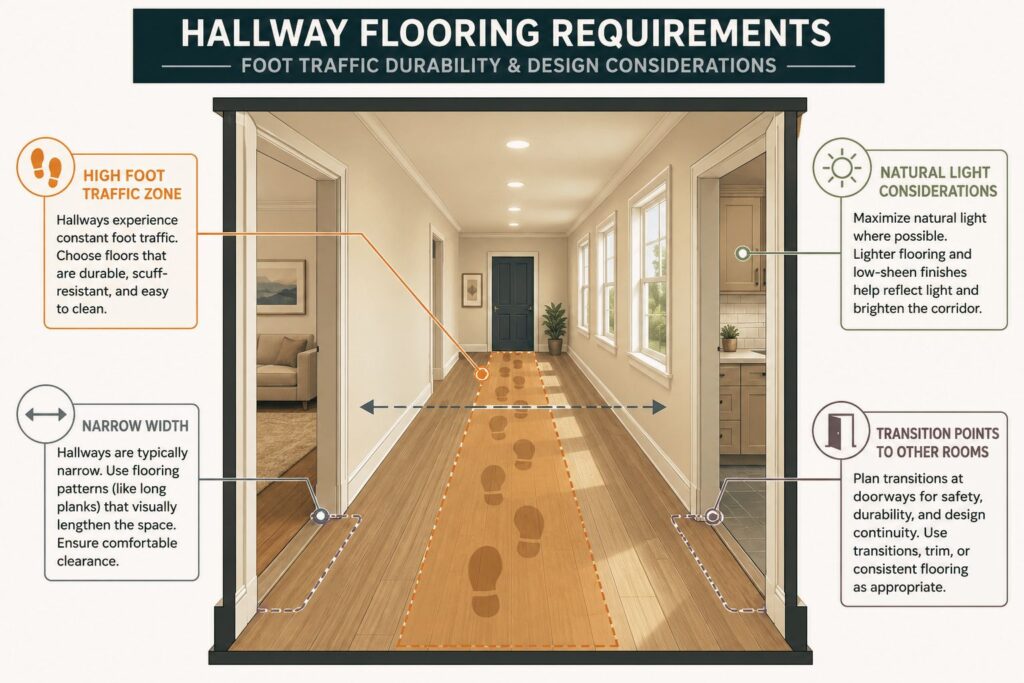
Before jumping into options, it’s worth understanding what makes hallways a unique design challenge.
Unlike living rooms or bedrooms, hallways deal with:
- Concentrated foot traffic — every journey through your home passes through here
- Narrow proportions — flooring patterns and scale matter more in tight spaces
- Transition zones — your hallway flooring needs to connect visually with adjacent rooms
- Moisture and dirt — especially near front doors, which act as a gateway for outdoor elements
According to the National Wood Flooring Association, traffic patterns and moisture exposure are the two most critical factors when selecting flooring for high-use areas like hallways and entryways. Getting the material right saves you money and headaches in the long run.
1. Hardwood Flooring — The Timeless Classic
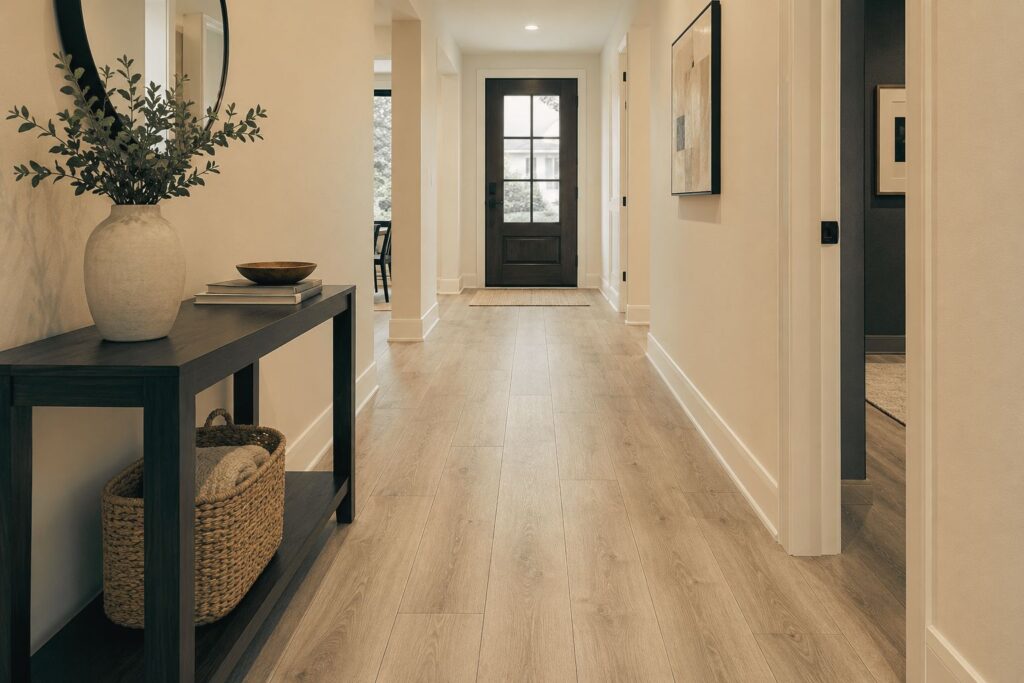
Few flooring choices match the warmth and prestige of solid or engineered hardwood. It’s been a go-to for hallways in traditional and contemporary homes alike for good reason.
Solid vs. Engineered Hardwood
| Type | Best For | Avg. Cost (per sq ft installed) | Durability |
|---|---|---|---|
| Solid Hardwood | Ground floors, low-moisture areas | $8–$15 | High (refinishable) |
| Engineered Hardwood | All levels including basements | $5–$12 | High (partially refinishable) |
Engineered hardwood uses a real wood veneer over a plywood core, making it more dimensionally stable than solid wood — meaning it handles humidity and temperature changes far better. This makes it a smarter pick for hallways near exterior doors.
Popular species for hallways include white oak (exceptionally hard and neutral in tone), hickory (dramatic grain, extremely durable), and maple (smooth, light, and modern-looking).
Expert Tip: Apply a commercial-grade polyurethane finish to hardwood in high-traffic hallways. It significantly extends the life of the floor between refinishes.
Pros: Timeless appeal, increases home value, refinishable, wide variety of species and stains Cons: Susceptible to scratches and moisture damage, higher upfront cost
2. Luxury Vinyl Plank (LVP) — The Smart, Durable Choice
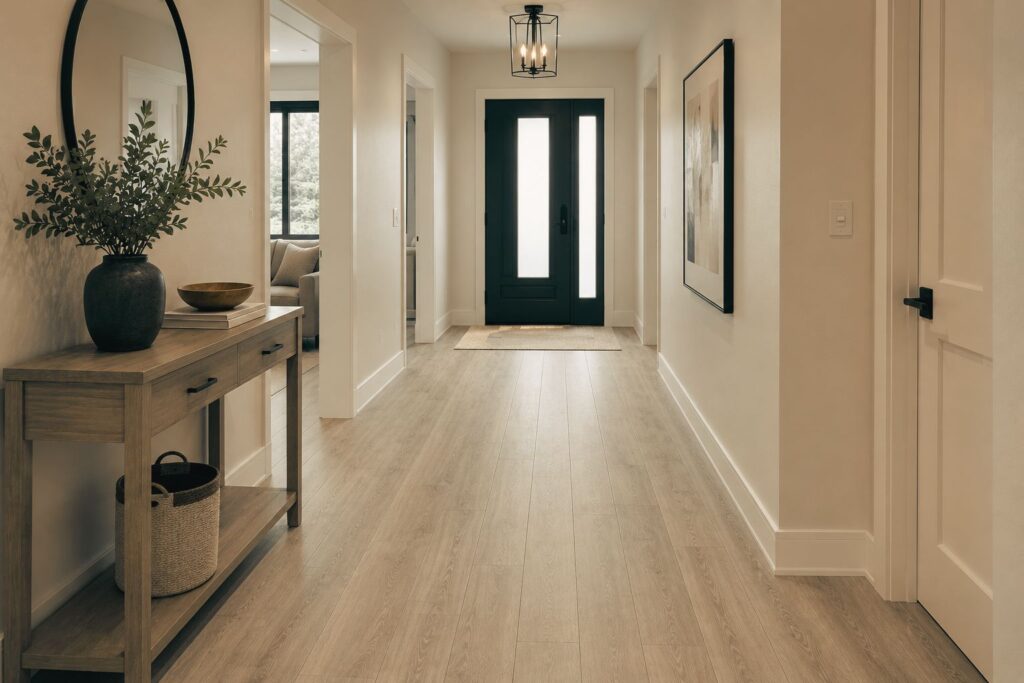
Luxury vinyl plank has quietly become one of the most popular hallway flooring choices — and it deserves every bit of that reputation.
Modern LVP is waterproof, scratch-resistant, comfortable underfoot, and available in designs that convincingly mimic hardwood, stone, and tile. For hallways near entryways or bathrooms, it’s often the most practical choice available.
Brands like LifeProof, COREtec, and Shaw Floors produce LVP with wear layers ranging from 6 mil to 20 mil — the thicker, the better for hallway use.
What to look for:
- Wear layer: 12 mil or higher for hallways
- AC rating: AC4 or AC5 for residential high-traffic areas
- Thickness: 6mm or thicker for a solid, floor-level feel
- Attached underlayment: Adds comfort and sound absorption
Pros: 100% waterproof, highly durable, easy DIY installation, affordable ($2–$7/sq ft installed), realistic wood/stone looks Cons: Cannot be refinished, lower-end options can look plasticky, may not add home resale value like hardwood
Also Read: Bedroom Panelling: Transform Your Walls Into a Design Statement
3. Porcelain and Ceramic Tile — Hardworking and Stylish
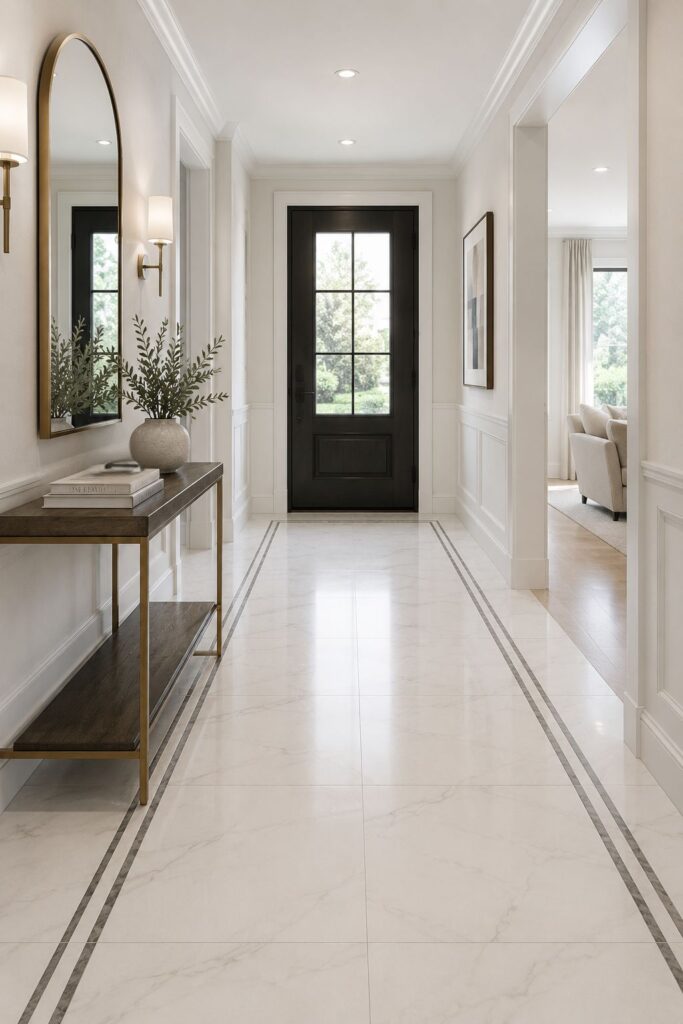
For high-moisture areas or homes in warmer climates, tile is one of the most practical hallway flooring ideas out there. It’s virtually indestructible, easy to clean, and incredibly versatile in terms of design.
Porcelain vs. Ceramic Tile
| Type | Water Resistance | Hardness | Best Use |
|---|---|---|---|
| Porcelain | Excellent (low absorption) | Very Hard | All hallways, outdoor transitions |
| Ceramic | Good | Hard | Interior hallways with lower traffic |
Large-format tiles (24″×24″ or larger) are trending heavily in hallway design right now — they create a seamless, expansive look that makes narrow hallways feel wider. For a more classic look, encaustic cement tiles or Moroccan-style patterns add personality and visual interest.
Grout color matters too. Dark grout hides dirt but can look heavy; light grout brightens the space but requires more maintenance. The Tile Council of North America recommends epoxy grout for high-traffic areas as it resists staining and cracking far better than cement-based grout.
Expert Tip: In narrow hallways, lay tiles on a diagonal (45°) or in a herringbone pattern — it visually widens the space without any structural changes.
Pros: Extremely durable, waterproof, easy to clean, endless design options Cons: Cold underfoot, hard on legs during long standing, grout requires upkeep, installation cost can be high
4. Natural Stone — Luxury That Lasts Generations
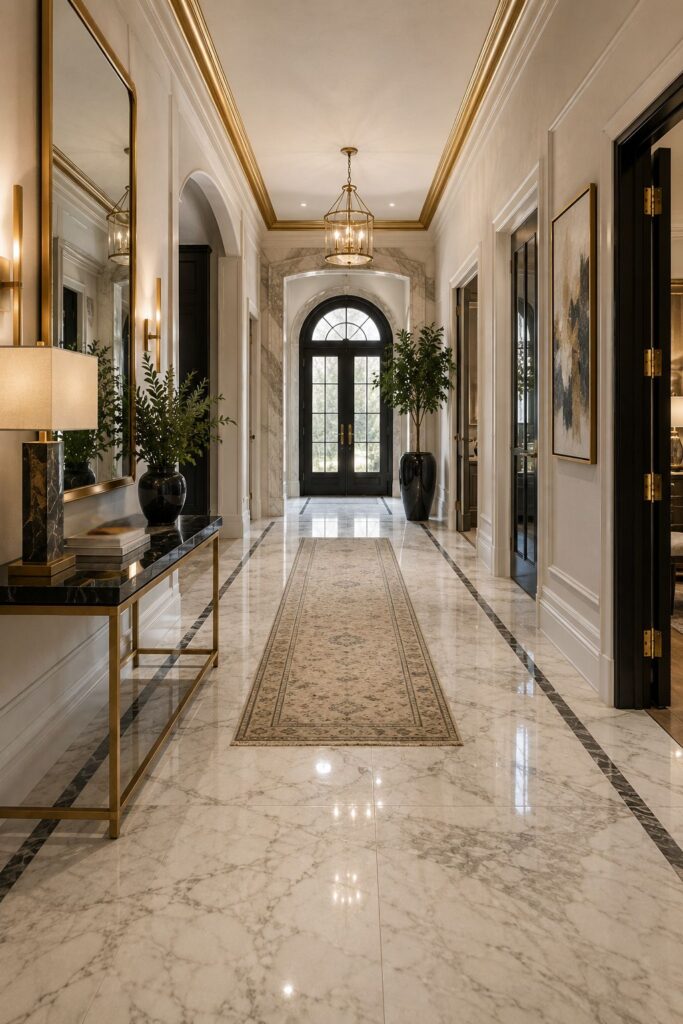
If budget isn’t the primary concern, natural stone delivers unmatched character and longevity. Marble, slate, travertine, and limestone each bring their own distinct personality to a hallway.
Popular stone types for hallways:
- Marble: High-gloss, elegant, dramatic veining — best for lower-traffic formal entryways
- Slate: Matte, rugged, excellent grip — ideal for busy family homes and exterior transitions
- Travertine: Warm tones, natural texture, timeless Mediterranean aesthetic
- Limestone: Subtle, sophisticated, pairs beautifully with neutral palettes
Natural stone requires sealing (typically once a year) to protect against moisture and staining. StoneTech Professional offers sealers specifically formulated for high-traffic stone floors.
Pros: Unique, one-of-a-kind appearance, extremely durable, adds significant home value Cons: Expensive ($15–$30+/sq ft installed), requires sealing and maintenance, some stones are slippery when wet
5. Laminate Flooring — Budget-Friendly Wood Look
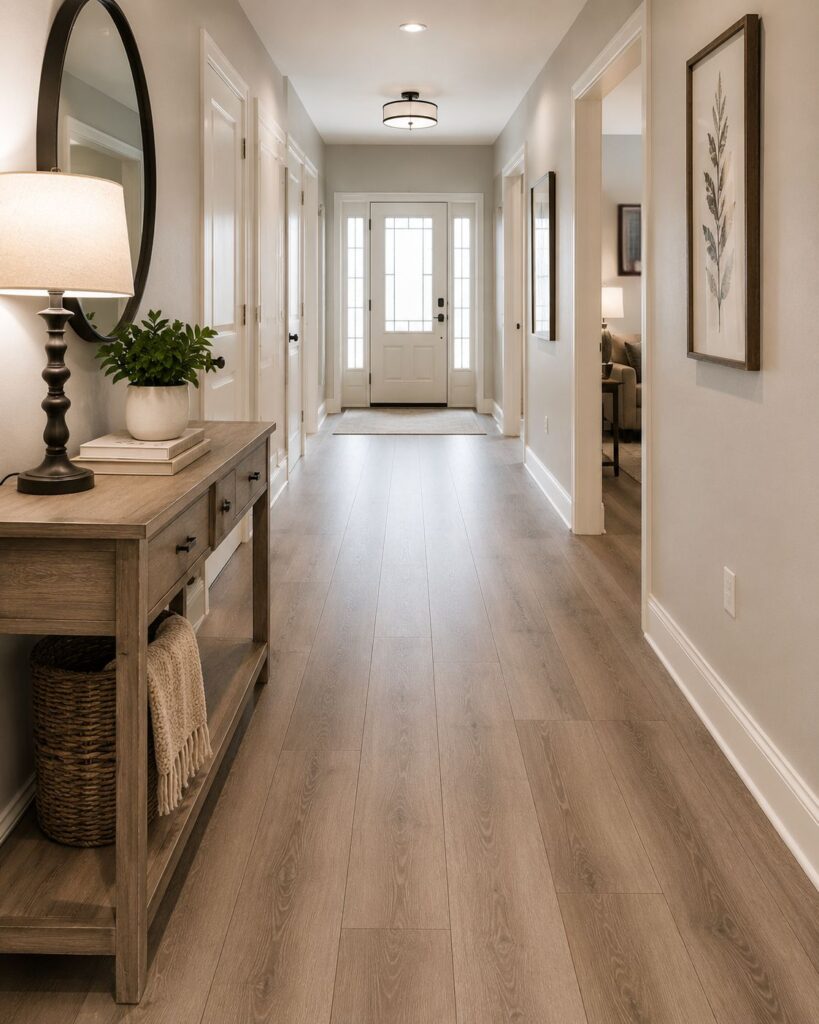
Laminate has come a long way from its early reputation as a cheap imitation. Modern high-definition laminate uses photographic imaging layered under a protective wear surface to realistically mimic hardwood and stone — often at a fraction of the cost.
For hallways with moderate traffic and no moisture issues, it’s a solid middle-ground option.
Look for an AC4 or AC5 rating (the European Producers of Laminate Flooring standard) which indicates commercial or heavy residential durability. Thickness of 10mm or more also helps dampen sound and feel more substantial underfoot.
Pros: Very affordable ($1.50–$5/sq ft), easy installation, realistic wood looks Cons: Not waterproof, cannot be refinished, lower-end versions sound hollow underfoot
6. Carpet and Carpet Runners — Warmth and Quiet
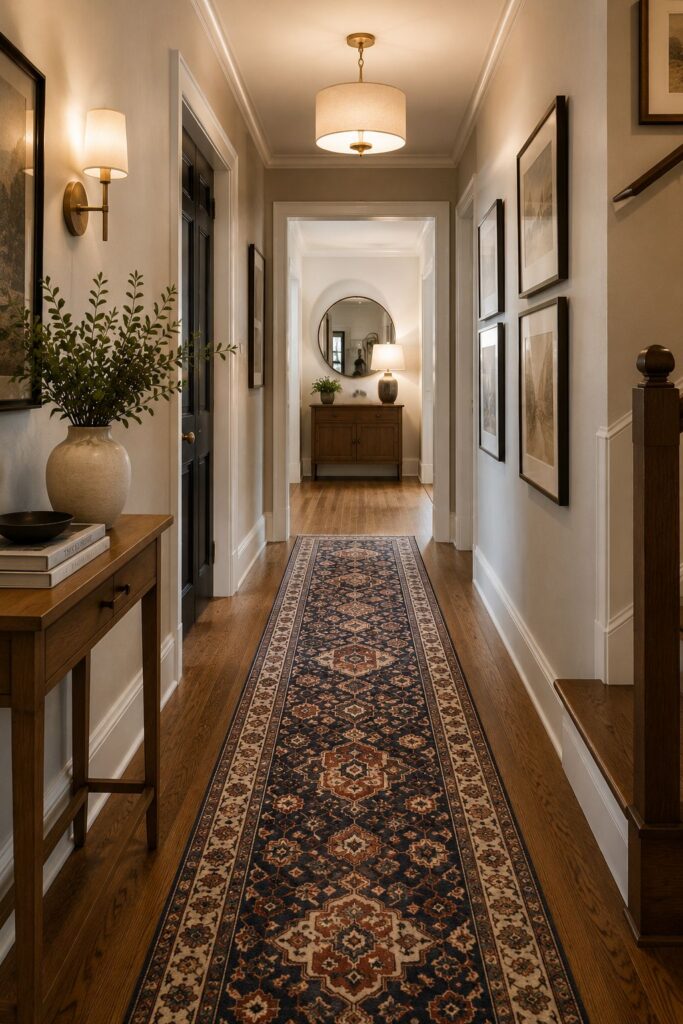
Carpet isn’t always the obvious choice for hallways — but used strategically, it works beautifully. A hallway carpet runner over hard flooring is one of the most popular design moves in traditional and transitional home styles.
Runners protect the hard floor beneath, add sound insulation, bring color and pattern to what could be a plain space, and create a welcoming, cozy feel.
For wall-to-wall hallway carpet (common in upstairs corridors), opt for commercial-grade loop pile or Berber carpet — both handle foot traffic far better than cut-pile styles. The Carpet and Rug Institute provides a Green Label Plus certification for carpets that meet indoor air quality standards.
Pros: Soft and warm underfoot, absorbs sound, budget-friendly for large areas Cons: Stains more easily, traps allergens, requires more maintenance, not ideal near exterior doors
Best Hallway Flooring at a Glance
| Flooring Type | Durability | Water Resistance | Avg. Cost/sq ft (installed) | Best For |
|---|---|---|---|---|
| Hardwood | ★★★★☆ | ★★☆☆☆ | $8–$15 | Classic, high-value homes |
| Luxury Vinyl Plank | ★★★★★ | ★★★★★ | $2–$7 | Families, pets, wet areas |
| Porcelain Tile | ★★★★★ | ★★★★★ | $5–$15 | High traffic, warm climates |
| Natural Stone | ★★★★★ | ★★★☆☆ | $15–$30+ | Luxury, unique character |
| Laminate | ★★★☆☆ | ★★☆☆☆ | $1.50–$5 | Budget-conscious renovations |
| Carpet/Runner | ★★☆☆☆ | ★☆☆☆☆ | $1–$5 | Upstairs halls, cozy spaces |
Design Tips to Make Your Hallway Flooring Work Harder
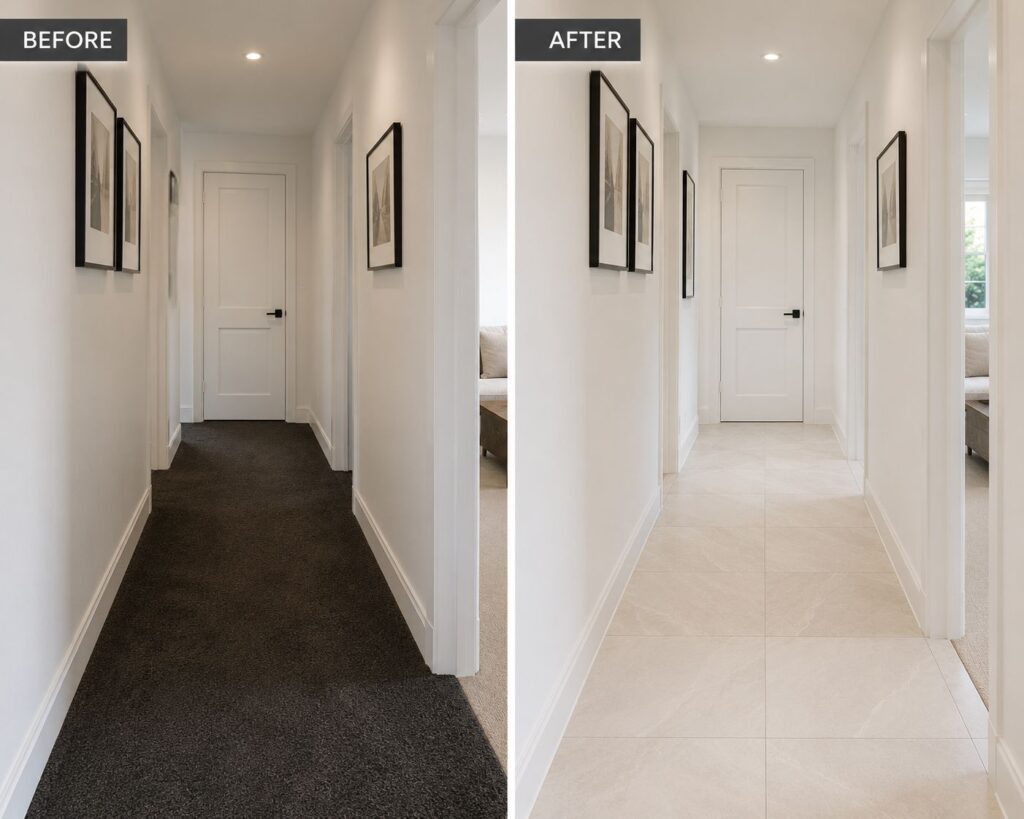
The material is only half the decision. How you use it defines the result.
- Go light in narrow hallways — light-toned floors reflect light and make tight spaces feel more open
- Use long planks or large tiles lengthwise — this draws the eye forward and elongates the space
- Add a runner rug — even over hard flooring, a runner adds warmth, defines the space, and reduces slip risk
- Match or complement adjacent rooms — sudden jarring transitions in flooring create visual discord
- Use pattern to add interest — herringbone, chevron, and diagonal layouts work especially well in hallways
- Consider underfloor heating — particularly worthwhile under tile or stone, which can feel cold in cooler months
Frequently Asked Questions
1. What is the most durable flooring for a hallway?
Porcelain tile and luxury vinyl plank are the most durable hallway flooring options for everyday use. Both resist scratches, moisture, and heavy foot traffic. For natural material durability, hardwood with a commercial-grade finish is an excellent long-term investment.
2. What flooring makes a hallway look bigger?
Light-colored floors, large-format tiles, and long planks laid lengthwise are the most effective ways to make a hallway appear larger. Diagonal tile patterns and high-gloss finishes also reflect light and open up narrow spaces visually.
3. Is hardwood or tile better for hallways?
It depends on your priorities. Tile wins on durability and moisture resistance, making it ideal for front-door entryways. Hardwood wins on warmth, comfort, and home resale value. Engineered hardwood is a strong middle ground — more moisture-resistant than solid wood while offering a genuine wood appearance.
4. How much does it cost to floor a hallway?
Hallway flooring costs vary widely by material and labor. Budget options like laminate or carpet start around $1.50–$3 per square foot, while mid-range choices like LVP or ceramic tile run $4–$10 installed. Premium hardwood or natural stone can reach $15–$30+ per square foot installed. Most homeowners spend between $500–$2,500 to floor a standard hallway.
5. What hallway flooring is easiest to maintain?
Luxury vinyl plank and porcelain tile are the easiest to maintain. Both are waterproof, resistant to stains, and require only regular sweeping and occasional mopping. Natural stone and hardwood require periodic sealing or refinishing to stay in peak condition.
Conclusion
The right hallway flooring transforms your home’s first impression — and makes daily life easier at the same time.
Whether you go with the timeless warmth of hardwood, the no-nonsense practicality of luxury vinyl plank, the enduring elegance of porcelain tile, or the personality of a patterned runner, what matters most is matching your choice to your lifestyle, your budget, and the look you’re going for.
Don’t rush the decision. Measure your space, get samples, and live with them in natural light for a day or two before committing. Your hallway endures more wear than almost any room in the house — it deserves a flooring choice made with care.
Renovating your hallway? Drop a comment below with your flooring choice and home style — we’d love to hear what you’re planning.

