
The Old Men Who Dance Like Young Gods
Picture this: four men shuffle onto a cobblestone plaza in the heart of Michoacán, Mexico. They move slowly, hunched over wooden canes, groaning with every step. Their carved wooden masks show wrinkled faces frozen in wide smiles. The crowd chuckles. Then — without warning — the music quickens, the canes begin to stamp the ground like drums, and these “old men” unleash a dazzling explosion of footwork that leaves the audience breathless.
This is the Danza de los Viejitos. The Dance of the Little Old Men.
But there is nothing simple about it. Beneath the humor, the colorful costumes, and the infectious rhythm lies one of the most layered cultural traditions in all of Mexico — a folk performance rooted in ancient spiritual ritual, shaped by colonial resistance, and kept alive today as a living symbol of Purépecha identity and pride.
So what is the real meaning behind this celebrated tradition? The answer is far older, far deeper, and far more fascinating than most people realize.
What Does “Danza de los Viejitos” Actually Mean?
The name translates directly from Spanish as “Dance of the Little Old Men” — viejitos being the affectionate diminutive of viejos, meaning old men.
It is a traditional folk dance in Michoacán, Mexico, originating in the Purépecha Region. The men who perform this tradition are known as Danzantes or “Dancers.”
In the Purépecha language, the performance is known as T’arche Uarakua — a name that connects it firmly to the indigenous cultural tradition that gave it life thousands of years before Spanish explorers ever set foot in Mexico.
The Ancient Origins: A Ritual for the God of Fire
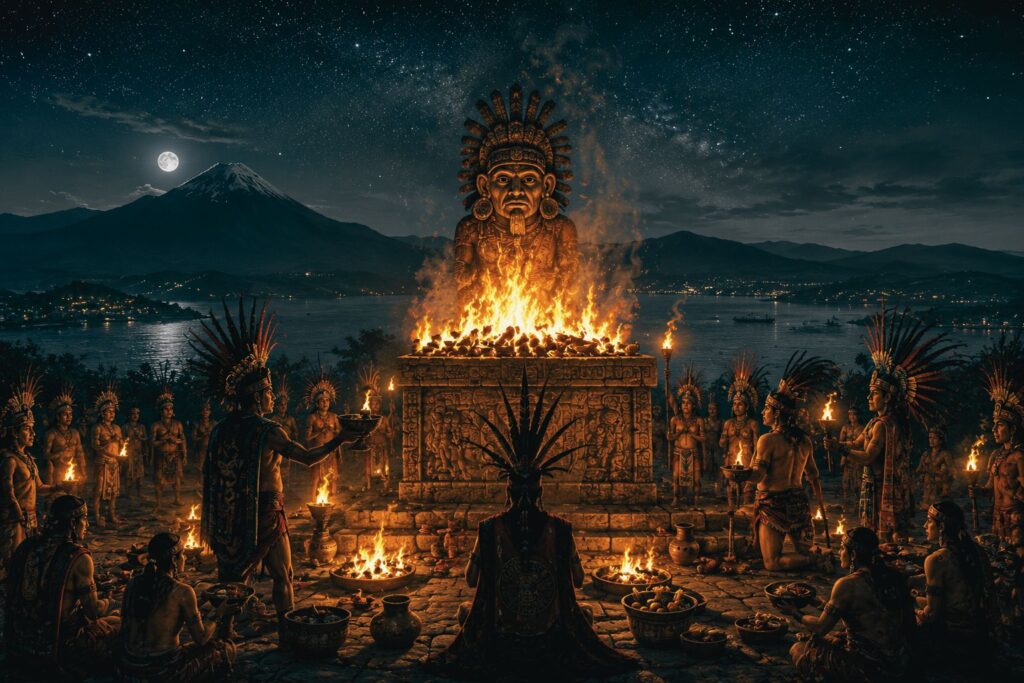
To understand the meaning of this ancient tradition, you have to go back more than a thousand years — long before colonial Mexico, long before Christianity arrived on these shores.
This folk tradition traces its roots to pre-Hispanic times, when it was a ritual to honor the Guegueteo — the “Old God” or “God of Fire,” also known as Huehueteotl or Xiuhtecuhtli, one of the oldest deities in Mesoamerican tradition. According to the Tennessee Arts Commission’s documentation, this performance was meant to honor the Guegueteo, which means “Old God” or “God of Fire.”
The dance was not entertainment. It was prayer.
The Library of Congress, which holds photographic documentation of the performance, describes it as having “pre-Hispanic origin dedicated to deities such as Huehueteotl — the old god and god of fire,” and notes that it is “typical of the Purépecha culture of the Lake Pátzcuaro region.”
Why Four Dancers?
The number four is not accidental — it carries profound cosmological meaning.
According to Grokipedia’s documented research, the four dancers each represent one of the four sacred elements: fire, water, earth, and air. They also represent the four colors of corn — red, yellow, white, and blue — which were foundational to Purépecha agricultural spirituality and survival.
In this original ceremonial context, the performers asked El Dios Viejo (The Old God) for good harvests, communication with ancestral spirits, knowledge of the past, and the ability to predict the future. The ritual was also believed to ward off evil — the powerful stomping of the wooden-soled shoes was understood as a way to scare off malevolent spirits lurking near the community.
What Happened When the Spanish Arrived
The story of this folk performance takes a dramatic turn in 1530, when Spanish conquistadors arrived in Michoacán.
According to Así Es Mi México’s cultural documentation, the original folk performance was banned by Spanish authorities. But the Purépecha shamans refused to let it die. They taught it secretly to young people who could hold the rhythm, marked with the drum and the flute, preserving the tradition underground while colonial power tried to erase it.
Gradually, as centuries passed, the performance transformed. Stripped of its most overtly spiritual elements, it adapted to survive. What emerged was something unexpected — and deeply clever.
Here is one of the most fascinating and little-known dimensions of the tradition’s meaning: many historians and anthropologists believe the dance became, in part, a satirical mockery of Spanish colonizers.
As Así Es Mi México explains, “one of the meanings of this dance is a mockery of the Spanish colonizers and their lack of grace when dancing.” Over time, the “little old men” of the performance came to represent not elderly Purépecha ancestors, but the Spanish colonos — who, as local observers noted with wry humor, aged faster than the indigenous population and showed more aches and pains in their gait.
The performance evolved into what Journey Mexico describes as “a parody of old Spanish men” — a clever form of cultural resistance wrapped in comedy and costume, hidden in plain sight from the very people being mocked.
This dual meaning — spiritual reverence on one layer, political satire on another — makes this folk tradition one of the most intellectually rich in the Americas.
The Deeper Symbolic Meaning: Life, Death, and the Cycle of Age
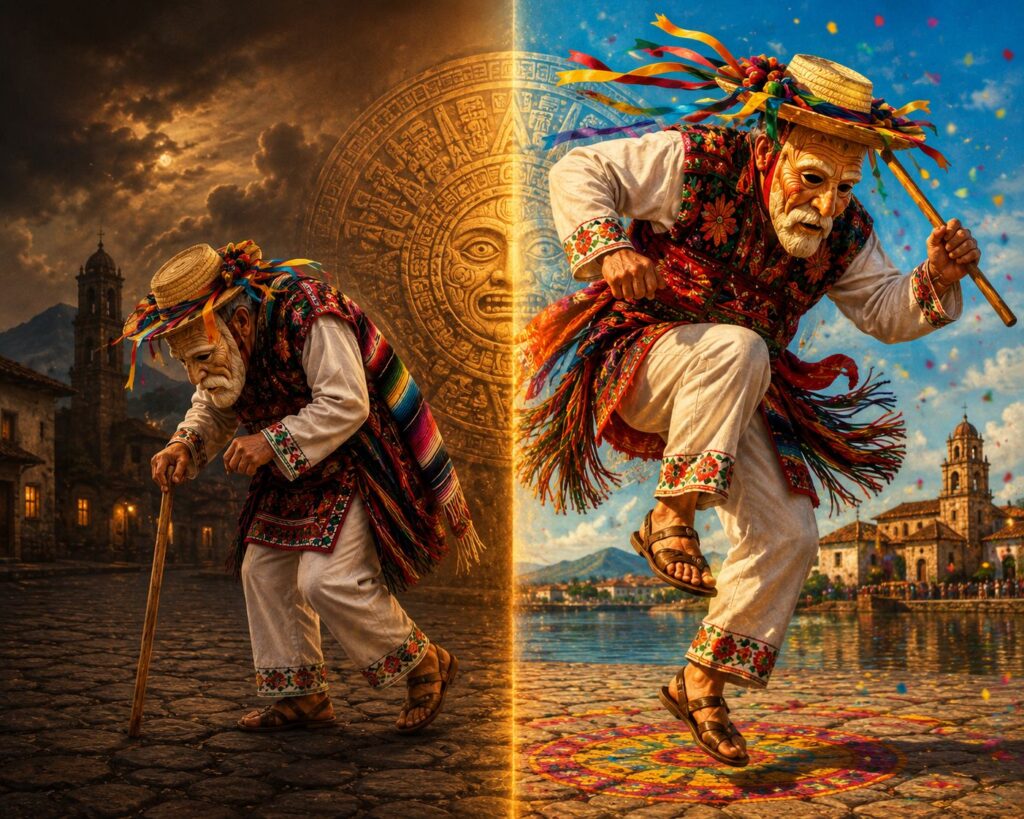
Beyond history and politics, the performance carries a profound philosophical message about the nature of human life.
The structure of the performance itself is intentionally symbolic. It begins with the dancers shuffling slowly, hunched over their canes, coughing, stumbling — perfectly performing the fragility of extreme old age. Then the music builds, the tempo accelerates, and suddenly these “old men” are stomping, spinning, and displaying extraordinary athleticism.
This transformation is not a punchline. It is the point.
The performance is a representation of the cycle of life — where old men represent the end of one cycle and the beginning of a new one. According to The Yucatan Times, it is a celebration of life, of the wisdom that comes with old age, and of the enduring traditions of the Mexican people.
The hidden vitality beneath the mask of age carries a message that resonates across cultures: age is not defeat. Within every elder is the full energy of a life lived — and within every young person is the future elder who will carry these traditions forward.
The ritual may also represent, as Julisa’s Cultural Blog documents, a protest against growing old — the danzantes stomping hard showing they can still scare off spirits, asserting life and vigor even in the face of mortality.
The Costume and Its Symbolism Explained
Every element of the traditional costume carries meaning. Nothing is accidental.
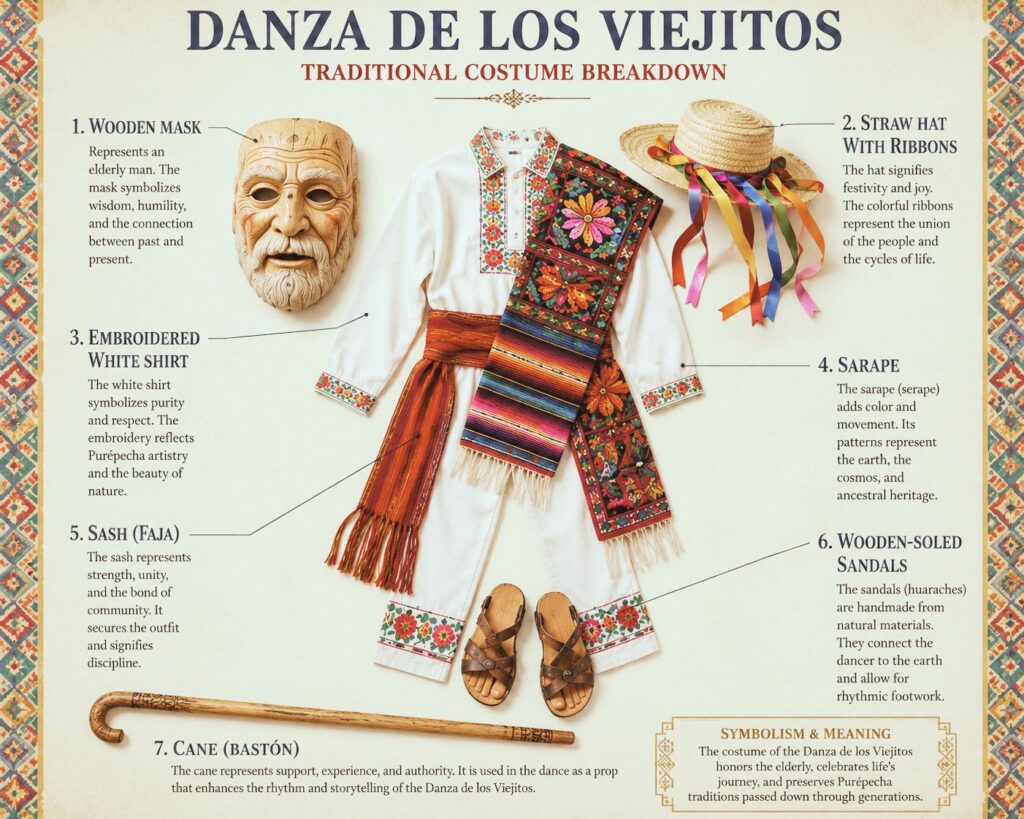
The Carved Wooden Mask
The mask is the most recognizable element. Carved from wood, it depicts the face of an old man with exaggerated wrinkles and, crucially, a wide smile. The smile is important — it transforms what could be a grim image of age and death into something joyful and celebratory.
The Straw Hat with Colored Ribbons
The straw hat adorned with long, multicolored ribbons parted down the middle represents the festive spirit of the tradition. The colors echo the vibrancy of Purépecha textile traditions and the four sacred colors of corn.
The White Outfit and Sarape
A Danzante wears a top and bottom made out of a white blanket, topped with a sarape — a blanket worn as a cloak. Each sarape contains different designs and colors representing the diversity of the Purépecha people and their communities. White symbolizes purity and connection to ancestral spirits.
The Wooden-Soled Sandals
The sandals are designed with wooden soles specifically to make tapping and stamping noises during the performance. This echoes the ancient function of the ritual, where rhythmic stomping was believed to communicate with spirits and ward off evil. Every tap of the wooden sole connects the dancer to a tradition stretching back millennia.
The Cane
The wooden cane marks the dancers as elderly characters, functions as a prop during the shuffling opening sequence, and becomes a rhythmic instrument as the performance accelerates. In some interpretations, it also symbolizes the staff of elders — the authority and wisdom that comes with age.
Where and When the Dance Is Performed Today
The Danza de los Viejitos is most strongly associated with the Lake Pátzcuaro region of Michoacán, particularly the towns of Pátzcuaro, Morelia, Jarácuaro, and Ocumicho. According to Así Es Mi México, this tradition is so deeply ingrained in the lacustrine zone of Michoacán that dancers are usually initiated as children, passing it from generation to generation.
Day of the Dead
This folk performance is perhaps most famously associated with Día de los Muertos (Day of the Dead) celebrations around Lake Pátzcuaro in late October and early November. During this time, its themes of honoring ancestors, celebrating the cycle of life, and maintaining connection between the living and the dead take on their fullest meaning.
The island community of Jarácuaro is especially known for its variant called the “Danza de los Viejos Alegres de Jarácuaro” — the Dance of the Joyful Old Men of Jarácuaro — performed with extraordinary virtuosity and enthusiasm, according to Experiencia Pátzcuaro.
Christmas and Religious Festivals
The performance is also prominent during Christmas celebrations. According to legend documented in Day of the Dead resources, when Christ was born, the eldest people of the region didn’t know how to worship the Christ child — so they danced before him as an offering of love. Since then, it has been woven into Christmas traditions in the region.
Today, this celebrated folk tradition is also performed during:
- The Feast of San Juan
- The Festival of the Virgin of Guadalupe
- The Feast of Candelaria
- Mexican Independence Day celebrations
- Cultural festivals and folkloric performances internationally
From Local Ritual to International Stage
As Así Es Mi México notes, folkloric ballet companies have taken this tradition to international stages around the world. What began as a sacred ritual in a lake village in Michoacán has become one of the most recognized symbols of Mexican cultural identity globally.
The Music That Drives the Performance
The music for this traditional performance is played by a group of musicians using traditional string instruments — primarily the violin, guitar, and tambourine. The music is cheerful and lively, designed to represent the joy of life and the celebration of old age.
The deliberate contrast between the slow, mournful opening movements and the increasingly rapid, joyful music creates the theatrical arc that defines the performance. When the tempo finally breaks into its full exuberant rhythm, the crowd’s energy transforms with it — and suddenly a room full of people watching “old men” shuffle around is erupting in laughter, awe, and celebration.
This musical structure — shifting from measured solemnity to explosive joy — mirrors the deepest philosophical message of the tradition: that within age, death, and endings, there is always the seed of vitality, rebirth, and life.
How the Tradition Is Being Kept Alive
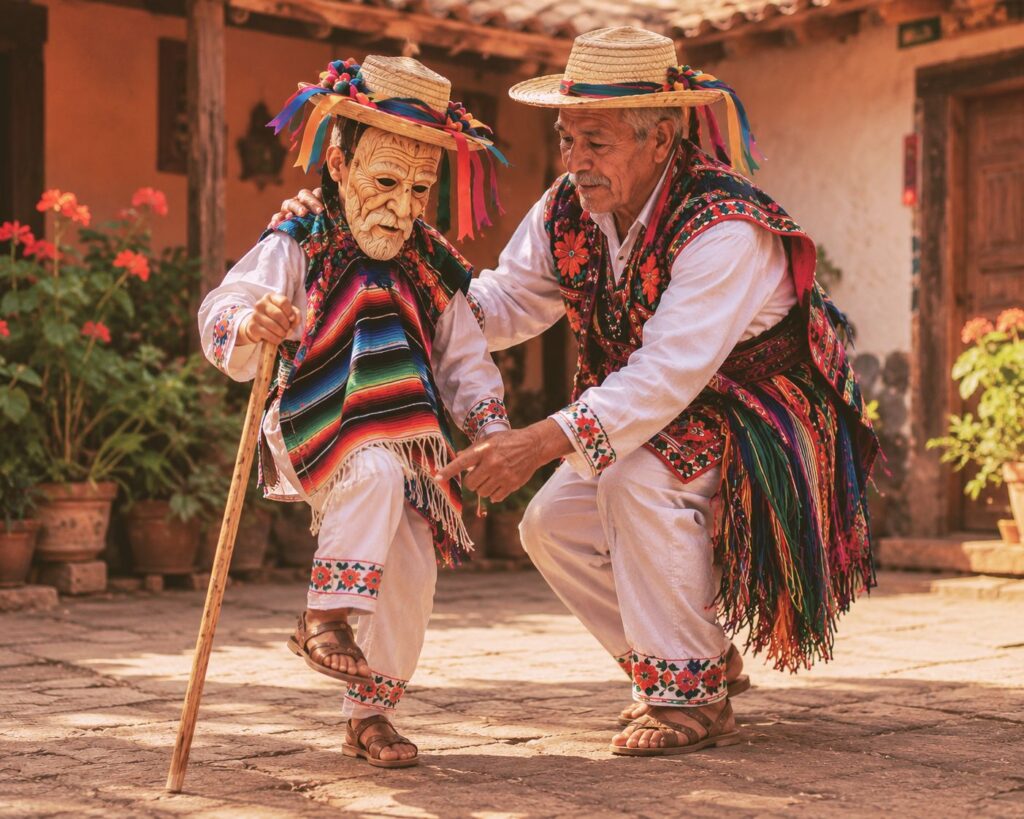
One of the most moving aspects of this living tradition is how it is transmitted — not through formal institutions or government programs, but through families.
Felipe Vasquez, a practitioner documented by the Tennessee Arts Commission, learned the performance from his grandparents and has been practicing since he was five years old. He has been teaching this folk tradition for over 14 years and founded the Corazón Alegre dance group to pass it to younger generations.
“It is important for them to learn the traditions and roots of their ancestors so they can continue for generations to come,” Vasquez explains. “The dance allows us to share our culture with them through visual arts and performance, in hopes that this tradition will continue.”
His apprentice, Michael Galvan, adds a perspective that speaks to the community-building power of this art form: “Sharing this dance allows me to be part of the community. Also, it helps my community to feel that they belong to the community when we are part of it. We are part of the community when we share our traditions. I believe it is important to pass it on to other generations.”
This intergenerational transfer — grandfather to child, parent to teenager — is itself a living embodiment of this ancient folk dance’s core message about honoring those who came before.
Expert Cultural Insight: What Makes This Tradition Unique
Cultural Note #1: This tradition is one of the few traditional dances in the world that uses humor as a vehicle for profound spiritual and philosophical meaning. Comedy and reverence are not opposites in Purépecha tradition — they are partners.
Cultural Note #2: This performance exists in distinct regional variations. In the lake zone around Pátzcuaro, it retains strong pre-Hispanic roots tied to fire deity rituals. In mestizo communities, it takes on more satirical and festive tones. Neither version is less authentic — they represent the living, evolving nature of cultural tradition.
Cultural Note #3: The wooden-soled shoes are not just costume — they are instruments. A skilled Danzante produces complex rhythmic patterns with their footwork that function as percussion, adding a musical dimension beyond the string ensemble.
Cultural Note #4: The smiling mask is a deliberate philosophical choice. In Mexican indigenous tradition, the smile of the elder is not naive happiness — it is the hard-won peace of someone who has witnessed the full cycle of life and found it worthy of celebration.
Danza de los Viejitos vs. Other Mexican Folk Dances
| Dance | Region | Key Theme | Costume Feature |
|---|---|---|---|
| Danza de los Viejitos | Michoacán | Cycle of life, ancestor reverence | Wooden mask, sarape, wooden sandals |
| Jarabe Tapatío (Hat Dance) | Jalisco | Courtship, national pride | Charro suit, china poblana dress |
| Danza de los Voladores | Veracruz/Puebla | Cosmological ritual, solar worship | Feathered headdress, rope flight |
| Guelaguetza Dances | Oaxaca | Community sharing, indigenous diversity | Region-specific elaborate costumes |
| Concheros | Central Mexico | Spiritual syncretism, conquest history | Feathered headdress, shell instruments |
This Purépecha tradition stands apart from most Mexican folk dances through its rare combination of comedy and depth, its direct connection to pre-Hispanic deity worship, and its deliberate narrative arc from fragility to strength.
Pros and Cons of the Dance’s Cultural Evolution
| What Has Been Preserved | What Has Been Lost or Changed |
|---|---|
| Core Purépecha identity and pride | Original sacred ritual context largely absent |
| Intergenerational transmission in families | Some communities perform it as tourism spectacle |
| Connection to Day of the Dead traditions | Pre-Hispanic musical instruments (drum, flute) replaced by strings |
| Four-dancer cosmological symbolism | Spiritual petitions to Huehueteotl rarely practiced today |
| Regional costume variations intact | Commercialized versions may lack regional authenticity |
ALSO READ:How to Start an Electronic Music Career in 2026 (Complete Guide)
Frequently Asked Questions
1. What is the meaning behind the Danza de los Viejitos?
The Danza de los Viejitos — the Dance of the Little Old Men — carries multiple layers of meaning. At its deepest level, it originated as a pre-Hispanic ritual by the Purépecha people of Michoacán to honor Huehueteotl, the Old God and God of Fire, asking for good harvests, communication with spirits, and protection from evil. Over time, it absorbed new meanings: a celebration of the wisdom of old age, a philosophical meditation on the cycle of life, and — following Spanish colonization — a satirical mockery of colonizers hidden within humor and performance. Today it serves as a living symbol of Purépecha cultural identity and resilience.
2. Where does the Danza de los Viejitos come from?
This folk tradition originates from the state of Michoacán in central Mexico, specifically from the Purépecha indigenous communities of the Lake Pátzcuaro region. It has existed since pre-Hispanic times, with its roots in the ceremonial traditions of the Purépecha people. The towns most associated with the performance today include Pátzcuaro, Morelia, Jarácuaro, and Ocumicho.
3. Why do the dancers in the Danza de los Viejitos pretend to be old men?
The old men characters carry rich symbolic meaning on several levels. Originally, they represented the Old God — Huehueteotl — and the wisdom of elders. After colonization, the “old men” persona was reinterpreted as a satire of aged Spanish colonizers. At a universal level, the contrast between the fragile appearance of old age at the start of the performance and the explosive athletic vitality that emerges represents the enduring power of life within every human being, regardless of age.
4. When and where is the Danza de los Viejitos performed?
This tradition is most famously performed during Day of the Dead celebrations around Lake Pátzcuaro in late October and early November. It is also performed at Christmas, the Feast of Candelaria, the Festival of the Virgin of Guadalupe, the Feast of San Juan, Mexican Independence Day celebrations, and various cultural festivals. Folkloric ballet companies have also brought the performance to international stages around the world.
5. What do the four dancers represent in the Danza de los Viejitos?
The four dancers carry cosmological significance rooted in Purépecha and broader Mesoamerican spiritual tradition. They represent the four sacred elements — fire, water, earth, and air — and the four colors of corn — red, yellow, white, and blue. Corn was sacred and central to survival in Purépecha culture, and the four-dancer format connects the tradition to agricultural and cosmological beliefs about the fundamental forces that sustain all life.
Conclusion: A Dance That Contains a Whole World
This Purépecha tradition is many things at once — ancient ritual, colonial resistance, philosophical meditation, cultural celebration, and living community bond. Every stamped foot, every shuffling step, every smiling wooden mask contains centuries of meaning that most audiences will never fully see.
That is precisely what makes it extraordinary.
When you watch those four men shuffle onto a cobblestone plaza and then erupt into breathtaking footwork, you are watching a tradition that survived colonial banning, centuries of cultural erasure, and the march of modernity — not by hiding, but by dancing.
The viejitos keep dancing because the tradition keeps being passed from hand to hand, generation to generation, grandfather to grandchild. And as long as someone teaches a five-year-old to stomp their wooden soles on the earth in the right rhythm, this ancient conversation between the living and the Old God of Fire will never go silent.
Want to experience the Danza de los Viejitos in person? The best time and place to see an authentic performance is during Day of the Dead celebrations in Pátzcuaro, Michoacán in late October and early November. The island of Jarácuaro is particularly renowned for its joyful and virtuosic version of the tradition.

