
You just got out of the shower, grabbed a freshly laundered towel, and — wait. That smell. Damp, sour, vaguely like a wet basement. It’s not what you expect from a towel that was just washed.
If this sounds frustratingly familiar, you’re not alone. Mildewy towels are one of the most common laundry complaints, and the maddening part is that washing them doesn’t always fix it. Sometimes it makes it worse.
The good news? The problem is fixable — and you don’t need to throw out your towels or buy expensive products. Once you understand what’s causing the smell, the solution becomes obvious. This guide covers everything: why it happens, how to remove mildew smell from towels, and how to make sure it never comes back.
Why Do Towels Smell Like Mildew?
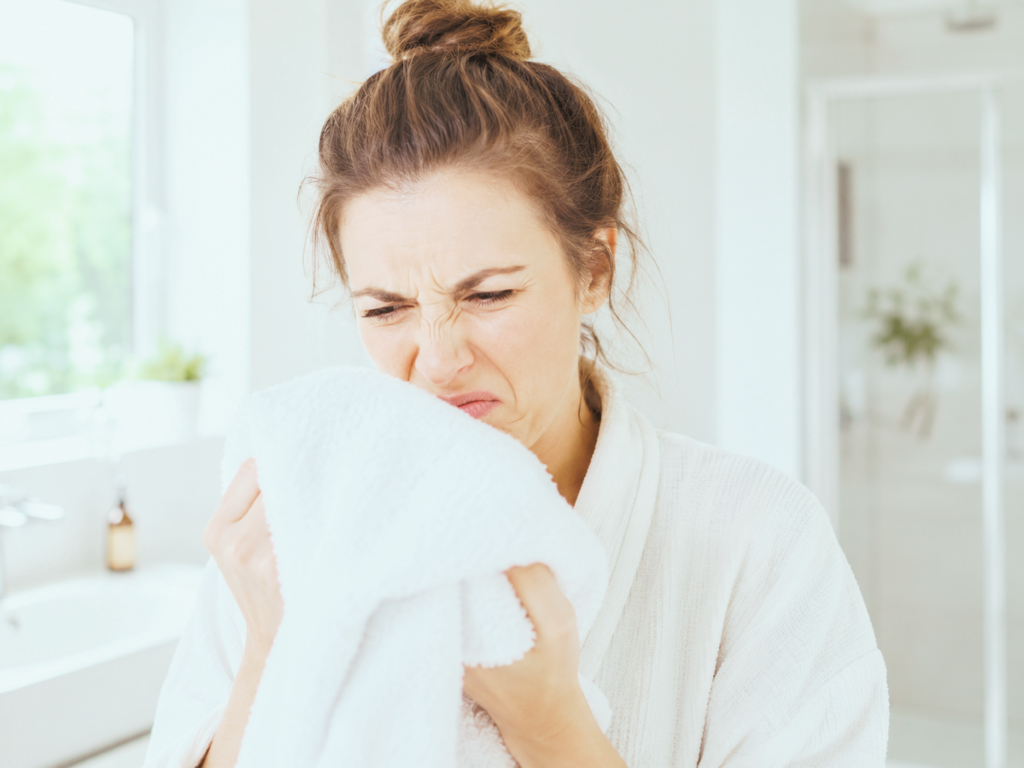
The smell isn’t just unpleasant — it’s a signal that something biological is happening inside your towel fibers. Understanding the cause makes the fix make sense.
The Real Culprit: Mildew and Bacteria
Mildew is a type of fungus that thrives in warm, moist environments. When towels stay damp — even for a few hours — mildew and odor-causing bacteria begin to multiply in the dense cotton fibers.
According to research published by the American Society for Microbiology, fabrics that remain wet provide ideal conditions for microbial growth, which produces the characteristic musty, sour odor you notice when you unfurl a towel.
Why Washing Doesn’t Always Work
Here’s the counterintuitive part: your washing machine might actually be part of the problem.
- Low-temperature washes don’t kill mildew spores or odor-causing bacteria effectively
- Too much detergent leaves a residue in fibers that traps moisture and feeds bacteria over time
- Fabric softener coats towel fibers with a waxy layer that reduces absorbency and traps bacteria — making musty towels worse with every wash
- Front-loading washers are known to harbor mildew in the rubber door gasket, which can transfer to laundry during the wash cycle
The Consumer Reports laundry research team has specifically flagged front-loader odor transfer as a widespread issue, recommending regular drum cleaning as a maintenance step.
The Drying Factor
Leaving towels in the washer too long after the cycle ends is one of the fastest ways to develop mildew smell. Even 30 minutes in a damp drum can start the process. The same applies to tossing a damp towel on the bathroom floor or over a hook where air can’t circulate.
Method 1: White Vinegar Wash (The Most Effective Fix)
White distilled vinegar is the single most recommended solution for removing mildew smell from towels — and for good reason. Its acetic acid content breaks down the bacterial and mildew residue that’s causing the odor, without damaging cotton fibers.
This is the method cleaning professionals reach for first.
What You’ll Need
- 1 to 2 cups of white distilled vinegar
- Your washing machine
- Hot water setting (if fabric allows)
Step-by-Step
- Place your smelly towels in the washing machine — do not add detergent
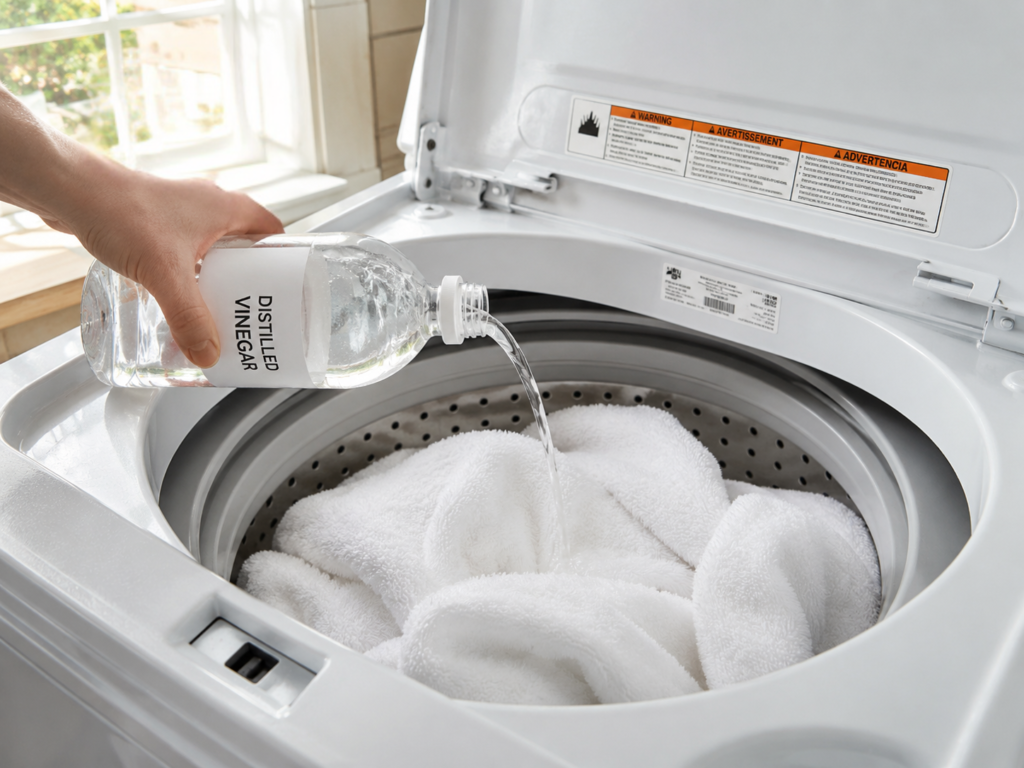
- Pour 1 to 2 cups of white distilled vinegar directly into the drum or the detergent dispenser
- Set the machine to the hottest water setting safe for your towels (check the care label)
- Run a full wash cycle
- Do not add fabric softener at any point
- Transfer towels to the dryer immediately — do not let them sit
- Dry on high heat until completely dry
The vinegar smell dissipates completely once dry. Your towels will come out odor-free.
💡 Expert Tip: For towels with a particularly severe mildew smell, soak them in a basin of hot water and 2 cups of vinegar for 30 minutes before running the machine wash. This pre-soak gives the acetic acid more time to penetrate deep into the fibers.
Method 2: Baking Soda Wash (The Deodorizing Boost)
Baking soda (sodium bicarbonate) is a natural deodorizer and mild abrasive that neutralizes acidic odors and helps lift buildup from towel fibers. It works slightly differently from vinegar — instead of killing the source of the smell, it neutralizes the odor compounds themselves.
Used on its own, it’s good. Used after a vinegar wash, it’s excellent.
How to Use It
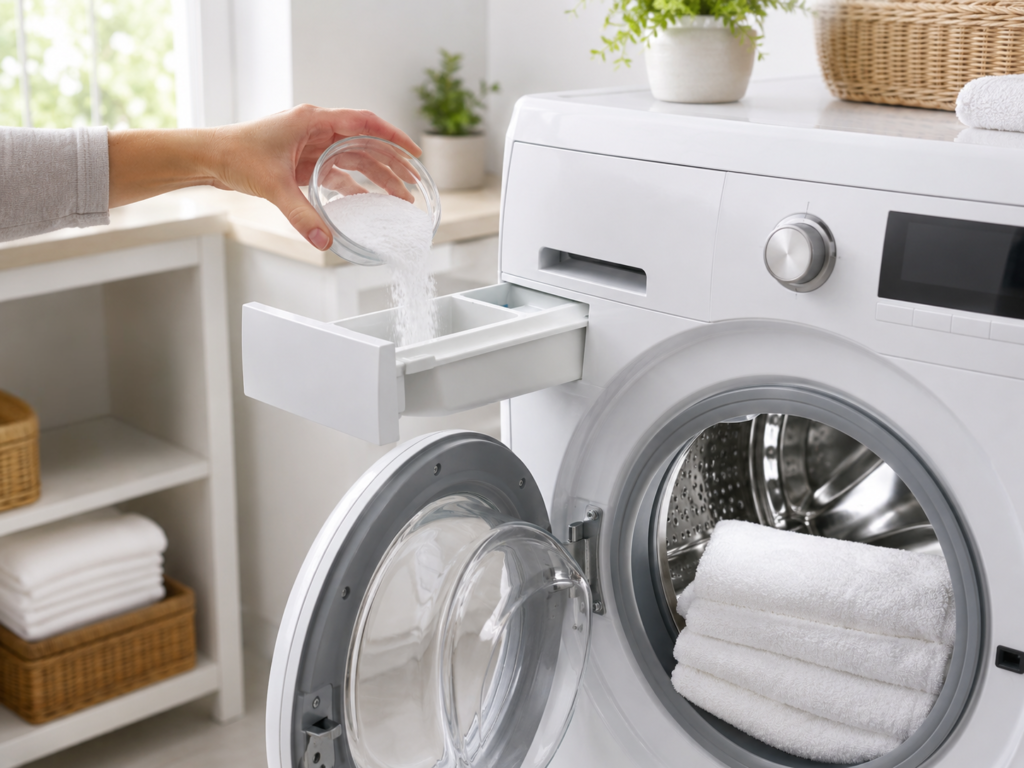
- Wash towels as normal — but add ½ cup of baking soda to the drum along with your usual detergent
- Skip fabric softener
- Dry on high heat immediately after the cycle
The Two-Wash Method (Vinegar + Baking Soda)
For badly mildewed towels, many professional cleaners recommend a two-wash sequence:
- Wash 1: Vinegar only, hot water, no detergent
- Wash 2 (immediately after): Regular detergent + ½ cup baking soda, hot water
This combination strips away detergent buildup, kills mildew, and neutralizes odors in one laundry session. It’s the most thorough DIY deep-clean available without commercial products.
⚠️ Important: Never mix vinegar and baking soda in the same wash cycle — they neutralize each other and lose effectiveness. Use them in separate consecutive washes.
Method 3: Hot Water and Borax
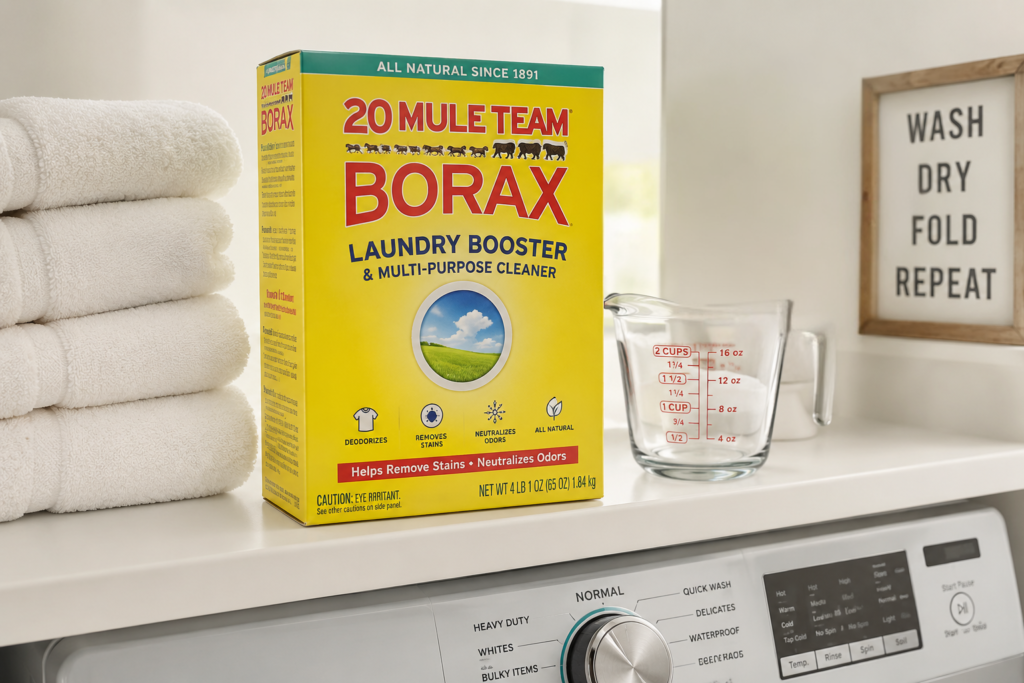
Borax — also known as sodium tetraborate — is a naturally occurring mineral that has been used as a laundry booster for over a century. It raises the pH of wash water, which inhibits mildew and bacteria, while also softening water to help detergent work more effectively.
How to Use Borax on Mildewed Towels
- Add your towels to the washing machine
- Dissolve ½ cup of Borax in a cup of hot water and add it to the drum
- Add your regular detergent
- Wash on the hottest safe setting
- Dry completely on high heat
Borax is particularly useful in areas with hard water, where mineral deposits in the water can contribute to towel stiffness and odor retention.
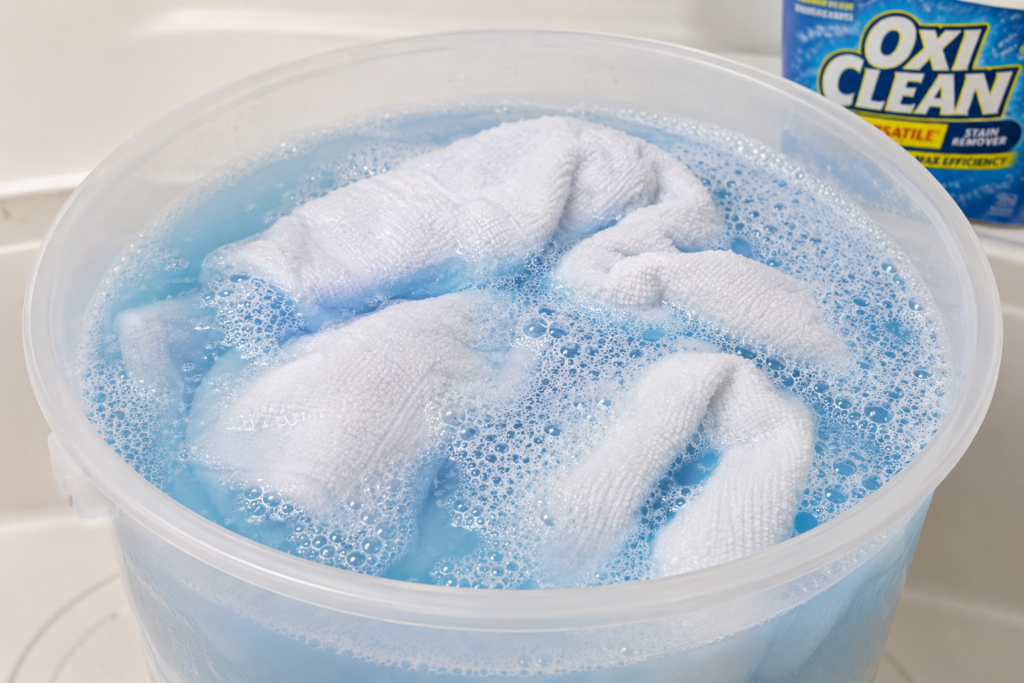
Method 4: Oxygen-Based Bleach (OxiClean)
For white or colorfast towels with persistent mildew odor, an oxygen bleach product like OxiClean can be highly effective. Unlike chlorine bleach, oxygen bleach is gentler on fibers, color-safe in most cases, and works by releasing oxygen ions that break down organic stain and odor compounds.
How to Use It
- Fill a large bucket or bathtub with hot water
- Add 1–2 scoops of OxiClean per gallon of water and stir to dissolve
- Submerge your towels and soak for 1–6 hours (or overnight for severe cases)
- Wring out and wash normally in the machine with detergent
- Dry on high heat immediately
💡 Expert Tip: Always check your towel’s care label before using any bleach product — even oxygen-based bleach. Avoid using on wool, silk, or towels with rubber backing.
Method 5: Sunlight Drying
One of the oldest and most effective deodorizing methods costs absolutely nothing: sunlight.
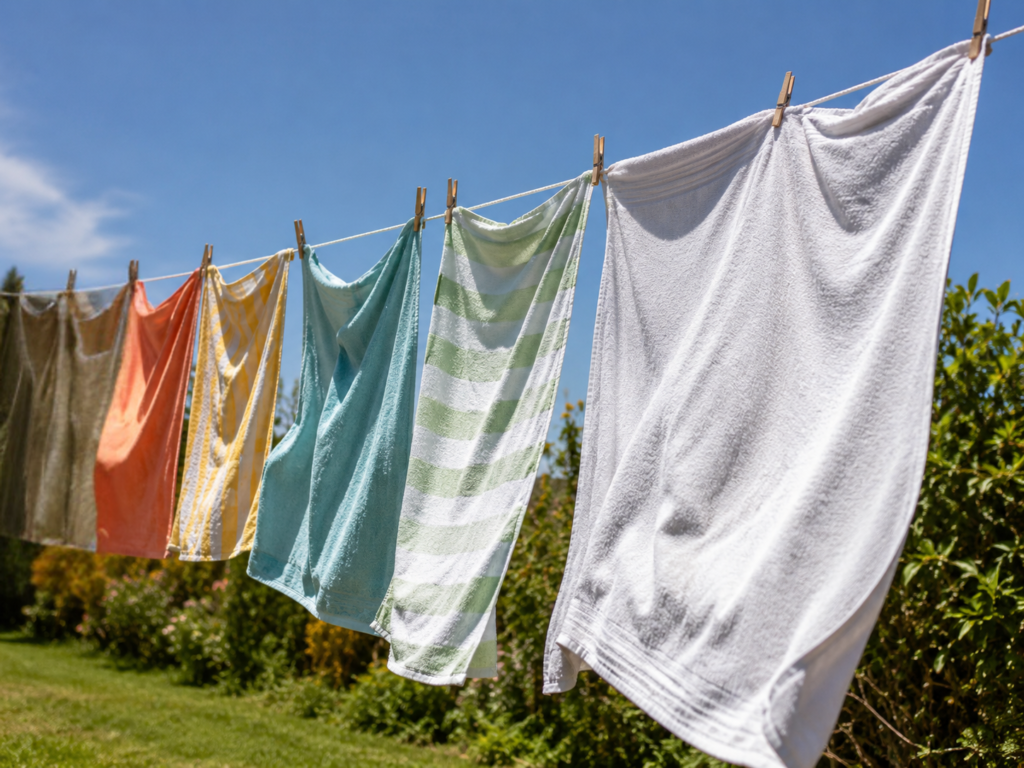
UV rays from the sun are a natural disinfectant. Direct sunlight kills mildew spores and bacteria on fabric surfaces — the same principle behind why hospital linens were traditionally line-dried outdoors.
After washing your towels with vinegar or baking soda, hang them outside on a clothesline or drying rack in full sun for several hours. Even a few hours of direct UV exposure can dramatically reduce residual odor.
This method works especially well as a finishing step after a vinegar wash when you want the absolute best result.
Also Read: HOW TO CLEAN SHOWER TILES
The Towel Stripping Method
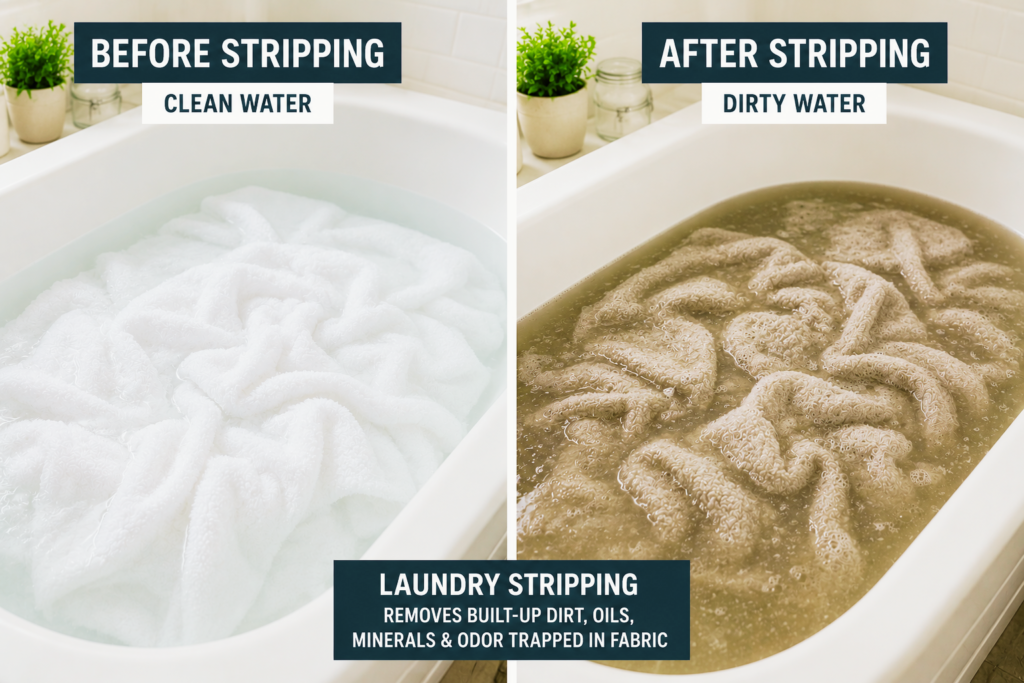
If your towels have been building up detergent residue, fabric softener, and mineral deposits over months or years, a standard wash — even with vinegar — may not be enough. That’s where “laundry stripping” comes in.
Laundry stripping is a deep-cleaning soak that removes years of embedded residue from fabric fibers. It’s become popular in cleaning communities for exactly the problem you’re dealing with.
What You Need
- Bathtub or large plastic bin
- Very hot water
- ¼ cup Borax
- ¼ cup washing soda (sodium carbonate, such as Arm & Hammer Super Washing Soda)
- ½ cup powdered laundry detergent (not liquid)
Steps
- Fill the tub with very hot water
- Dissolve all three ingredients thoroughly
- Submerge clean (already washed) towels and stir to saturate
- Soak for 4–6 hours, stirring every hour
- Watch the water turn brown or gray — that’s years of buildup releasing from the fibers
- Wring out and run through a rinse cycle in the washer (no detergent)
- Dry on high heat
This is a one-time reset, not a regular routine. After stripping, your towels will be dramatically softer, more absorbent, and completely odor-free.
Quick Comparison: All Methods at a Glance
| Method | Difficulty | Cost | Best For |
|---|---|---|---|
| White vinegar wash | Easy | Under $2 | Most mildew odors |
| Baking soda wash | Easy | Under $1 | Mild odors, deodorizing |
| Vinegar + baking soda (2-wash) | Easy | Under $3 | Stubborn or recurring smell |
| Borax wash | Easy | ~$5 | Hard water areas, bacteria |
| OxiClean soak | Moderate | ~$8 | Deep stains + odor |
| Sunlight drying | Easy | Free | Finishing step, UV disinfecting |
| Laundry stripping | Moderate | ~$5–10 | Years of buildup, fabric reset |
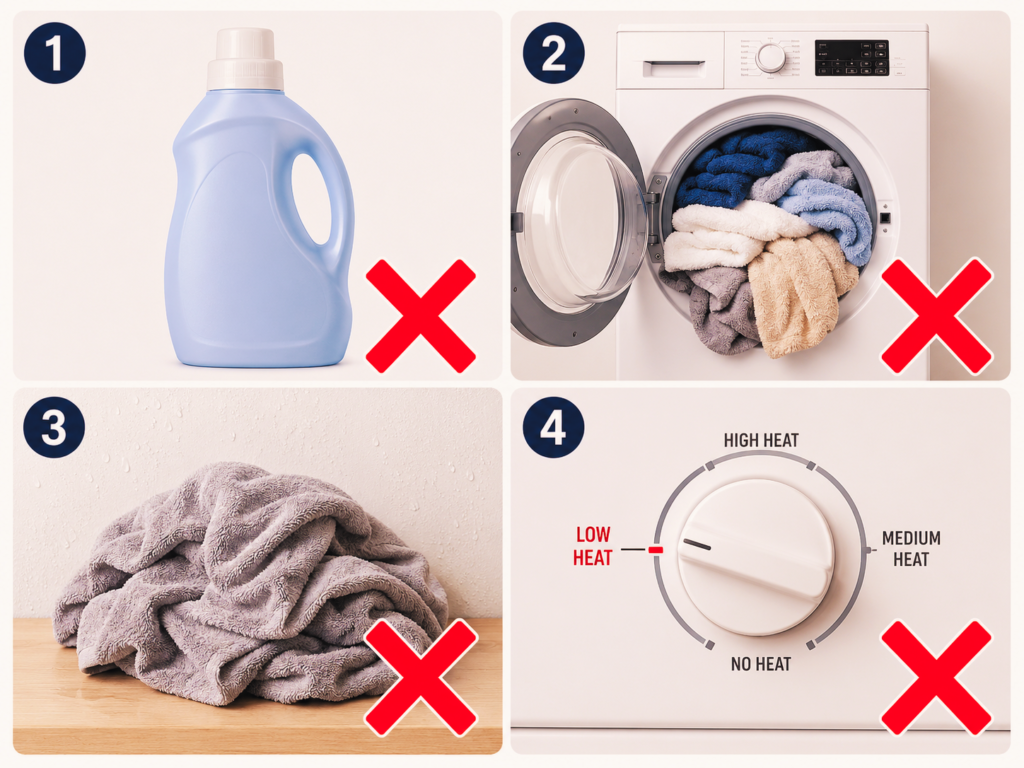
What NOT to Do (Common Mistakes That Make It Worse)
Knowing what to avoid is just as important as knowing what to do.
- Don’t use fabric softener — it coats fibers with a wax-like residue that traps moisture and feeds bacteria. The Spruce’s laundry experts specifically recommend skipping softener on towels entirely.
- Don’t overload the washing machine — towels need room to agitate properly. Overcrowding means they don’t rinse clean, leaving detergent residue behind.
- Don’t use too much detergent — more is not better. Excess detergent doesn’t fully rinse out and becomes a food source for bacteria. Most machines need far less than the detergent cap suggests.
- Don’t leave wet towels in the drum — even 20–30 minutes is enough to restart mildew growth. Transfer to the dryer immediately.
- Don’t dry towels on low heat — low heat leaves moisture in fibers. Use medium-high to high heat and run the full cycle.
- Don’t hang damp towels in a pile — hanging towels on hooks in a humid bathroom reduces airflow. Use a towel bar or spread them flat on a rack.
Expert Tips: Keeping Towels Fresh Long-Term
Fixing the smell is step one. Keeping towels fresh permanently takes a few consistent habits:
- Wash towels every 3–4 uses — the American Cleaning Institute recommends washing bath towels at least once a week, or after every 3–4 uses. Waiting longer allows bacteria and dead skin cells to accumulate.
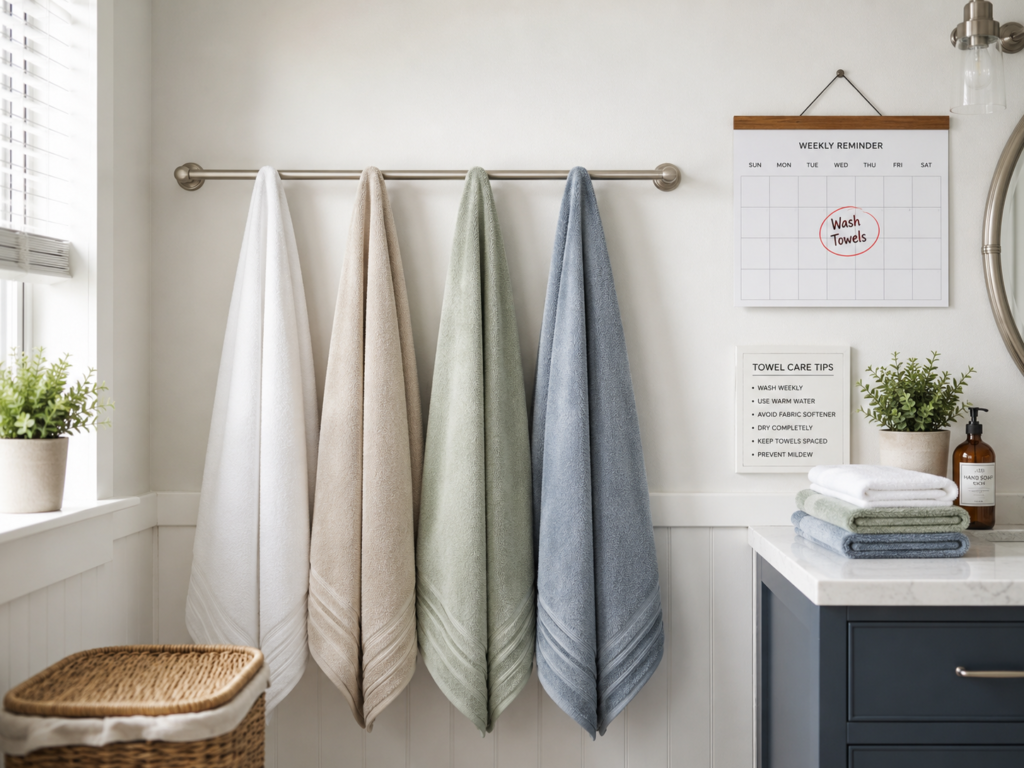
- Hang towels fully spread out after every use — even in a small bathroom, use a towel bar (not a hook) so the full surface can dry between uses.
- Run your washer drum cleaning cycle monthly — most modern washers have a “Clean Washer” or “Drum Clean” cycle. Run it monthly with a washing machine cleaner tablet or a cup of vinegar to prevent mildew from transferring to your laundry.
- Leave the washer door open between uses — especially on front-loaders. This allows the drum to dry out and prevents mold buildup in the door gasket.
- Rotate your towels — using the same two towels every day means they never fully dry out. Having four to six towels in rotation gives each one adequate drying time.
- Consider bamboo or microfiber towels — these materials are naturally less prone to mildew than thick cotton terry due to their faster-drying structure.
FAQs: How to Remove Mildew Smell from Towels
1. Why do my towels still smell after washing?
If towels smell after washing, the likely cause is one of three things: detergent or fabric softener residue built up in the fibers over time, a mildew problem in the washing machine itself (especially front-loaders), or incomplete drying after the wash cycle. Try a vinegar-only wash on hot, followed immediately by a baking soda wash, and dry on high heat right away without letting the towels sit in the drum.
2. How much vinegar should I use to remove mildew smell from towels?
For a standard load, use 1 to 2 cups of white distilled vinegar added directly to the drum or detergent dispenser. Do not add detergent in the same cycle — the detergent can neutralize the vinegar’s effectiveness. For severely mildewed towels, pre-soak in hot water and 2 cups of vinegar for 30 minutes before machine washing.
3. Is it safe to use vinegar in a washing machine?
Yes — white distilled vinegar is safe for both standard top-loaders and high-efficiency (HE) front-loaders when used occasionally. However, some washing machine manufacturers advise against regular vinegar use as it can, over time, degrade rubber gaskets and seals. Use it as a periodic deep-clean treatment rather than an every-wash additive.
4. Will baking soda alone remove mildew smell from towels?
Baking soda is an excellent deodorizer and will reduce mildew odor, but it works best in combination with vinegar (in separate wash cycles) for complete removal. On its own, baking soda neutralizes odors without fully killing the mildew or bacteria causing them. For mild smells, it may be sufficient — for stubborn cases, pair it with the vinegar method.
5. How do I stop towels from developing a mildew smell in the future?
The three most impactful habits are: hang towels fully spread out after every use (not bunched on a hook), wash them every three to four uses, and skip the fabric softener permanently. Also run a monthly drum-cleaning cycle on your washing machine to prevent mildew in the washer itself from transferring to your towels.
Conclusion: Fresh Towels Are Closer Than You Think
Mildew-smelling towels are a frustrating problem — but they’re not a permanent one. The root cause is almost always the same: moisture trapped in fibers, combined with residue buildup that feeds bacteria over time. Once you address both, the smell goes away and stays away.
Start with the white vinegar wash — it works for most people on the first try. If the smell persists, follow it with a baking soda wash, or go all-in with a full laundry strip for towels that have years of buildup. Then adopt the simple habits: dry your towels fully after every use, skip the fabric softener, and wash them regularly.
You don’t need expensive products. You don’t need new towels. You just need the right method — and now you have it.
Bookmark this guide for the next time a towel comes out of the wash smelling less than fresh. And if this helped, share it with someone still fighting the same battle.

