
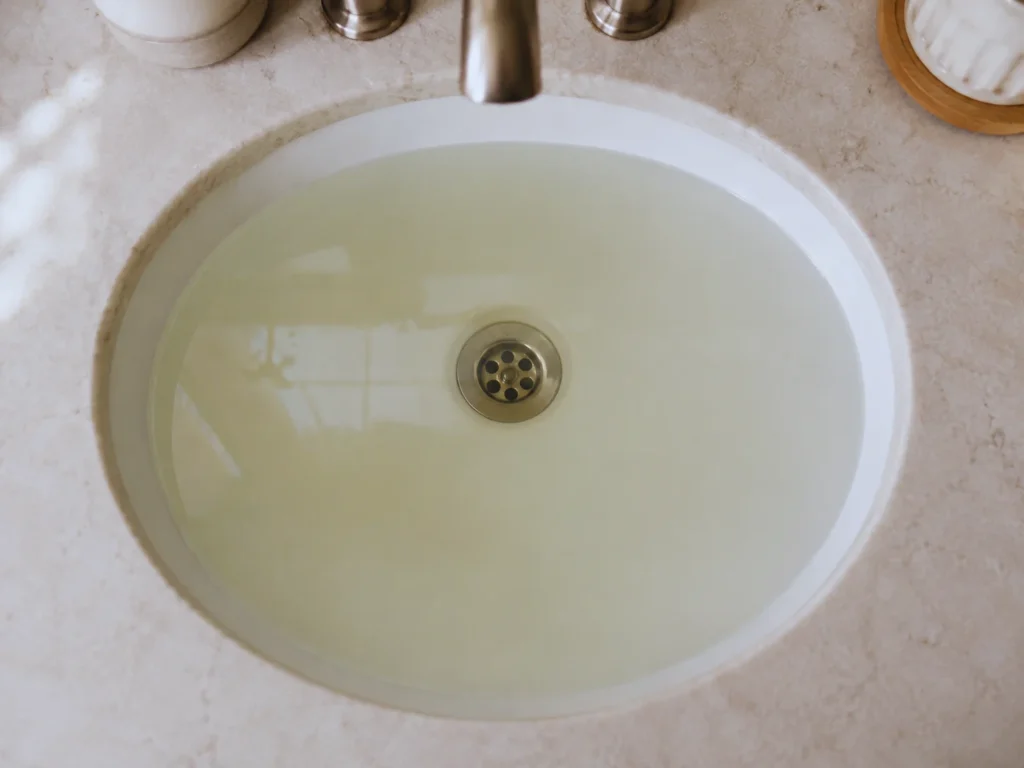
It starts as a minor annoyance — water draining just a little slower than usual. You ignore it for a week. Then two. Then one morning you’re standing in an inch of soapy water while showering, and you realize: the drain is completely blocked.
Sound familiar?
Clogged drains are one of the most common household plumbing problems. According to the Environmental Protection Agency (EPA), the average household uses over 100 gallons of water per day — and every bit of that water needs to flow through your drains smoothly. When something goes wrong, it doesn’t fix itself.
The good news: most clogs don’t require a plumber or expensive chemicals. In most cases, you can unclog a drain yourself in 15 to 30 minutes using items you already have at home.
This guide covers every method — from the quick and natural to the heavy-duty — so you can pick the right fix for your situation.
What Causes a Drain to Clog?
Before you fix it, it helps to know what you’re dealing with.
Different drains collect different culprits — and knowing which is yours points you toward the fastest solution.
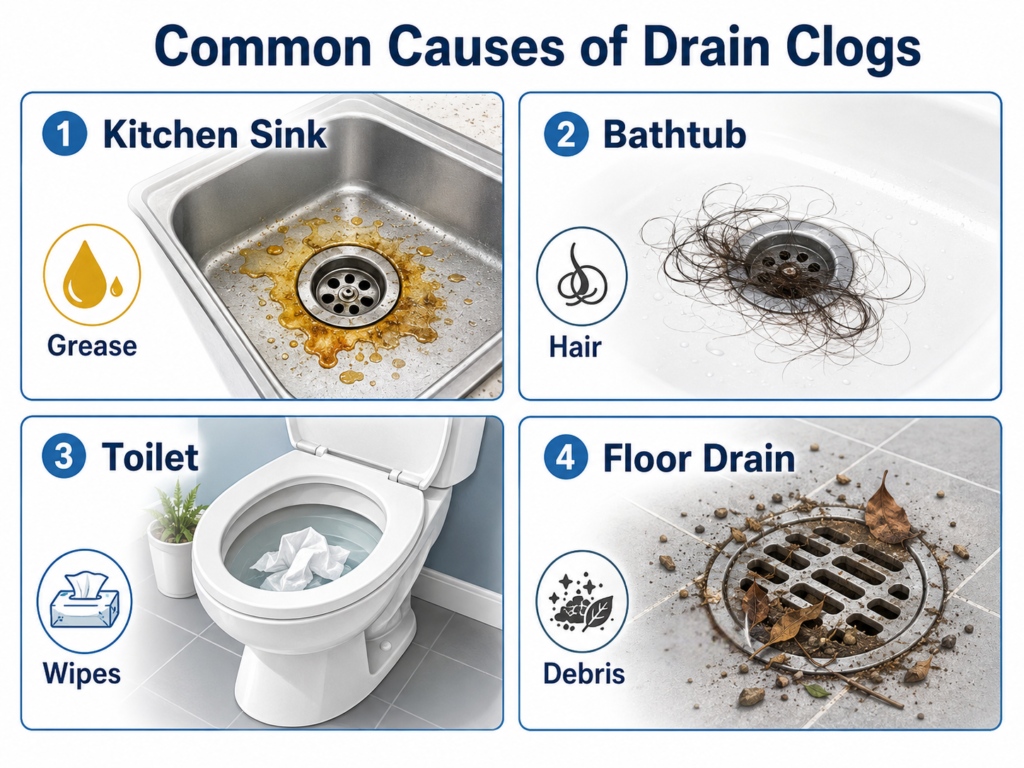
Kitchen Sink Drains
Kitchen clogs are almost always caused by grease, oil, and food buildup. When hot grease goes down the drain, it flows freely — then cools and solidifies further down the pipe, collecting food particles and creating a stubborn blockage.
The American Society of Home Inspectors (ASHI) notes that fat, oil, and grease (FOG) are the leading cause of residential drain clogs and even municipal sewer overflows.
Bathroom Sink and Tub Drains
Hair is the number one culprit here. A single shower can deposit significant amounts of hair into the drain. Combined with soap scum and product residue, it forms a dense, web-like mass that catches everything that follows.
Toilet Clogs
Usually caused by too much toilet paper, wipes (even those labeled “flushable”), cotton balls, or other non-degradable items. According to Consumer Reports, “flushable” wipes are a leading cause of residential and municipal plumbing blockages and should be disposed of in the trash instead.
Floor Drains and Utility Drains
These catch debris, lint, and sediment over time — especially in laundry rooms, basements, and garages.
Also Read: How Long Does It Take for Bathroom Caulk to Dry?
Method 1: The Plunger (Your First Move)
If you only own one plumbing tool, make it a plunger. It’s cheap, chemical-free, and surprisingly effective on most standard clogs.
Which Plunger to Use
There are two types:
- Cup plunger — the classic flat-bottomed red plunger, best for flat surfaces like sink and tub drains
- Flange plunger — has an extended rubber flap that fits into toilet openings, creating a better seal
Using the wrong type reduces effectiveness significantly. For sinks and tubs, always use a cup plunger.
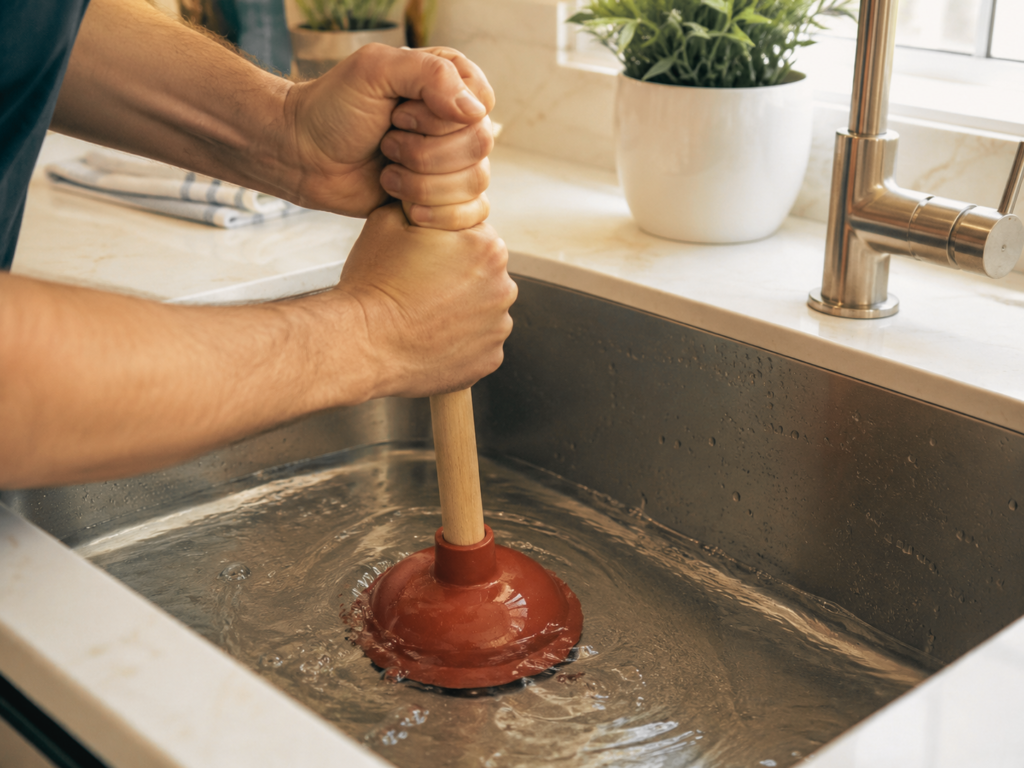
How to Plunge a Drain Correctly
- Remove the drain stopper or cover if possible
- Add enough water to the sink or tub to cover the rubber cup of the plunger
- Position the cup directly over the drain opening and press down firmly to create a seal
- Push and pull with forceful, rhythmic strokes — 10 to 15 times
- Lift the plunger quickly on the final pull to break the suction
- Run hot water to test if the clog cleared
💡 Expert Tip: For double kitchen sinks, plug the second drain with a wet rag before plunging. This forces the pressure toward the clog instead of escaping through the other opening.
Method 2: Baking Soda and Vinegar
If you prefer to avoid harsh chemicals — or you just don’t have any on hand — this natural drain cleaner is worth knowing. It won’t dissolve a major blockage, but it works well on mild clogs and as a monthly maintenance flush.
Why It Works
Baking soda (sodium bicarbonate) is a mild alkali. White vinegar is a weak acid. When you combine them, they create a fizzing reaction that can dislodge loose buildup and deodorize the drain at the same time.
The National Institute of Health’s chemistry resources confirm that this acid-base reaction produces carbon dioxide gas, water, and sodium acetate — a safe and non-toxic combination.
Step-by-Step
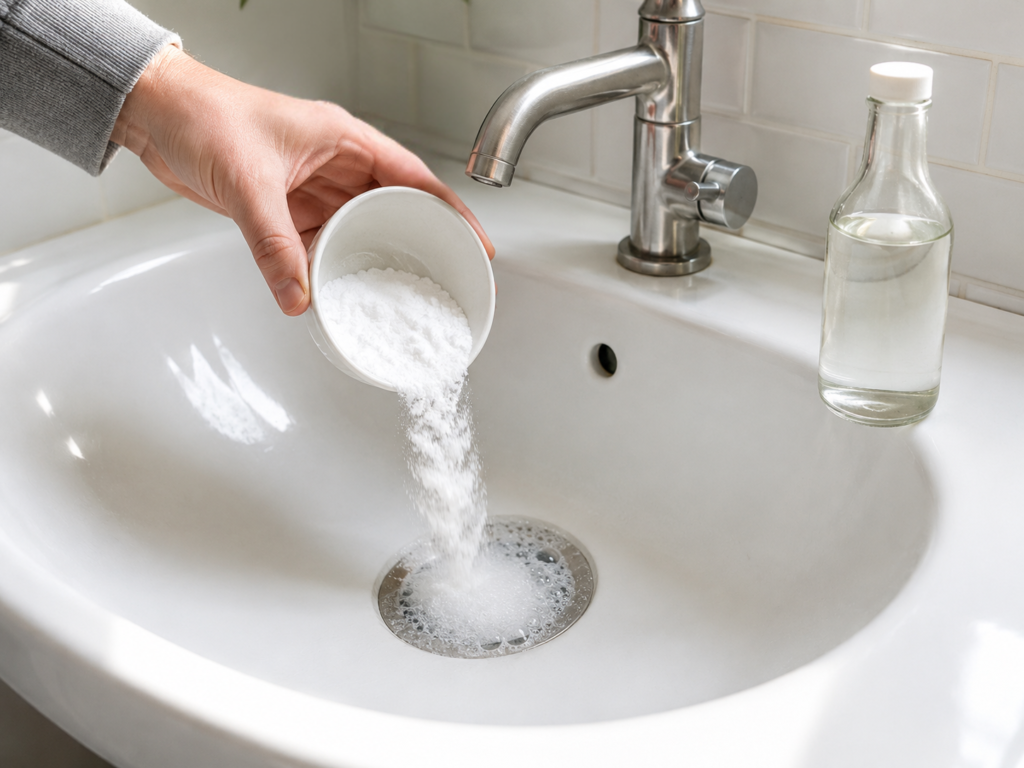
- Pour a kettle of boiling water down the drain (loosens grease)
- Pour ½ cup of baking soda directly into the drain
- Follow with ½ cup of white vinegar
- Immediately cover the drain with a plug or damp cloth to direct the fizzing action downward
- Wait 15–20 minutes
- Flush with another kettle of boiling water
Repeat once more if drainage is still slow.
⚠️ Caution: Do not use boiling water on PVC pipes — it can soften joints over time. Use very hot tap water instead. If you’re unsure about your pipe material, ask a licensed plumber before using hot water methods.
Method 3: Boiling Water Alone
Sometimes the simplest solution is the right one.
Hot water alone is highly effective at dissolving grease and soap scum buildup — the two most common causes of kitchen and bathroom sink clogs. This is the fastest method to try first before anything else.
Just boil a full kettle and pour it slowly down the drain in two to three stages, waiting 30 seconds between each pour. The pauses allow the hot water to work on the buildup before you add more.
This works best on grease and soap clogs in metal pipes. Again, avoid boiling water if you have PVC plumbing.
Method 4: The Drain Snake (Drain Auger)
When a plunger can’t reach the clog, a drain snake — also called a drain auger — is your next tool.
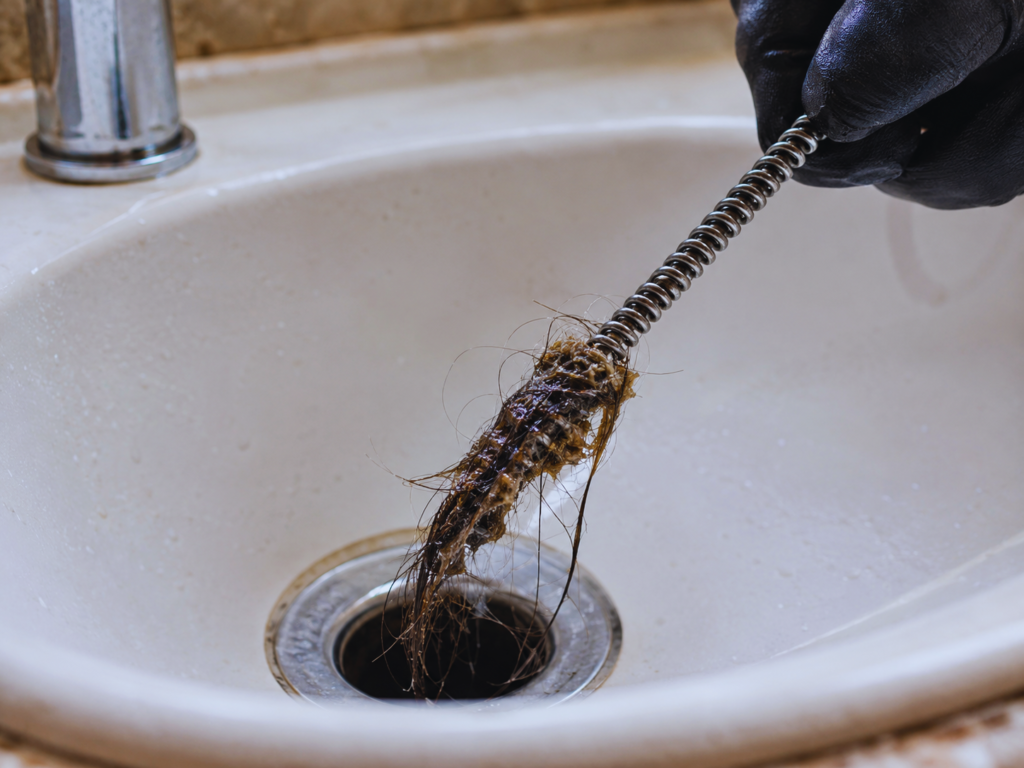
A manual drain snake is a coiled metal cable with a corkscrew tip. You feed it into the drain and rotate it to break apart or retrieve the clog. They’re available at hardware stores like Home Depot for $20–$40.
How to Snake a Drain
- Insert the tip of the snake into the drain opening
- Slowly feed it in while rotating the handle clockwise
- When you feel resistance, you’ve hit the clog — keep rotating to break it up or hook it
- Pull the snake back out slowly, bringing the clog material with it
- Run hot water for 2–3 minutes to flush the loosened debris
💡 Expert Tip: For bathroom sinks, remove the drain stopper first. Most pop-up stoppers can be unscrewed by hand or with a screwdriver, giving you direct, unobstructed access to the drain pipe.
Method 5: Remove and Clean the P-Trap
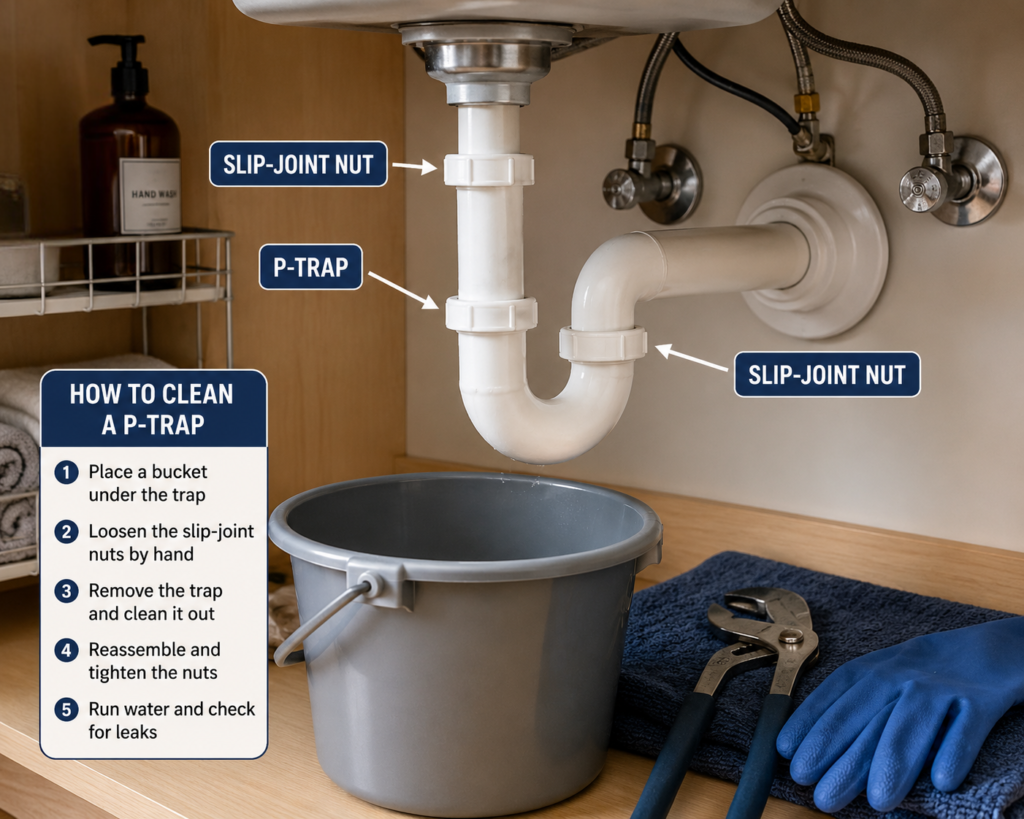
Under every sink is a curved pipe section called the P-trap. It’s shaped like the letter “P” and is designed to hold a small amount of water that blocks sewer gases from entering your home.
It’s also where dense clogs frequently get stuck.
Cleaning it is easier than it sounds.
What You’ll Need
- A bucket
- Adjustable pliers or a pipe wrench
- Rubber gloves
- Old towel or rags
Steps
- Place the bucket under the P-trap to catch water
- Unscrew the two slip-joint nuts on either side of the curved section by hand (or with pliers if tight)
- Remove the P-trap and dump the contents into the bucket
- Use an old toothbrush or bottle brush to scrub out buildup inside the trap
- Rinse with water and reinstall — hand-tighten the nuts, then give a quarter turn with pliers
- Run water to check for leaks
This is especially effective when other methods have failed, because the P-trap catches physical debris that can’t be dislodged by pressure or chemicals.
Method 6: Commercial Drain Cleaners
When home remedies don’t cut it, commercial drain cleaners offer a stronger option.
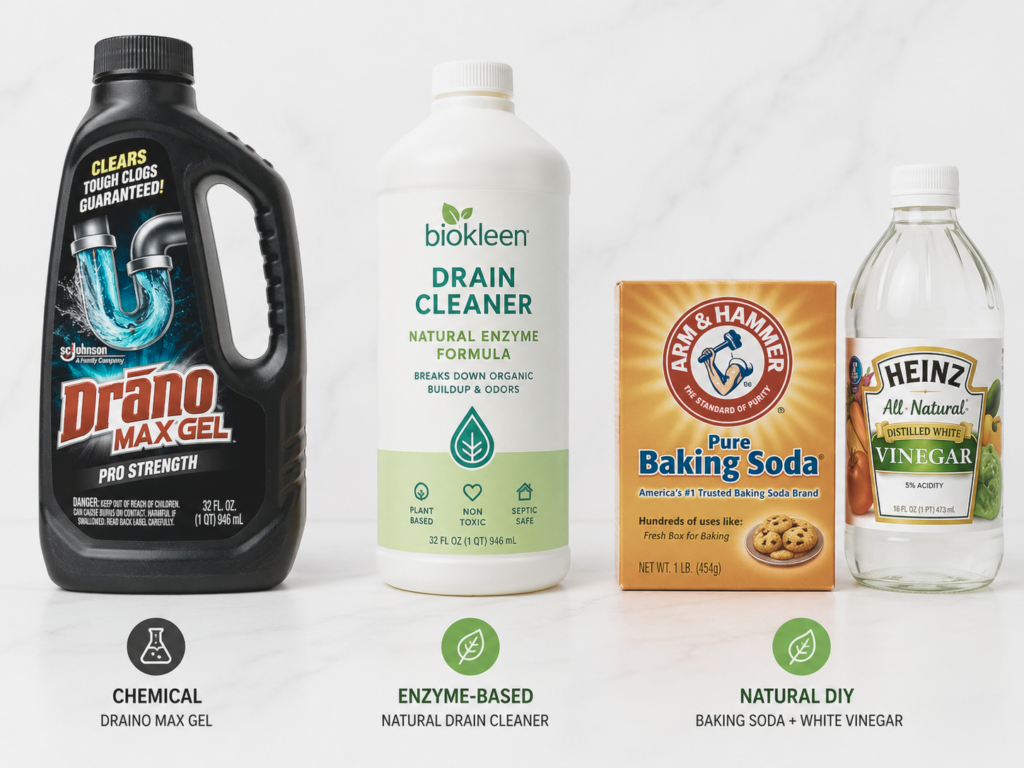
There are three main types:
| Type | How It Works | Best For |
|---|---|---|
| Chemical (caustic) | Uses lye or sulfuric acid to dissolve organic matter | Grease, hair, soap scum |
| Enzymatic | Uses bacteria/enzymes to break down organic matter | Mild clogs, maintenance |
| Oxidizing | Uses bleach or peroxides to break down clogs | Hair, food particles |
Popular options include Drano Max Gel and Liquid-Plumr, which are widely available and designed to cut through tough hair and grease clogs.
Pros and Cons of Chemical Drain Cleaners
Pros:
- Fast-acting (often 15–30 minutes)
- Widely available, inexpensive
- No tools required
Cons:
- Harsh chemicals can damage older pipes with repeated use
- Harmful if skin or eyes are exposed — always use gloves and ventilate the area
- Not effective on physical obstructions (toys, large debris)
- Environmental concerns — chemicals eventually reach waterways
The EPA recommends looking for safer, biodegradable alternatives when possible, particularly in households with septic systems.
⚠️ Never mix different drain cleaners — combining products can cause dangerous chemical reactions, including releasing toxic fumes.
Method 7: Wet/Dry Vacuum
If you have a wet/dry shop vacuum, it can be a surprisingly powerful tool for unclogging drains — especially tub and floor drains.
Set the vacuum to liquid mode, seal the hose over the drain as tightly as possible (a plunger cup makes a great adapter), and turn it on. The suction can pull up hair clogs, debris, and even small objects that fell into the drain.
This works best when the clog is relatively close to the drain opening — within the first few feet of pipe.
Method 8: Dish Soap and Hot Water for Kitchen Sinks
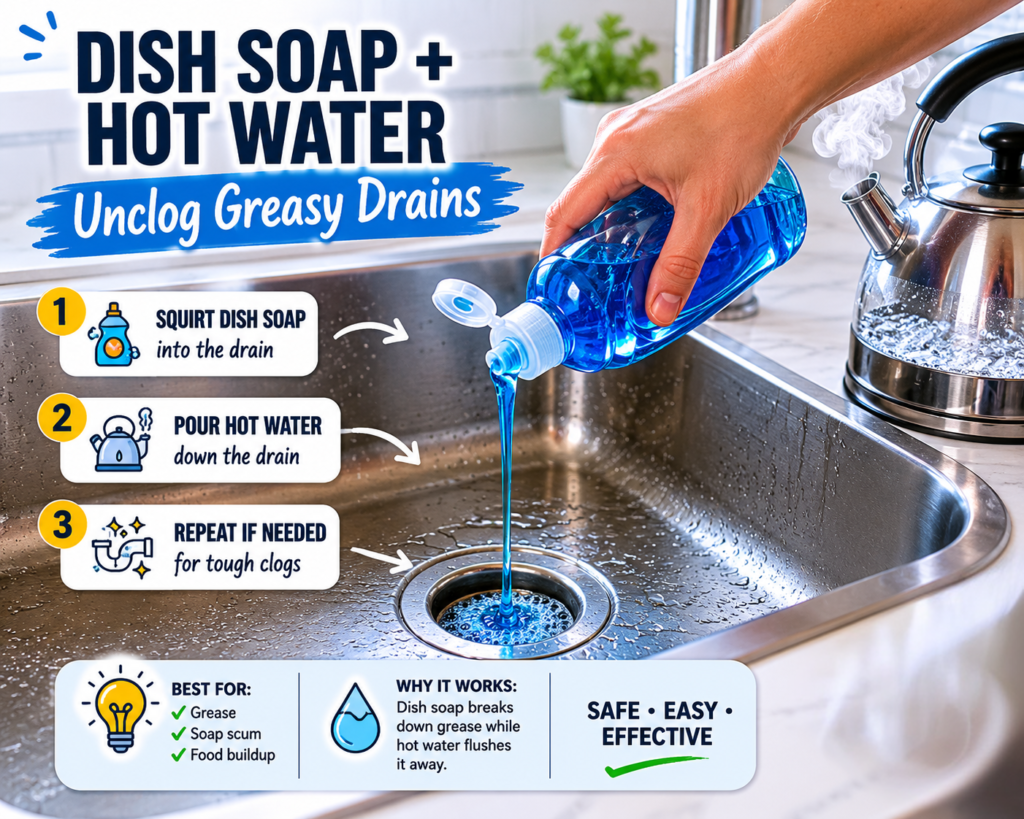
For grease-based kitchen clogs, dish soap is a surprisingly effective degreaser.
Squirt a generous amount of dish soap like Dawn directly down the drain — about 2–3 tablespoons. Follow it immediately with a full kettle of very hot water. The soap breaks up grease, and the hot water flushes it away.
This works best as a first attempt or for mild grease buildup. It’s one of the gentlest methods and safe for all pipe types.
Method 9: Wire Hanger Hook
No drain snake? A wire coat hanger works in a pinch — especially for pulling hair clogs out of bathroom drains.
Straighten the hanger, then bend one end into a small hook about half an inch wide. Insert it into the drain and use a twisting, fishing motion to hook the clog and pull it out.
It’s not elegant, but it works remarkably well on shallow hair blockages in tub and shower drains.
Method 10: Call a Licensed Plumber
Sometimes a clog signals something bigger — a blockage deep in the main line, root intrusion into sewer pipes, or a structural issue that DIY methods can’t reach.
Call a plumber if:
- Multiple drains in your home are clogged at the same time
- You hear gurgling sounds from other drains when water is running
- There’s sewage smell coming from drains even after cleaning
- DIY methods have repeatedly failed on the same drain
- Water is backing up into other fixtures
You can find a licensed, certified plumber through the Plumbing-Heating-Cooling Contractors Association (PHCC) or HomeAdvisor, both of which vet their contractors for licensing and insurance.
How to Prevent Drain Clogs in the First Place
Fixing a clog is satisfying. Never getting one is better.
Here are the habits that keep drains clear long-term:
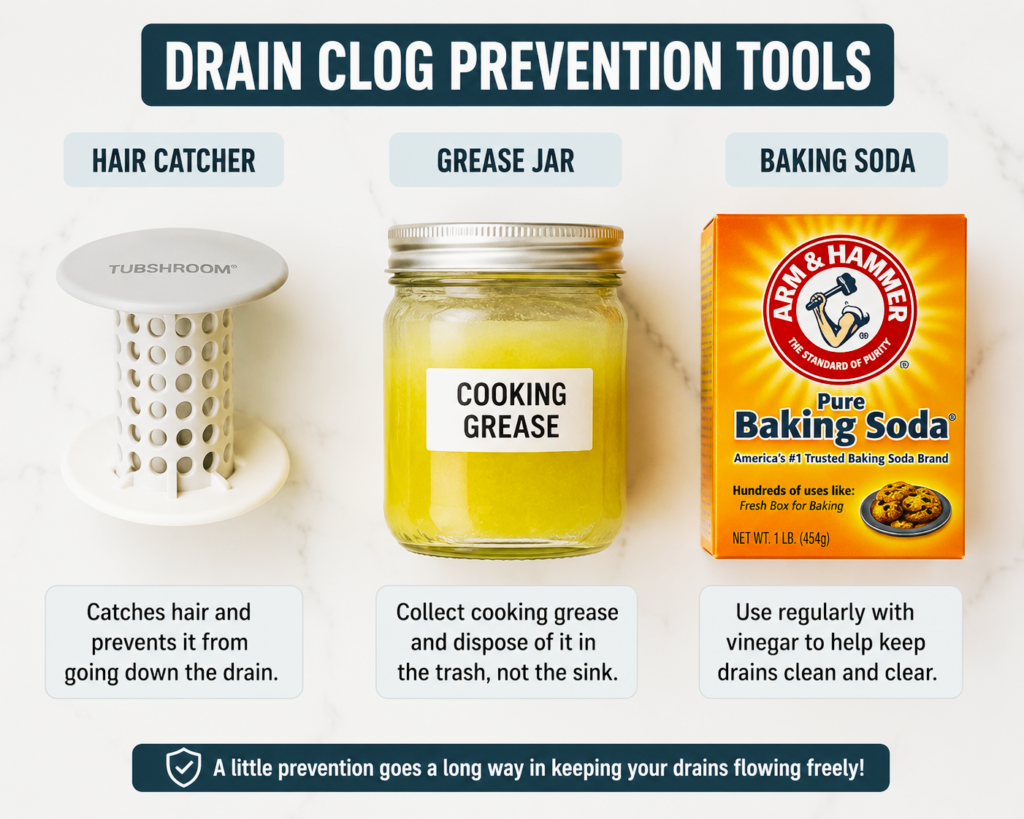
- Use a drain hair catcher in every shower and tub — inexpensive mesh covers catch hair before it goes down the drain. TubShroom is one of the most popular and effective options.
- Never pour grease down the kitchen drain — collect it in a jar and dispose of it in the trash. This single habit prevents the majority of kitchen sink clogs.
- Run hot water for 30 seconds after each use of the kitchen sink to flush food and grease through the pipe.
- Do a monthly baking soda flush — a quick pour of baking soda and hot water keeps soap scum and light buildup from accumulating.
- Only flush toilet paper — wet wipes, cotton products, and paper towels do not break down in pipes, regardless of what the packaging says.
- Clean pop-up stoppers regularly — the stopper in your bathroom sink collects hair and soap residue that slowly restricts flow.
Quick Comparison: All Methods at a Glance
| Method | Difficulty | Cost | Best For |
|---|---|---|---|
| Boiling water | Easy | Free | Grease, soap buildup |
| Plunger | Easy | $5–$15 | Most standard clogs |
| Baking soda + vinegar | Easy | Under $2 | Mild clogs, maintenance |
| Dish soap + hot water | Easy | Free | Kitchen grease clogs |
| Wire hanger | Easy | Free | Shallow hair clogs |
| Wet/dry vacuum | Moderate | (if owned) | Tub and floor drains |
| Drain snake | Moderate | $20–$40 | Hair, deep clogs |
| P-trap cleaning | Moderate | Free | Sink drain blockages |
| Commercial cleaner | Easy | $5–$12 | Stubborn organic clogs |
| Professional plumber | N/A | $100–$300+ | Severe or recurring clogs |
FAQs: How to Unclog a Drain
1. What is the fastest way to unclog a drain?
For most clogs, a plunger is the fastest first response. If the clog is grease or soap-based, boiling water poured in stages can dissolve it in minutes. Commercial gel drain cleaners like Drano Max Gel are also fast-acting — usually within 15–30 minutes — for organic clogs like hair and grease.
2. Is it safe to use baking soda and vinegar to unclog a drain?
Yes — baking soda and vinegar are completely safe for pipes, the environment, and your household. The fizzing reaction can dislodge light buildup and deodorize the drain. However, this method is not strong enough to clear dense hair clogs or heavy grease blockages on its own. It works best for mild or partial clogs and as a preventive maintenance routine.
3. Why does my drain keep clogging even after I clean it?
Recurring clogs in the same drain usually indicate a deeper issue — a partial obstruction further down the pipe, a buildup of pipe scaling, or tree root intrusion into exterior sewer lines. If the same drain clogs repeatedly within weeks, it’s worth having a licensed plumber inspect the pipe with a camera to diagnose the root cause.
4. Can I unclog a drain without any tools or products?
Yes — boiling water alone clears many grease and soap-based clogs with no tools or products at all. A bent wire hanger can also pull out a hair clog with nothing more than the hanger itself. For completely blocked drains, however, a plunger or drain snake will be necessary to generate enough pressure or reach.
5. When should I stop DIY and call a plumber?
Call a plumber if multiple drains are clogged at the same time, if you notice water backing up into other fixtures (like the toilet gurgling when you run the sink), or if DIY methods have failed after two or three serious attempts. These are signs of a main sewer line blockage, which requires professional equipment to diagnose and clear safely.
Conclusion:
A clogged drain doesn’t have to mean a service call and a big bill. For the vast majority of household blockages, one of the methods in this guide will solve the problem in under an hour — often in under fifteen minutes.
Start simple: hot water, then a plunger, then baking soda and vinegar. If those don’t work, step up to a drain snake or P-trap cleaning. Reserve chemical cleaners for stubborn clogs, and call a professional when the problem points to something deeper in your plumbing.
And once you’ve got things flowing again — keep them that way. A hair catcher in the shower and a no-grease-in-the-drain rule in the kitchen will eliminate most clogs before they even start.
Found this guide helpful? Bookmark it — you’ll want it the next time water starts pooling where it shouldn’t.

