
You’ve heard the beat drop. You’ve felt that rush when a perfectly crafted synth line hits just right. And now, you’re thinking — could I make this? Could I actually build a career from electronic music?
The short answer: yes, more than ever before.
The tools to start an electronic music career are cheaper, more powerful, and more accessible than at any point in music history. You don’t need a fancy recording studio, a major label deal, or even formal music training. What you do need is the right roadmap — and that’s exactly what this guide gives you.
Whether you’re starting completely from scratch or you’ve been dabbling with beats on weekends, this guide walks you through every stage — from picking your first DAW to releasing music and building a real audience.
Let’s get into it.
What Does It Mean to Have an Electronic Music Career?
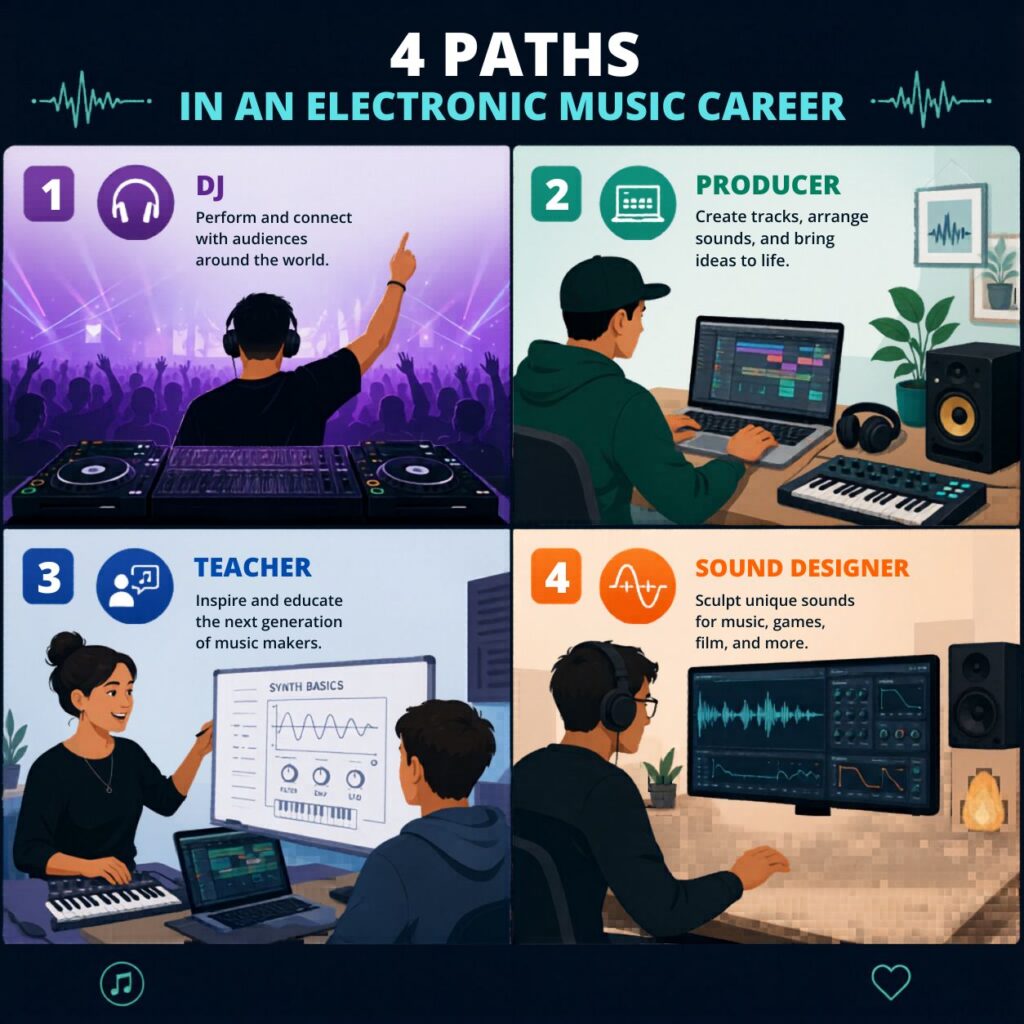
Before you start grinding, it helps to understand what an electronic music career can actually look like. The industry is broader than most people realize.
Some common career paths include:
- Music Producer – Creating original tracks for yourself or other artists
- DJ / Live Performer – Performing at clubs, festivals, or online
- Sound Designer – Crafting sounds for film, TV, games, or other artists
- Beatmaker / Ghost Producer – Selling beats or producing anonymously for others
- Music Educator – Teaching production, theory, or DJing
- Sync Licensing Artist – Placing your music in ads, movies, and TV shows
According to IFPI’s Global Music Report, the recorded music industry generated over $28 billion in revenue in 2024, with digital and streaming formats driving the majority of growth. Electronic music remains one of the fastest-growing genre categories within that ecosystem.
The point? There are multiple ways to earn — and the smartest producers combine several of them.
Step 1: Choose Your Electronic Music Genre
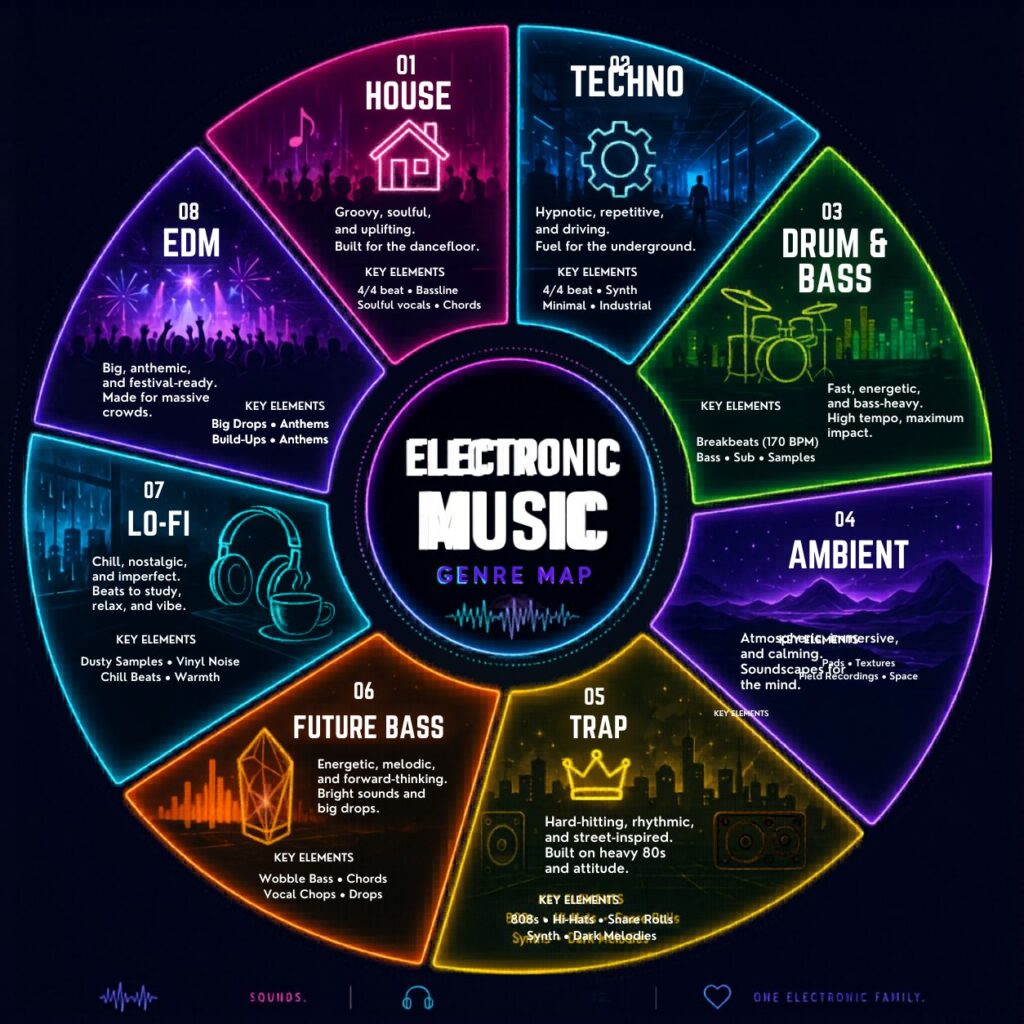
Before you touch a DAW, you should have a general feel for the type of music you want to make. This shapes everything from your software choice to your marketing strategy.
Some of the most popular electronic music genres to consider:
| Genre | BPM Range | Key Artists to Study |
|---|---|---|
| House | 120–130 | Fisher, MK, Chris Lake |
| Techno | 130–150 | Charlotte de Witte, Amelie Lens |
| Drum & Bass | 160–180 | Noisia, Pendulum |
| Lo-Fi Hip Hop | 70–90 | Joji, Nujabes |
| Future Bass | 150–160 | Flume, San Holo |
| Ambient | 60–90 | Brian Eno, Tycho |
| Trap / Melodic Trap | 130–160 | RL Grime, Flosstradamus |
You don’t need to be locked in forever — most producers evolve their sound. But starting with a focus helps you study the right references, understand the structure, and build a cohesive body of work.
Step 2: Get the Right Equipment to Start Making Electronic Music on Computer
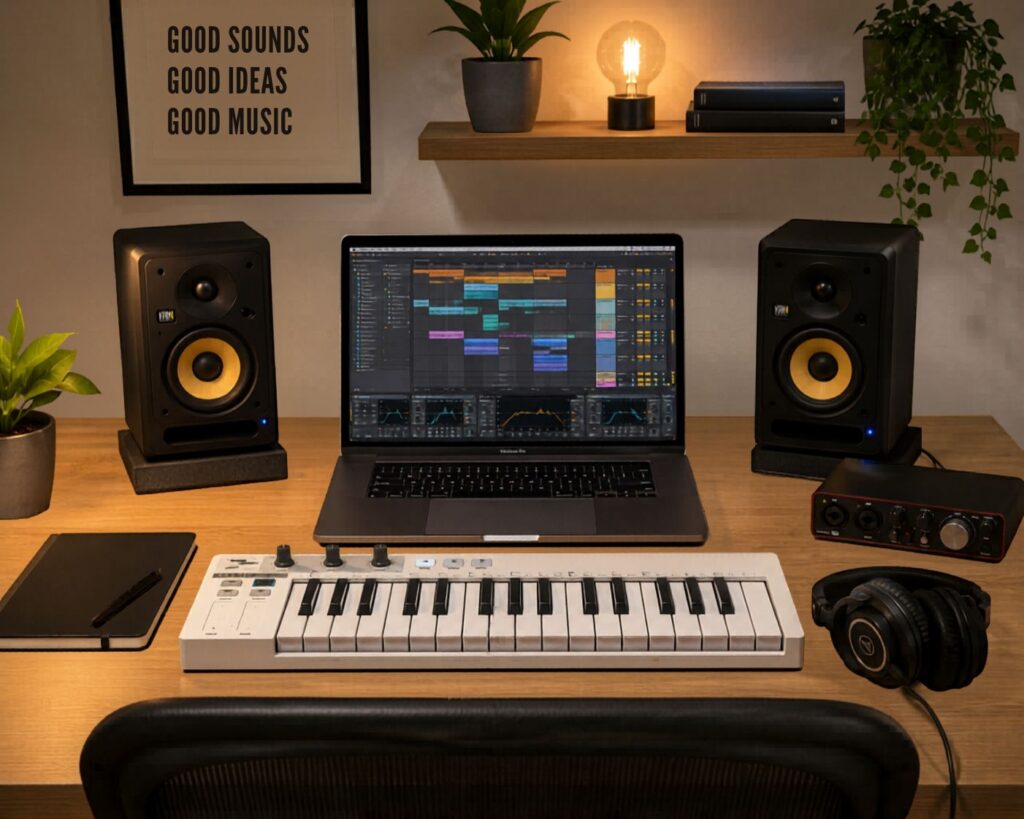
The great news: you don’t need to spend thousands to get started. Here’s what you actually need:
Essential Gear for Beginners
1. A Computer
Any modern laptop or desktop running Windows 10/11 or macOS will work. More RAM (16GB+) and a fast SSD make things smoother, but you can start with what you have.
2. A DAW (Digital Audio Workstation)
This is your primary music-making software. The most popular options for electronic music:
- Ableton Live – Industry standard for electronic music and live performance. The Intro version starts free (limited) and Lite is often bundled with hardware.
- FL Studio – Beginner-friendly, especially for beat-making. One-time purchase with lifetime updates.
- Logic Pro – Mac only. Excellent value at $199.99 with a huge built-in sound library.
- Reason – Unique rack-based workflow great for synthesizer exploration.
- GarageBand – Free on Mac, perfect for absolute beginners.
3. Headphones or Studio Monitors
Accurate sound reproduction matters. The Audio-Technica ATH-M50x (~$150) is a beloved beginner headphone. Studio monitors from Yamaha HS5 or KRK Rokit are solid first monitor choices.
4. MIDI Controller (Optional but Helpful)
A MIDI keyboard or pad controller like the Arturia MiniLab (~$99) makes programming melodies and chords feel natural.
5. Audio Interface (If Recording External Audio)
If you plan to record vocals or live instruments, an interface like the Focusrite Scarlett Solo is the go-to entry-level option.
Pro Tip: Start simple. Many professional producers have made chart-topping tracks with just a laptop and headphones. Gear is never the bottleneck — skill is.
Step 3: Learn Music Theory (Just Enough)
You don’t need to go to music school. But understanding a few fundamentals will dramatically speed up your progress:
- Scales & Keys – Understanding the major and minor scale helps you pick notes that sound good together
- Chord Progressions – Simple progressions like I–V–vi–IV appear in thousands of electronic tracks
- Rhythm & Timing – Understanding bars, beats, and time signatures helps you structure your tracks properly
Free resources to learn:
- Musictheory.net – Structured, beginner-friendly lessons
- YouTube: Adam Neely – Engaging theory breakdowns
- Hooktheory – Interactive chord progression tool used by thousands of producers
Even 15–20 minutes of theory study per day will compound rapidly over months.
Step 4: Master Your DAW and Learn Sound Design
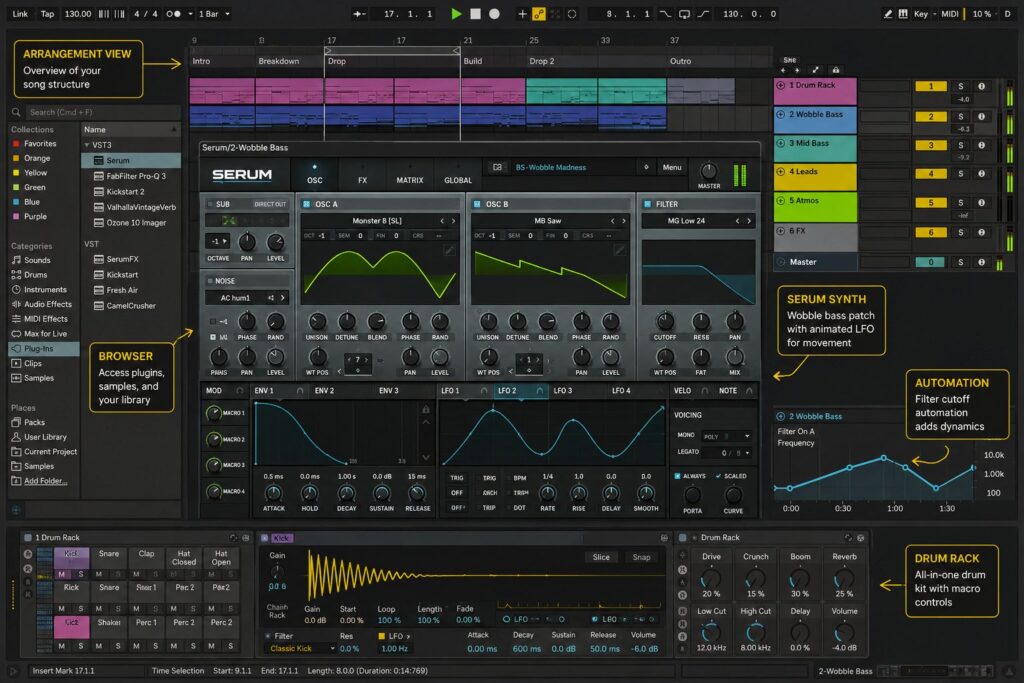
Learning your DAW is a long-term investment. Here’s how to approach it:
Start With Tutorials
Most DAWs have official tutorial channels:
- Ableton YouTube Channel
- FL Studio official tutorials
- Produce Like A Pro (YouTube) – Great for workflow and mixing
Learn a Synthesizer Plugin
Sound design is what separates average producers from memorable ones. Start with one synth and go deep:
- Serum by Xfer Records – The most popular synthesizer in modern electronic music production
- Vital – A free, powerful alternative to Serum
- Massive X by Native Instruments – Industry standard for bass-heavy genres
Focus on These Core Skills
- Mixing – Balancing levels, panning, and EQ
- Compression – Controlling dynamics and adding punch
- Arrangement – Building a track that holds listener attention from start to finish
- Automation – Making your track evolve and feel alive
Platform Coursera’s Berklee Online courses and Splice’s Beat School offer structured learning paths that go deep on these topics.
Step 5: Build a Consistent Creative Workflow
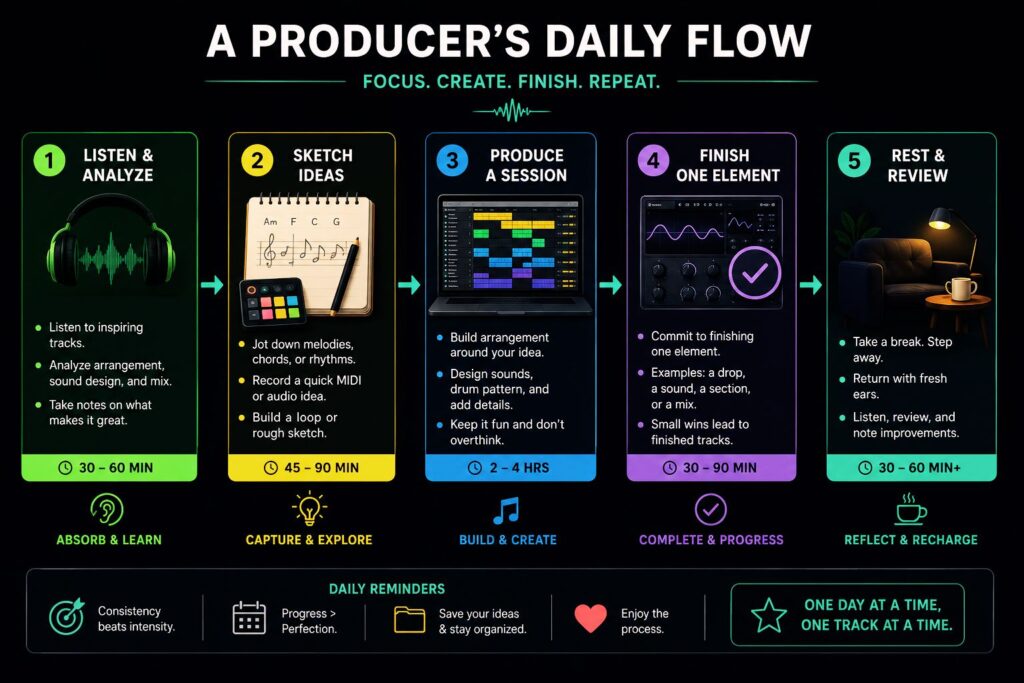
One of the biggest mistakes beginners make is waiting for inspiration. Professionals build systems.
Some workflow habits that work:
- Finish tracks, not just ideas. A completed mediocre song teaches you more than 50 unfinished “bangers.” Many coaches advocate the one song per week challenge for exactly this reason.
- Use samples wisely. Platforms like Splice, Loopmasters, and Looperman offer royalty-free samples that speed up your production.
- Reference tracks. Load a commercial release you admire into your DAW and compare your mix. This gives instant, actionable feedback.
- Set session time limits. Many producers work in focused 90-minute blocks with breaks, using techniques like the Pomodoro method applied to creative work.
Step 6: Release Your Music Professionally
Once you have tracks you’re proud of, it’s time to get them into the world. Here’s how:
Use a Music Distributor
You need a distributor to get your music on Spotify, Apple Music, Amazon Music, and Tidal. Top options:
| Distributor | Pricing | Key Feature |
|---|---|---|
| DistroKid | ~$22.99/year | Unlimited uploads, fast delivery |
| TuneCore | Per release | Detailed royalty tracking |
| CD Baby | One-time fee | Physical + digital distribution |
| Amuse | Free tier available | Mobile-first workflow |
Create a Compelling Artist Identity
Your artist name, logo, cover art, and visual aesthetic are part of your brand. Consistency across Spotify, SoundCloud, Instagram, and YouTube builds recognition.
Submit to Playlists
Spotify’s Pitch to Playlists tool lets you submit unreleased tracks for editorial playlist consideration. Independent playlisting companies like SubmitHub also connect artists with curators across genres.
Step 7: Promote Your Music and Build an Audience
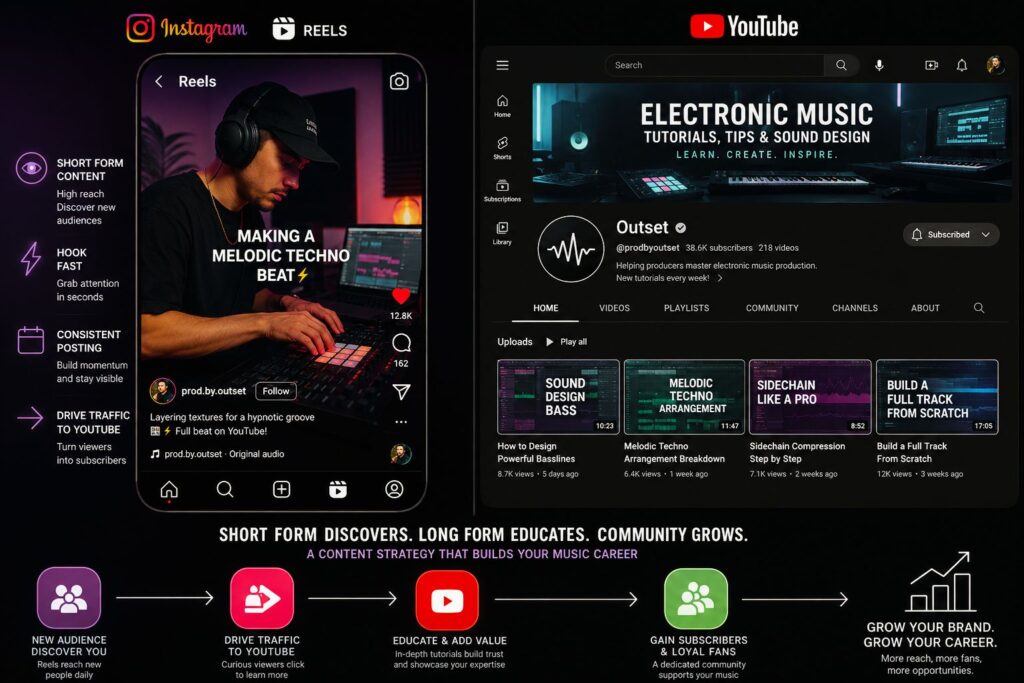
Making great music isn’t enough. You need people to hear it.
Platforms That Work Best for Electronic Producers
- YouTube – Post production tutorials, track breakdowns, and sample packs. Educational content builds trust and long-term subscribers.
- Instagram/TikTok – Short clips of your production process, studio sessions, or live performance generate high organic reach.
- SoundCloud – Still active in electronic music communities, especially for underground genres.
- Bandcamp – Excellent for direct-to-fan sales, especially in niche genres like ambient, techno, and lo-fi.
Network Inside Your Genre Community
Join producer communities
Collaboration with other producers can double your reach instantly, and feedback from experienced peers accelerates your growth faster than going solo.
Step 8: Monetize Your Electronic Music Career
A sustainable music career isn’t built on one income stream. Here are the main ways electronic producers earn money:
- Streaming Royalties – Earned through platforms like Spotify, Apple Music, and YouTube Music via your distributor
- Beat Sales – Platforms like BeatStars and Airbit let you sell licenses to rappers and vocalists
- Sync Licensing – Getting your music placed in TV, film, or ads via platforms like Musicbed, Artlist, or Epidemic Sound
- Live Performance / DJ Gigs – Local clubs, venues, and online streaming performances
- Teaching / Courses – Sell your knowledge via Teachable or Skillshare
- Sample Packs / Presets – Selling your sounds on Splice or directly via Gumroad
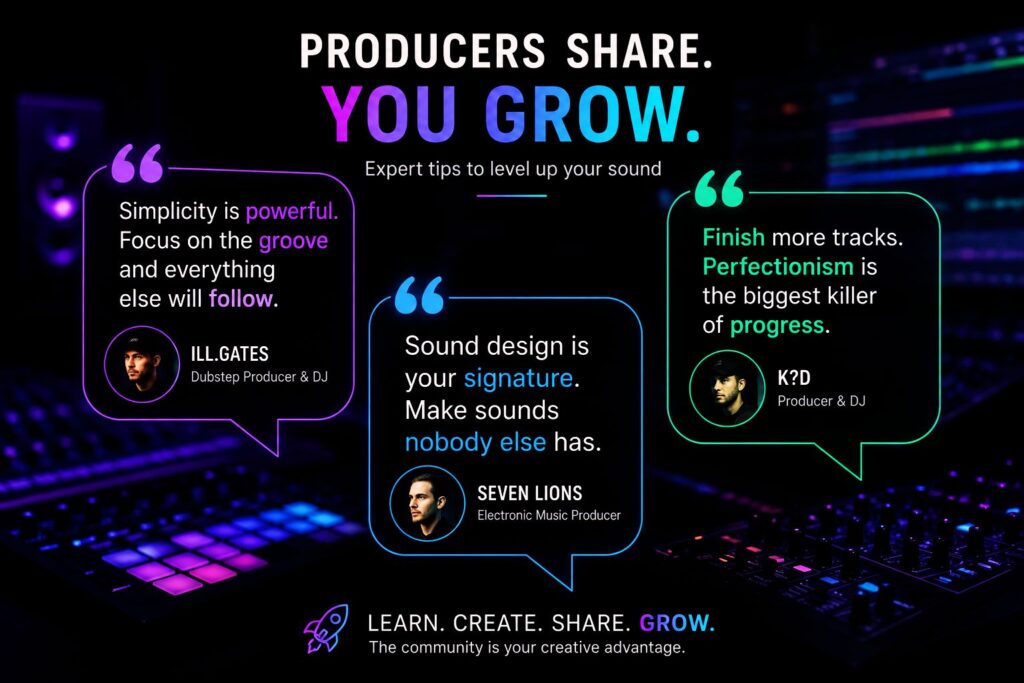
Expert Tips from Professionals
We’ve distilled advice from veteran producers and industry educators into actionable insights:
“Don’t chase trends — understand them. Know why a sound works, not just what it sounds like.”
— Common wisdom from producers like Deadmau5, who frequently discusses production philosophy publicly
- Finish everything. Unfinished projects don’t ship. Even bad finished tracks build portfolio and muscle memory.
- Study the masters. Deconstruct tracks you love. Analyze the arrangement, the mix, the sound design. Tools like Tracklib can help you understand how classic tracks are built.
- Protect your hearing. OSHA recommends limiting exposure to loud audio. Mix at moderate volumes (around 75–80 dB) and take regular breaks.
- Copyright your work. Register your tracks with ASCAP, BMI, or SESAC to collect performance royalties.
- Treat it like a business from day one. Set up a simple spreadsheet tracking releases, income, and expenses. The Music Business Association offers free resources on music business basics.
Pros and Cons of Pursuing an Electronic Music Career
| ✅ Pros | ❌ Cons |
|---|---|
| Low startup cost (vs. traditional music) | Income is unpredictable early on |
| Work from home / location freedom | Extremely competitive market |
| Creative independence | Long learning curve for production |
| Multiple income streams available | Requires consistent self-motivation |
| Global audience through streaming | Algorithm changes can affect discoverability |
| Growing industry with new niches | Equipment and software costs add up |
Frequently Asked Questions (FAQs)
How long does it take to start an electronic music career?
There’s no fixed timeline, but most producers spend 1–3 years learning production fundamentals before releasing music they’re proud of. With consistent daily practice (even 30–60 minutes), you can have your first track released within 3–6 months. Building a sustainable career, however, is a multi-year process.
Do I need music theory to start making electronic music on computer?
No, but it helps significantly. Many successful producers are self-taught and learned theory through producing. Apps like Simply Piano or Hooktheory make theory accessible without formal education.
What is the best DAW to start an electronic music career?
There’s no single “best” DAW — it depends on your genre and workflow preference. FL Studio is often recommended for beginners due to its pattern-based workflow. Ableton Live is the industry standard for electronic music performance and production. Try free trials of both before committing.
How much does it cost to start an electronic music career?
You can genuinely start for under $200: a free DAW like GarageBand or FL Studio trial, a pair of decent headphones, and a free synth like Vital. As you grow, you’ll invest more — but the initial barrier is lower than ever.
How do I get my electronic music heard?
Start by uploading to SoundCloud and YouTube, then distribute to streaming platforms via DistroKid or CD Baby. Post your process on TikTok and Instagram. Submit to genre-specific blogs and playlist curators via SubmitHub.
Conclusion: Your First Step Starts Now
Starting an electronic music career isn’t about waiting until you’re “ready.” It’s about taking one step today, then another tomorrow.
Pick your DAW. Make your first loop. Finish your first track — even if it’s messy. Share it. Ask for feedback. Then do it again. The producers who succeed aren’t always the most talented in the room. They’re the ones who showed up consistently, learned from every release, and refused to quit.
The tools are in your hands. The only thing left is to press play.
→ Ready to take the first step? Download a free trial of Ableton Live or FL Studio today and start making your first track. Join a community like r/edmproduction to get feedback and stay motivated.
Have questions about starting your electronic music journey? Drop them in the comments below — we read every one.
Also Read:Much Does It Cost to Paint a Room? (Full 2026 Guide)

