
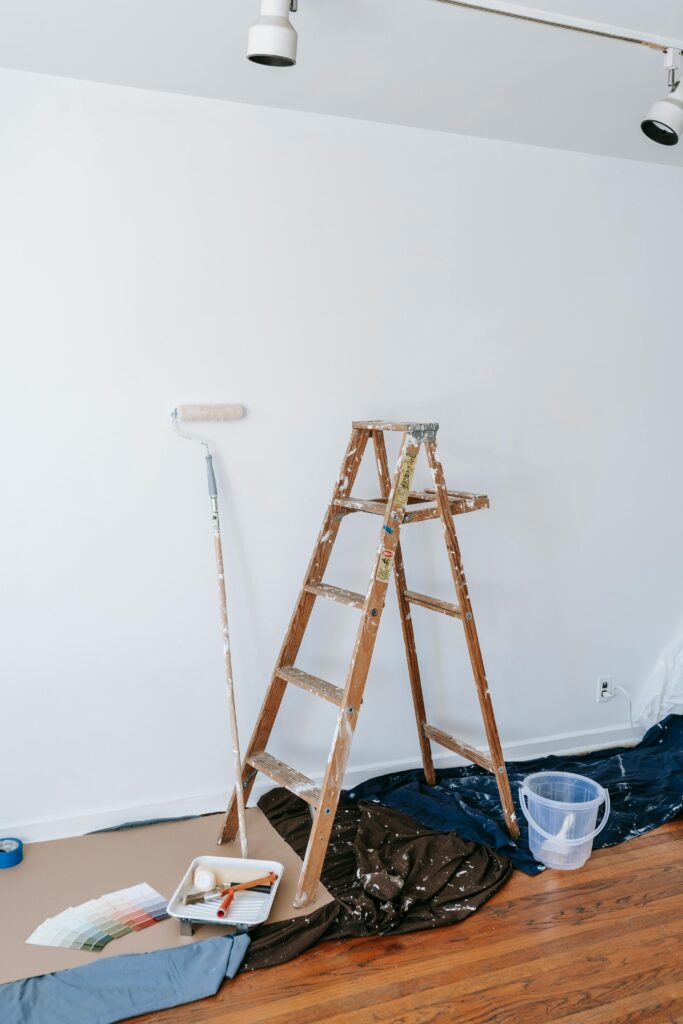
You’re standing in a room that desperately needs a fresh coat of paint. The walls are scuffed, the color is dated, and you’re wondering: how much is this actually going to cost me?
It’s one of the most common home improvement questions — and one of the most confusing, because the answer isn’t one number. It depends on the size of the room, the paint you choose, whether you hire a pro or pick up a brush yourself, and a dozen other factors.
This guide breaks it all down clearly. No fluff, no runaround. Just honest numbers and practical advice to help you budget with confidence.
Average Cost to Paint a Room
Before diving into the details, here’s a quick snapshot of what most homeowners actually pay:
| Room Type | DIY Cost | Professional Cost |
|---|---|---|
| Small bedroom (10×10) | $100 – $200 | $350 – $700 |
| Standard bedroom (12×12) | $150 – $300 | $500 – $900 |
| Large bedroom (14×18) | $200 – $400 | $700 – $1,400 |
| Living room (16×20) | $300 – $500 | $900 – $2,000 |
| Bathroom | $75 – $150 | $200 – $500 |
These figures reflect a standard two-coat application with basic wall prep. Ceilings, trim, and doors are usually priced separately.
According to HomeAdvisor, the national average for professional interior painting falls between $954 and $2,890 for a typical room, with most homeowners spending around $1,800 total.
What Drives the Cost to Paint a Room?
![Infographic showing room painting cost factors: room size, paint quality, labor, prep work, and number of coats] ALT text: painting estimate per square foot – infographic of cost factors for painting a room
Several variables affect your final bill. Understanding them helps you avoid budget surprises.
1. Room Size (Painting Estimate Per Square Foot)
This is the biggest driver. Painters typically charge by the square foot of wall surface, not the floor area.
To calculate paintable wall space: add up the perimeter of the room, multiply by ceiling height, then subtract doors and windows (roughly 20 sq ft each).
Typical painting estimates per square foot:
- Labor only: $1 – $3 per sq ft
- Labor + materials: $2 – $6 per sq ft
A 12×12 bedroom with 8-foot ceilings has roughly 350–400 sq ft of paintable wall surface. At $3/sq ft for labor plus materials, that comes to approximately $1,050–$1,200.
2. Paint Quality and Type
Paint costs range dramatically depending on brand and finish:
| Paint Grade | Cost per Gallon |
|---|---|
| Budget (e.g., store brand) | $20 – $35 |
| Mid-range (e.g., Behr, Sherwin-Williams) | $35 – $60 |
| Premium (e.g., Farrow & Ball, Benjamin Moore Aura) | $70 – $120+ |
Sherwin-Williams and Benjamin Moore are consistently rated among the top interior paint brands by professional painters for their coverage, durability, and finish quality.
Finish type also matters. Flat/matte paint hides imperfections but is harder to clean. Eggshell and satin are popular for living rooms and bedrooms. Semi-gloss is ideal for trim and bathrooms.
3. How Many Gallons of Paint for a Room?
A common question with a simple rule of thumb: one gallon of paint covers about 350–400 sq ft per coat.
For a standard 12×12 bedroom:
- Walls: ~1.5 gallons for two coats
- Ceiling: ~1 gallon
- Trim: ~1 quart
So a typical bedroom project might use 2–3 gallons total, depending on color changes. Going from a dark color to a lighter one often requires an extra coat — meaning more paint and more time.
4. Painting Labor Cost Per Hour
If you hire a professional, labor is usually your biggest expense. Painters typically charge:
- $25 – $75 per hour for standard interior work
- $40 – $100 per hour in high cost-of-living cities
Most professional painters switch between hourly and per-project pricing depending on the job complexity. A full bedroom typically takes 4–8 hours for a single painter, so expect to budget $200–$600 in labor alone for one room.
The Bureau of Labor Statistics reports the median hourly wage for professional painters at around $21–$27/hour, but independent contractors often charge significantly more to account for overhead, insurance, and profit margin.
5. Prep Work and Condition of Walls
Wall prep is where hidden costs creep in. If your walls have:
- Holes or cracks to patch: add $50–$150
- Old wallpaper to remove: add $150–$300 per room
- Water stains or mold: add $100–$500 depending on severity
- Popcorn ceiling removal: $1–$3 per sq ft
The EPA recommends testing older homes (pre-1978) for lead paint before any scraping or sanding — a critical safety step that may add inspection costs.
Paint a Bedroom Cost: What to Expect Room by Room
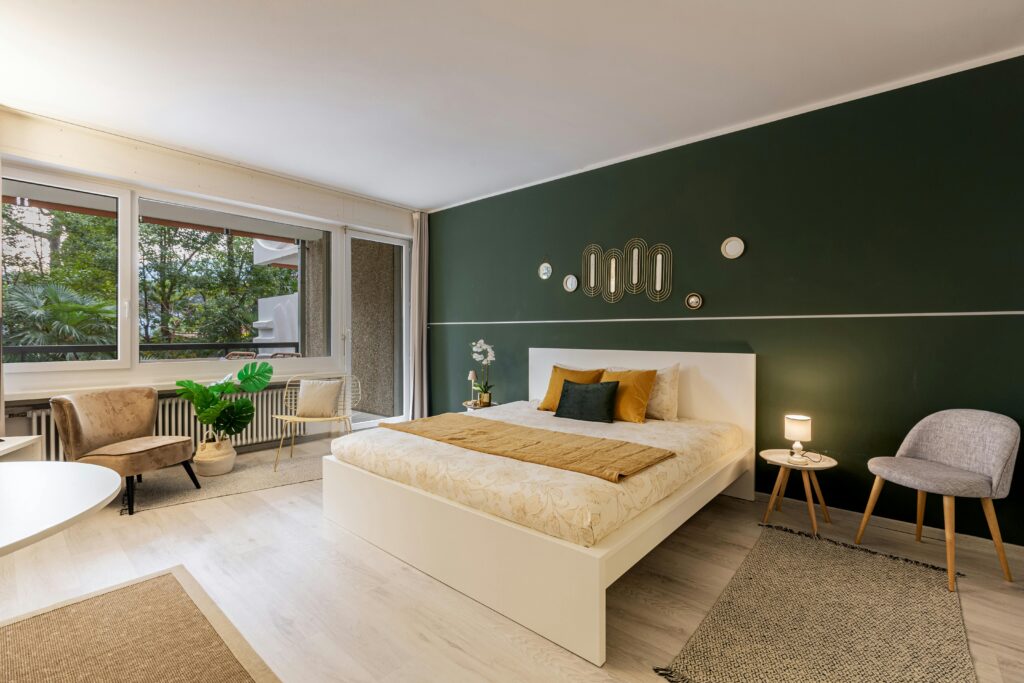
Small Bedrooms (100–150 sq ft floor area)
These rooms are budget-friendly to paint. Professional cost: $350–$700. DIY cost: $100–$200. A single gallon of mid-range paint is usually enough for the walls.
Standard Bedrooms (130–180 sq ft floor area)
Most homeowners spend $500–$900 for professional work in a typical bedroom. This includes walls and ceiling, but not trim (usually priced separately at $1–$2 per linear foot).
Master Bedrooms (200–300 sq ft floor area)
Larger spaces with vaulted ceilings or accent walls can push the professional cost to $900–$1,500.
Cost to Paint Living Room
Living rooms are often the most expensive single-room project due to their size and architectural complexity (tall walls, large windows, built-in shelves, fireplaces).
Professional cost for an average living room: $900 – $2,000 DIY cost: $200 – $500
Accent walls are a popular and affordable way to transform a living room. A single accent wall typically costs $100–$300 professionally painted — much less than a full room repaint.
DIY vs. Professional Painting Cost: Which Makes Sense?
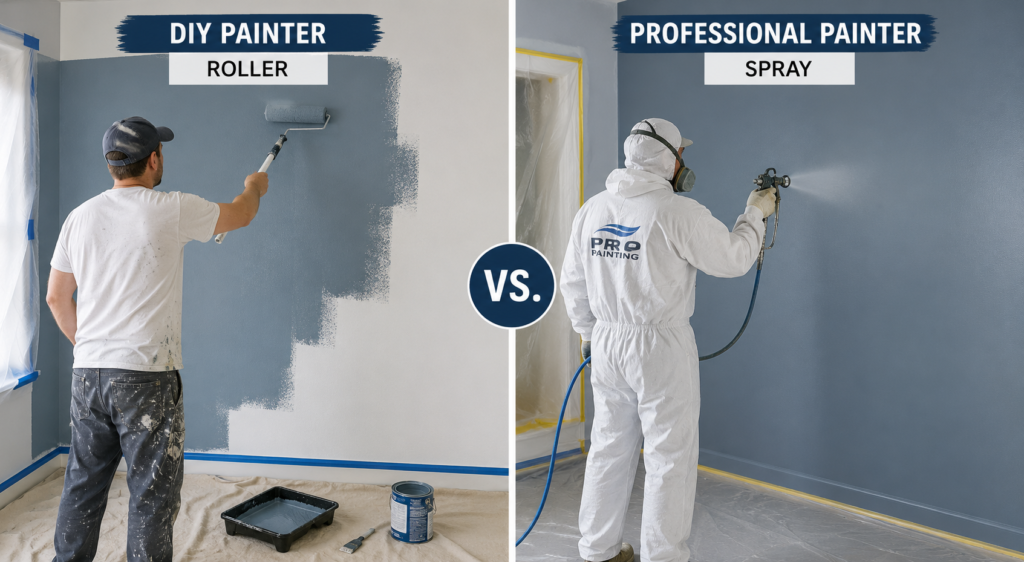
This is the question most homeowners wrestle with. Here’s an honest breakdown:
DIY Painting Pros and Cons
Pros:
- Saves 60–70% compared to hiring out
- Satisfying sense of accomplishment
- Work at your own pace
Cons:
- Time-intensive (a bedroom typically takes a full weekend)
- Quality depends heavily on skill and patience
- Equipment costs add up (rollers, brushes, drop cloths, tape)
- Mistakes (drips, brush marks, uneven coverage) are common
DIY startup costs (first project):
- Roller kit: $15–$30
- Brushes: $10–$25
- Painter’s tape: $8–$15
- Drop cloths: $10–$20
- Paint tray and liners: $5–$10
- Total tools: $50–$100 (reusable)
Professional Painting Pros and Cons
Pros:
- Clean, consistent results
- Faster — pros can finish a bedroom in 4–8 hours
- Proper surface prep is included
- Less disruption to your schedule
Cons:
- Significantly higher cost
- Must coordinate schedules
- Requires vetting and trusting contractors
Expert Tip: If you’re painting a room with intricate trim, cathedral ceilings, or you need to match an existing paint color precisely — hire a professional. The results will be worth it. For plain, single-color rooms in good condition, DIY is very manageable.
To find licensed, insured painters in your area, check resources like Angi (formerly Angie’s List).
How Long Does It Take to Paint a Room?
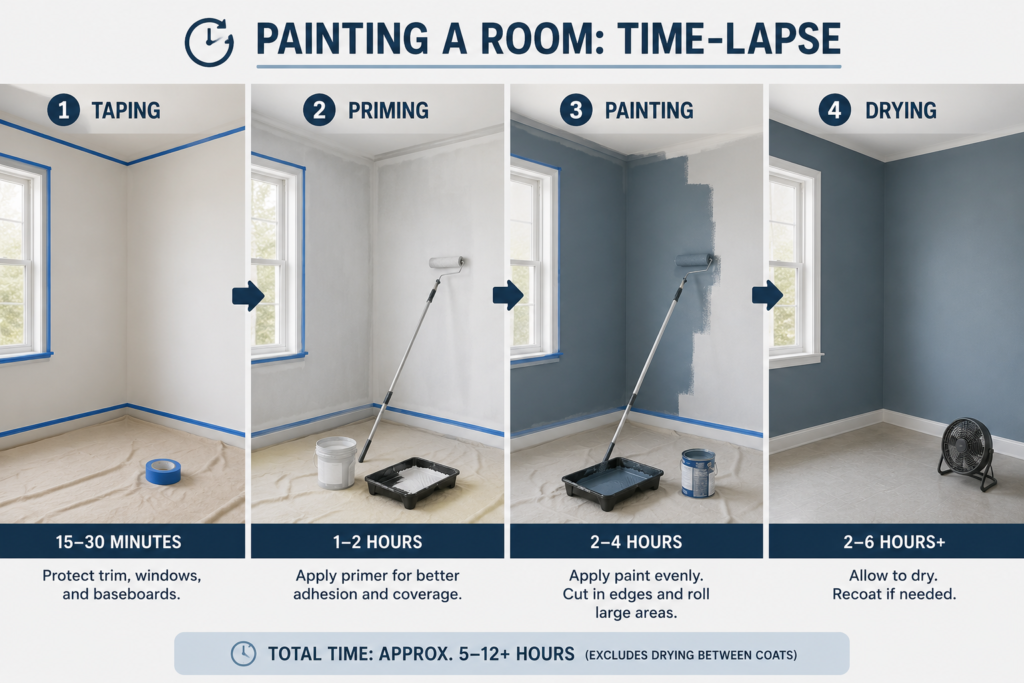
Time matters — especially if you’re displacing furniture or living in a small space. Here’s a realistic timeline:
Professional Painter Timeline
| Task | Time |
|---|---|
| Prep and taping | 30–60 min |
| First coat of paint | 1–2 hours |
| Drying between coats | 2–4 hours |
| Second coat | 1–2 hours |
| Touch-ups and cleanup | 30 min |
| Total (1 painter, 1 bedroom) | 5–9 hours |
A two-person crew can cut this nearly in half.
DIY Timeline
DIYers typically take 1.5–3x longer than professionals, especially for prep work. Expect a full weekend for a standard bedroom if you’re new to painting.
Drying vs. Curing: Paint dries to the touch in 1–2 hours but doesn’t fully cure for 30 days. Avoid scrubbing freshly painted walls until they’ve cured.
How to Get an Accurate Painting Estimate
Before calling contractors, arm yourself with measurements:
- Measure your room – length × width for floor area
- Calculate wall surface – (perimeter × ceiling height) minus doors/windows
- Decide on finish – flat, eggshell, satin, semi-gloss
- Count the coats needed – drastic color changes need 3 coats
- List extras – trim, ceiling, closet, accent walls
Then get at least 3 quotes from local painters. A reputable painter will offer a written estimate that itemizes labor and materials separately.
Use HomeAdvisor’s True Cost Guide or Fixr’s painting calculator to cross-check local estimates against national averages.
Money-Saving Tips for Room Painting
- Buy paint in bulk – a 5-gallon bucket is cheaper per gallon than buying singles
- Choose a mid-range paint – Behr Premium Plus and Sherwin-Williams Emerald offer excellent coverage without premium price tags
- Skip the primer if walls are in good shape – many modern paints include built-in primer
- Paint in the off-season – contractors often offer lower rates in winter
- Do the prep yourself – patching, sanding, and taping yourself can save $100–$200 on professional jobs
- Ask about leftover paint discounts – some paint stores sell mistints at steep discounts
Expert Tips
From the pros:
“Always use a quality brush for cutting in — it makes the biggest difference in a clean finish.” — Advice shared widely on PaintTalk professional forums
- Use blue painter’s tape, not white masking tape. 3M ScotchBlue painter’s tape is the industry standard for clean lines.
- Never skip sanding between coats on woodwork and trim. Even light scuff-sanding dramatically improves adhesion and sheen.
- Lighting matters. Always check paint swatches under the room’s actual lighting — natural light, LED bulbs, and incandescent bulbs render color very differently.
- Start at the ceiling and work down. This catches drips before they dry on the walls.
- Two thin coats beat one thick coat every time. Thick coats drip, run, and take far longer to dry.
FAQs: How Much Does It Cost to Paint a Room?
Q1: What is the average cost to paint a 12×12 bedroom?
The average professional cost to paint a standard 12×12 bedroom is $500–$900, including walls and ceiling. DIY costs range from $150–$300 in materials. Trim and doors are usually an added cost of $1–$2 per linear foot.
Q2: How much does it cost to paint a living room?
The cost to paint a living room typically ranges from $900–$2,000 professionally, or $200–$500 for DIY. Living rooms cost more due to their larger size, higher ceilings, and more complex trim work.
Q3: How much does a painter charge per hour?
Painting labor cost per hour generally runs $25–$75/hour for standard interior work. In major cities, rates can reach $100/hour or more. Most pros will price larger jobs as flat rates rather than hourly.
Q4: How many gallons of paint do I need for a room?
For a standard 12×12 bedroom, plan on 1.5–2 gallons for walls and 1 gallon for the ceiling (both assuming two coats). One gallon covers approximately 350–400 square feet per coat. Dark-to-light color changes may require an extra gallon.
Q5: Is it worth hiring a professional painter or doing it yourself?
For most homeowners, DIY makes sense for simple, flat-walled rooms in good condition. If you have intricate trim, high ceilings, significant wall damage, or simply don’t have the time, hiring a professional painter delivers better results and less stress. The labor savings from DIY can be 60–70%, but the time investment is substantial.
Conclusion
Painting a room is one of the highest-ROI home improvements you can make. A fresh coat of paint transforms a space instantly — and costs far less than new flooring, furniture, or a renovation.
Whether you’re budgeting $150 for a DIY bedroom refresh or $1,800 for a professionally painted living room, the key is going in informed. Measure your space, choose quality paint, understand what prep work is needed, and get multiple quotes if hiring out.
Also read:Why Do Wood Floors Creak? Causes, Fixes & Expert Tips

