
The Day the Water Stopped
Imagine waking up one July morning, turning on your kitchen faucet, and getting nothing. No trickle, no spit — just silence. That’s exactly what happened to Kara Peterson and her neighbors in Granite Mountain Estates water shortage, a quiet community nestled in the hills north of Prescott, Arizona.
In that moment, years of warnings became reality. The Granite Mountain Water Company, which serves close to 160 customers in this unincorporated area, had run out of water.
This isn’t a story about a broken pipe or a billing mistake. It’s a story about vanishing groundwater, failed well drillings, a region-wide drought, and the uncomfortable truth that many rural Arizona communities are facing: the water they’ve always counted on may simply be gone.
If you live in Granite Mountain Estates, own property there, or are thinking about buying — you need to understand what’s really happening, why it’s happening, and what comes next.
What Is Granite Mountain Estates?
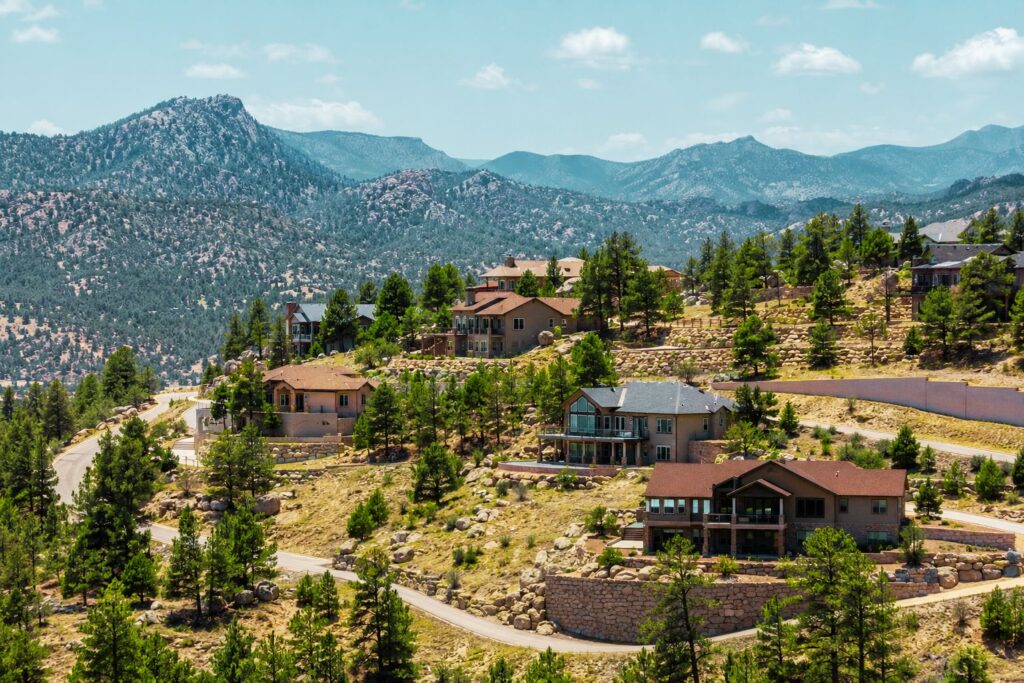
Granite Mountain Estates is a residential community located in an unincorporated area just north of Prescott, Arizona. It sits near the Prescott National Forest and the rugged Granite Mountain Wilderness — a place where homeowners have long sought that rare balance of desert solitude and mountain beauty.
The area traces its roots to the late 1960s, when real estate developer Paul Levie purchased a 700-acre horse farm and began subdividing lots for homes. A small private utility — the Granite Mountain Water Company — was created to provide water service to those homes, with the Levie family retaining control of the operation.
For decades, it worked. But underneath that peaceful landscape, the groundwater aquifer was quietly shrinking.
The Granite Mountain Estates Water Shortage: What Happened?
The Wells Started Failing
The signs came slowly at first. A well that once pumped reliably began to slow. Drilling crews were called in. Then called in again. And again.
According to ABC15 Investigators, Dewey Levie — secretary-treasurer of the Granite Mountain Water Company — confirmed that a well which once pumped 120 gallons per minute is now pumping only 18 gallons per minute. And in the past year and a half alone, the company drilled five essentially dry holes looking for a new source.
“My dad had told me we had plenty of water up here,” Levie told ABC15, “and I thought we had. But our well went dry.”
That single quote captures something devastating — not just about one community, but about the assumptions baked into decades of rural Arizona development.
The Outage That Changed Everything
The crisis became impossible to ignore when residents lost water entirely for two days. Text messages and emails flew through the neighborhood: “We’re out of water.”
Two hours after the alerts started, faucets across the community ran dry.
That two-day outage was a turning point. Since then, the Granite Mountain Water Company has been hauling water by truck from the City of Prescott, pumping it into 111,000-gallon storage tanks positioned on the hilltop above the neighborhood. It’s an expensive, logistically complex workaround — and it’s not a permanent fix.
Why Is This Happening? The Root Causes
Drought and Climate Change
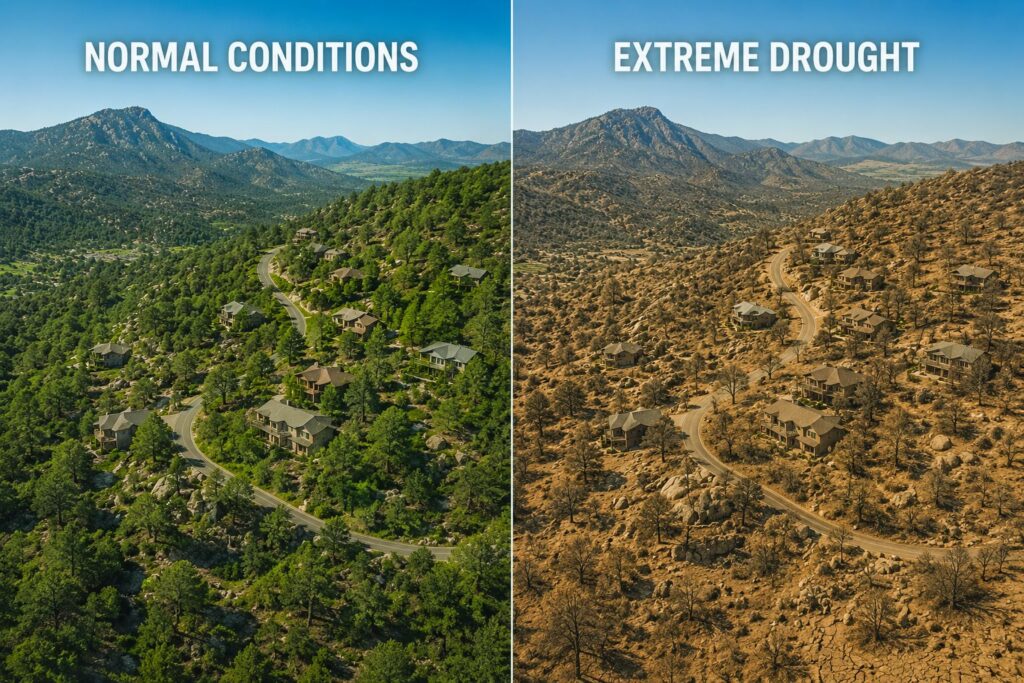
Arizona has been in the grip of a prolonged megadrought for over two decades. According to NASA Earth Observatory, decades of satellite observations confirm that aquifers in Arizona are “ailing” — and the losses to groundwater far outpace any surface water declines.
Rising temperatures reduce snowpack in the mountains that historically recharged underground aquifers. Less rain means less natural replenishment. The math is brutal and simple: more water is leaving the ground than is going back in.
Rapid Development and Increased Demand
The Granite Mountain area saw significant new home construction in recent years. As ABC15 reported, this new building — combined with the ongoing drought — caused groundwater levels to drop faster than existing wells could keep pace.
More homes drawing from the same aquifer, during a drought, is a recipe for exactly what happened.
Regulatory Gaps in Arizona Water Law
Here’s something that surprises many people: Arizona’s groundwater laws have major exemptions that allowed this situation to develop without oversight.
Under the 1980 Arizona Groundwater Management Act, wells pumping less than 35 gallons per minute were exempt from state oversight. Construction projects with fewer than six homes were also exempt from proving a 100-year water supply. These loopholes, as The Counter’s investigative report details, allowed development to accelerate in areas without adequate water security planning.
Granite Mountain Estates, located in an unincorporated area, operated within those gaps for decades. The community never had the regulatory backstop that protected larger developments within Active Management Areas (AMAs).
The Water Hauling Reality: What It Costs Residents
Rate Increases Approved by the Arizona Corporation Commission
Hauling water by truck is far more expensive than pumping it from a well. Those costs don’t disappear — they get passed to customers.
The Arizona Corporation Commission approved a rate increase for the Granite Mountain Water Company to allow it to recover the costs of hauled water. This is part of a broader pattern: as Arizona Capitol Times reports, over 54 small water and sewer utility companies in Arizona have not adjusted their rates in more than 20 years — and when they finally do, customers experience significant rate shock.
The Arizona Corporation Commission also gave the water company a deadline to propose long-term solutions before the end of the year. So the clock is ticking.
Stage 3 Curtailment Notice
The Granite Mountain Water Company has issued Stage 3 emergency curtailment notices — a sign that the situation remains serious. At Stage 3, customers are asked (or required) to dramatically reduce water usage. The company has noted that their well is currently pumping at its lowest rate ever — approximately 16 gallons per minute, far below what’s needed to meet normal community demand.
Is Granite Mountain Estates Alone? The Bigger Arizona Picture
A Symptom of a Statewide Crisis
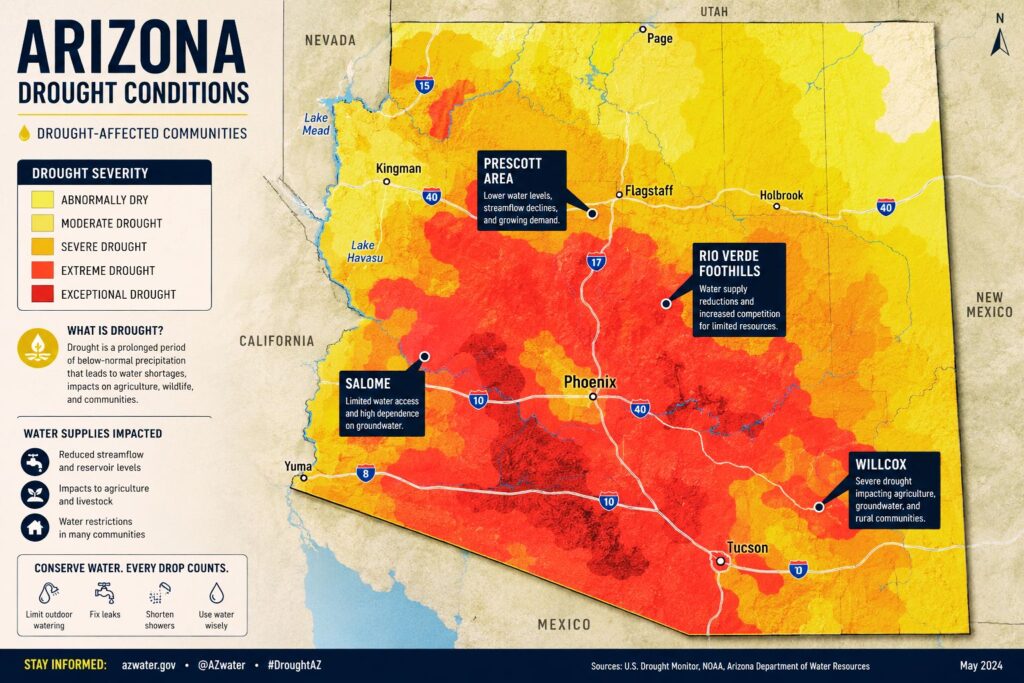
Granite Mountain Estates is not an isolated case. It’s part of a statewide pattern that experts and investigative journalists have been documenting for years.
The community of Rio Verde Foothills near Scottsdale made national headlines when the City of Scottsdale cut off their water hauling access, leaving hundreds of high-value homes without reliable water. The town of Salome, about an hour west of Wickenburg, is watching one of its two community wells go dry. Both communities, like Granite Mountain, got emergency rate approvals from the Arizona Corporation Commission.
As The Counter’s in-depth report put it: “What’s happening in the million-dollar homes of Rio Verde Foothills is a future shock ‘buyer beware’ scenario certain to be replicated over the next several decades in many other Arizona communities.”
Granite Mountain Estates is already living that future.
What Arizona Is Trying to Do About It
Governor Katie Hobbs and lawmakers have pushed for the Rural Groundwater Management Act, a bipartisan proposal to create new Rural Groundwater Management Areas with local oversight councils. The goal is to give rural communities the tools they’ve never had to manage their own water supplies.
The Prescott Active Management Area has long worked toward “safe yield” — a state where groundwater withdrawals don’t exceed natural recharge. But as Arizona State University’s Arizona Water Innovation Initiative notes, that safe-yield goal remains unmet, even after 45 years under the Groundwater Management Act.
“We have to come to terms with the fact that we just don’t have the water that we used to have,” said Jay Famiglietti, science director for ASU’s Arizona Water Innovation Initiative.
What Granite Mountain Estates Residents Can Do Right Now
Immediate Steps for Homeowners
If you live in or own property in Granite Mountain Estates, here are practical steps to navigate this situation:
- Monitor official notices from the Granite Mountain Water Company — check their website regularly for Stage notices and emergency alerts.
- Reduce household water use immediately — low-flow fixtures, shorter showers, xeriscaping, and eliminating outdoor irrigation all help reduce demand on a stressed system.
- Investigate water storage options — some residents are installing private holding tanks to buffer supply disruptions.
- Attend Arizona Corporation Commission hearings — rate cases and long-term solution proposals will require public input. Your voice matters.
- Consult a real estate attorney if you’re considering purchasing property, to fully understand water service risk disclosures.
Conservation Measures That Make a Real Difference
| Conservation Action | Estimated Daily Water Savings |
|---|---|
| Fixing household leaks | 20–50 gallons |
| Low-flow showerhead | 15–25 gallons |
| Eliminating lawn watering | 50–100+ gallons |
| Full-load laundry only | 10–20 gallons |
| Drought-tolerant landscaping | 100+ gallons (long-term) |
The Arizona Department of Water Resources offers free conservation resources and guidance for homeowners on reducing water usage.
What Property Buyers Should Know Before Purchasing in Granite Mountain Estates
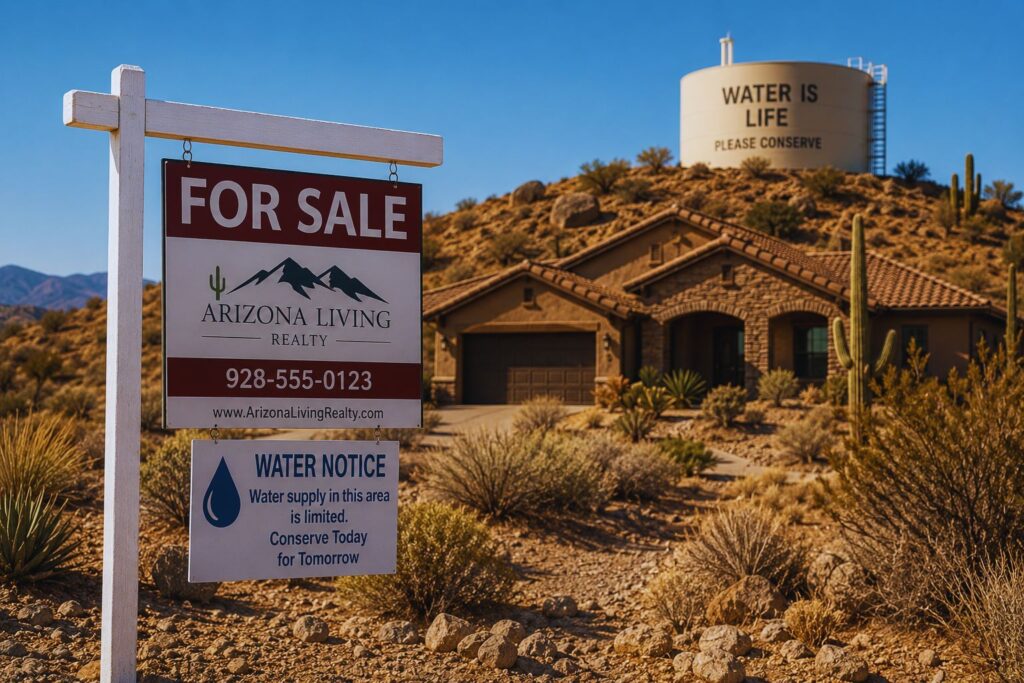
This section is critical if you’re considering buying a home in Granite Mountain Estates or any unincorporated rural Arizona community.
Ask these questions before you buy:
- Who provides water service? Is it a regulated private utility, a municipal system, or a private well? Each carries different risk levels.
- What is the current water supply status? Is the utility under any Stage curtailment orders?
- Have there been any service disruptions in the past two years? Ask for documentation.
- What are the current and projected water rates? Rate increases for hauled water can be dramatic.
- Has the utility been ordered to submit a long-term supply plan? This signals ongoing uncertainty.
- Is there a recorded water adequacy certificate? Under Arizona law, subdivisions within AMAs require proof of a 100-year water supply — but rural unincorporated areas may not.
The Arizona Department of Real Estate requires certain disclosures in real estate transactions, but buyers in unincorporated areas should conduct their own thorough due diligence. A qualified real estate attorney familiar with Arizona water law is a smart investment before closing.
Expert Tip #1: If you’re on a private utility in rural Arizona, file a copy of every Stage notice, rate increase, and official communication. This documentation becomes critical if you ever need to make an insurance claim, dispute a charge, or participate in a regulatory proceeding.
Expert Tip #2: Rainwater harvesting is legal in Arizona and increasingly encouraged. Collecting roof runoff into storage tanks can serve as a supplemental supply for outdoor use and can reduce demand on a stressed community system.
Expert Tip #3: Contact your Yavapai County Supervisor’s office. As an unincorporated community, Granite Mountain Estates doesn’t have city services — but elected county officials have standing to advocate for long-term water solutions on residents’ behalf.
Expert Tip #4: Review the Arizona Corporation Commission’s public dockets for any filings related to the Granite Mountain Water Company. All rate cases and emergency filings are public record and contain critical information about the utility’s financial health and future plans.
Pros and Cons of Living in Granite Mountain Estates During the Water Shortage Crisis
| Pros | Cons |
|---|---|
| Scenic, rural setting near Prescott National Forest | Active water supply uncertainty |
| Relatively affordable compared to Prescott proper | Water rates increasing due to hauling costs |
| Strong community bonds forged during the crisis | Property values may be affected by water risk disclosures |
| State and regulatory attention now focused on solutions | No guaranteed timeline for a permanent fix |
| Proximity to Prescott services and amenities | Limited options for individual homeowners acting alone |
Frequently Asked Questions (FAQs)
1. Is Granite Mountain Estates still without water?
The community is not without water entirely, but it is under severe strain. The Granite Mountain Water Company has been hauling water by truck from Prescott since late 2024 and storing it in large holding tanks. Residents should check the Granite Mountain Water Company website for the most current Stage notice and supply status.
2. Why did the Granite Mountain Estates wells go dry?
A combination of factors caused the well failures: a prolonged regional drought that reduced natural groundwater recharge, increased development in the surrounding area drawing more water from the same aquifer, and geological challenges that made drilling new productive wells extremely difficult. The company drilled five dry holes in just 18 months trying to find a reliable new source.
3. What is a Stage 3 water curtailment and what does it mean for residents?
A Stage 3 curtailment is an emergency water conservation level declared by a utility when supply is critically low. At Stage 3, the Granite Mountain Water Company requests — and may require — significant reduction in water usage by all customers. This can include restrictions on outdoor watering, pool filling, and other non-essential uses. Violations of curtailment orders can result in service interruption.
4. Will water rates in Granite Mountain Estates keep going up?
Likely yes, at least in the near term. The Arizona Corporation Commission approved a rate increase to cover the cost of hauled water. As long as the community relies on trucked water rather than a local groundwater source, those elevated operational costs will be reflected in customer bills. A long-term infrastructure solution — if one is approved — would also require significant capital investment that would be partially recovered through rates.
5. Should I sell my property in Granite Mountain Estates because of the water crisis?
That’s a personal financial and lifestyle decision that depends on many factors. However, potential buyers and sellers should be aware that the Arizona Department of Real Estate requires disclosure of material facts affecting property value and usability, which would include an ongoing water supply issue. A real estate attorney and a licensed Arizona realtor experienced in rural properties can help you understand your obligations and options.
Conclusion: A Community at a Crossroads
The Granite Mountain Estates water shortage is more than a local inconvenience. It’s a real-world preview of the water challenges that rural Arizona — and much of the arid American West — will increasingly face in the decades ahead.
For current residents, the path forward requires staying informed, conserving aggressively, and engaging actively with the regulatory and political processes that will shape long-term solutions. For potential buyers, it demands honest due diligence and a realistic understanding of what “water service” actually means in an unincorporated desert community.
The water didn’t disappear overnight, and the solutions won’t arrive overnight either. But communities that face these challenges head-on — by working with regulators, demanding accountability from utilities, and embracing conservation — are the ones most likely to find a stable path forward.
Stay informed. Stay engaged. And keep checking that faucet.

